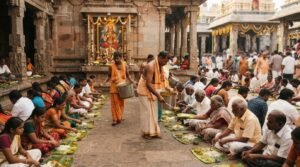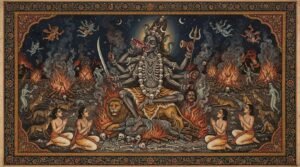
Few temples in the Indian Himalayas carry a history as turbulent, or a devotion as unbroken, as the Brajeshwari Devi Temple at Kangra. Set in the old town once called Nagarkot, on a spur of the Dhauladhar range in Himachal Pradesh, this is one of the fifty-one Shakti Peethas - the sites where, according to the Puranic account of Sati's self-immolation, a fragment of the goddess's body fell to earth and sanctified the ground beneath it. Here, tradition holds, it was her left breast (vaksha-sthala) that fell, and the site has drawn kings, plunderers, pilgrims and poets in roughly equal measure for over a thousand years.
What makes Brajeshwari Devi's story so striking is not only its antiquity but its resilience. This is a temple that was stripped of its fabled wealth again and again by invading armies, rebuilt each time by devotion rather than by treasury, levelled entirely by an earthquake in living memory, and raised once more within the same year. The goddess here is worshipped not as a sculpted image but as a pindi - a formless, symbolic form - a detail that itself carries a quiet theological lesson about where divinity truly resides. This guide walks through her legend as a Shakti Peetha, the extraordinary and sometimes violent history of her shrine, her architecture and worship, the unusual Makar Sankranti ritual of butter and healing associated with her, and everything a pilgrim needs to plan a visit, including her place within the wider Kangra Devi circuit of Himachal Pradesh.
For readers new to the broader framework within which this temple sits, our companion guide to the 51 Shakti Peethas explains the full network of these sites across the subcontinent, and our account of the Sati Devi and Daksha Yagna story traces the myth from which every Shakti Peetha, including this one, ultimately descends.
Who Is Brajeshwari Devi?
Brajeshwari - also written Bajreshwari or Vajreshwari, and known locally as the Nagarkot Mata or simply the Kangra Devi - means, roughly, "the goddess of the thunderbolt" (vajra). The name is understood in two complementary ways by those who worship her. It refers first to her ferocity: the concentrated, irresistible force of Shakti in her most protective and world-sustaining aspect, likened to the vajra wielded by Indra, the king of the gods, against forces of chaos. It refers secondly, in a gentler reading favoured by many pilgrims, to the swiftness and directness with which she is said to answer sincere prayer - striking through obstacles as a thunderbolt strikes through cloud.
She is regarded as a form of Adi Shakti, the primordial feminine power that Shakta tradition holds to be inseparable from, and prior to, all created form - a concept treated at length in our guide to Adi Parashakti. At Kangra she is not depicted as Durga astride a lion or as Kali garlanded in skulls; she is approached instead in her Shakti Peetha form, worshipped as a pindi, a naturally occurring rock formation understood to be self-manifest (svayambhu) rather than carved by human hands. This distinction matters to devotees: it signals that the goddess chose this ground herself, rather than being installed upon it by a builder's decision.
The temple's older name, Nagarkot, refers to the hill fort that once stood here and gave the wider region its mediaeval identity; Kangra town, a few kilometres below the old fort site, has since become the more commonly used geographical reference, and the temple is today generally called the Kangra Devi Temple or Bajreshwari Devi Temple in most modern usage, with Brajeshwari remaining the more classical and liturgically preferred form of the name.
The Shakti Peetha Legend: Where Sati's Left Breast Fell
Every Shakti Peetha begins with the same grief-stricken origin. Sati, daughter of the king Daksha and the first consort of Shiva, is said to have immolated herself after her father publicly insulted her husband at a great sacrificial rite, the Daksha Yagna. Overcome with sorrow and fury, Shiva lifted her body and began the Tandava, the cosmic dance of destruction, threatening to unmake the universe in his grief. To halt this catastrophe, Vishnu released his discus, the Sudarshana Chakra, and severed Sati's body into pieces as Shiva carried it, so that each fragment fell to a different place on earth. Wherever a part of her fell, that ground became a Shakti Peetha, a seat of the goddess's living power, and in the traditional account each such site is also paired with a form of Bhairava - a fierce manifestation of Shiva - who stands guardian over it. The fuller narrative, with its many regional variations, is told in our dedicated piece on Sati Devi and the Daksha Yagna.
At Kangra, tradition holds that it was Sati's left breast that fell, and the presiding Bhairava of this Peetha is generally named in temple literature as Bhairavnath, sometimes called Baba Lal Bhairav, worshipped in a modest adjoining shrine within the temple complex. Scholars and pilgrimage compilers do note some variation across regional Shakti Peetha lists here: several older Sanskrit stotras and later Bengali and Assamese enumerations differ slightly on precisely which body part is assigned to Kangra versus its far more famous neighbour, Jwalamukhi, barely fifty kilometres away, where the goddess is instead worshipped as an eternal flame said to be Sati's tongue. The two temples are frequently treated as a linked pair within the Kangra Devi tradition rather than as competing claims, and a devoted pilgrim in this valley will very often visit both in a single circuit. Readers wishing to explore that neighbouring shrine in depth will find our full account at Jwalamukhi, the Jwala Ji Temple.
What is not disputed is the antiquity and continuity of worship at Nagarkot. Local legend, recorded in temple accounts and repeated by regional historians, credits the Pandava brothers of the Mahabharata with constructing the earliest shrine here, following a dream in which the goddess herself commanded them to build a temple on this hill for the protection of their kingdom. Whether or not this specific attribution can be historically verified, it reflects how old the devotional memory of this site is understood to be - a temple whose living worship long predates any surviving inscription or masonry.
Architecture and the Sanctum: A Goddess Without an Idol
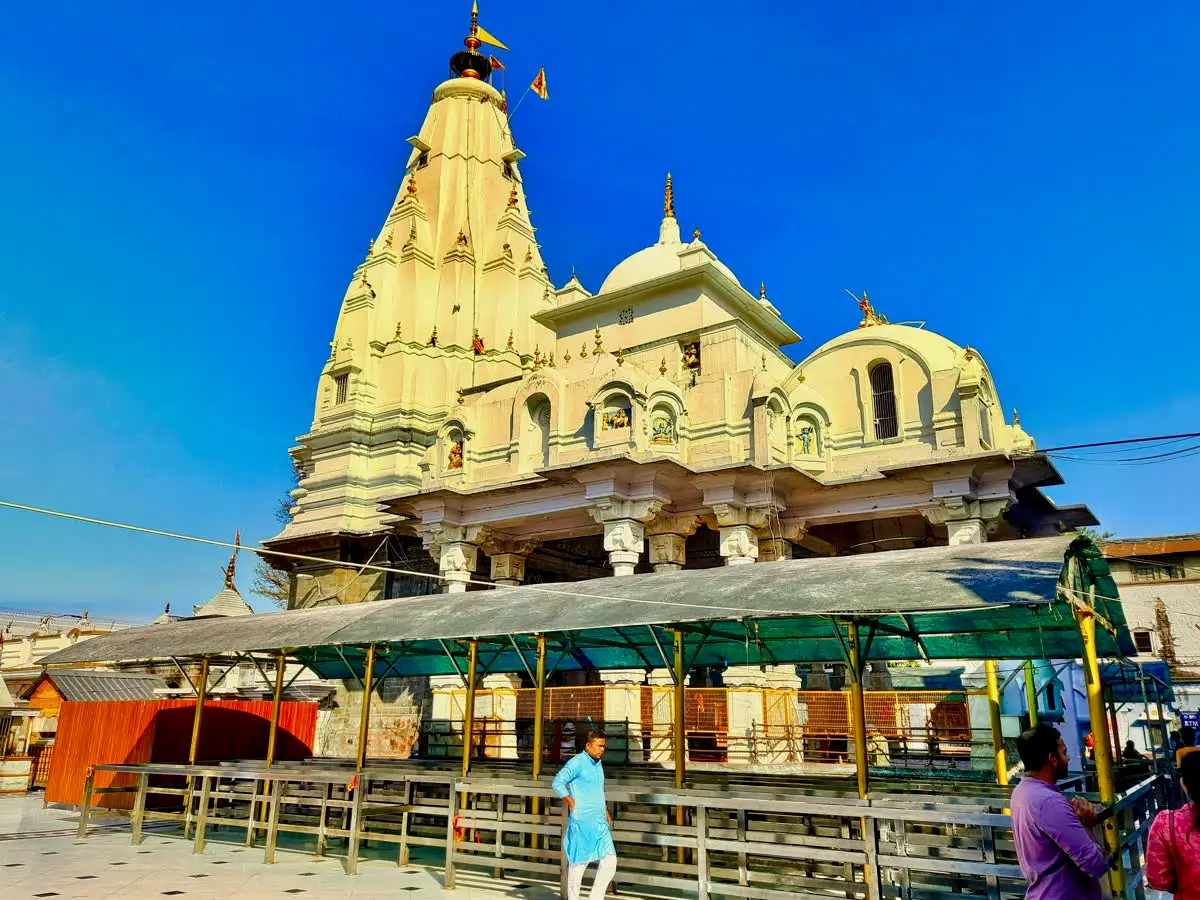
Unlike temples built around a carved anthropomorphic murti, the sanctum of Brajeshwari Devi houses no sculpted image of the goddess at all. The object of worship is the pindi - an unhewn, naturally formed stone considered to be the goddess's self-manifest form, draped in red cloth, adorned with a silver or gold mukut (crown-face mask) during rituals, and covered with vermilion, flowers and ornaments that together suggest, rather than depict, a divine countenance. This is a pattern shared with several of the most ancient Shakti Peethas across northern India, where the absence of a figurative idol is treated not as an incompleteness but as a deliberate theological statement: the goddess here is not represented, she is simply present, and any face devotees perceive in the draped stone is understood to be an act of devotion meeting divinity halfway.
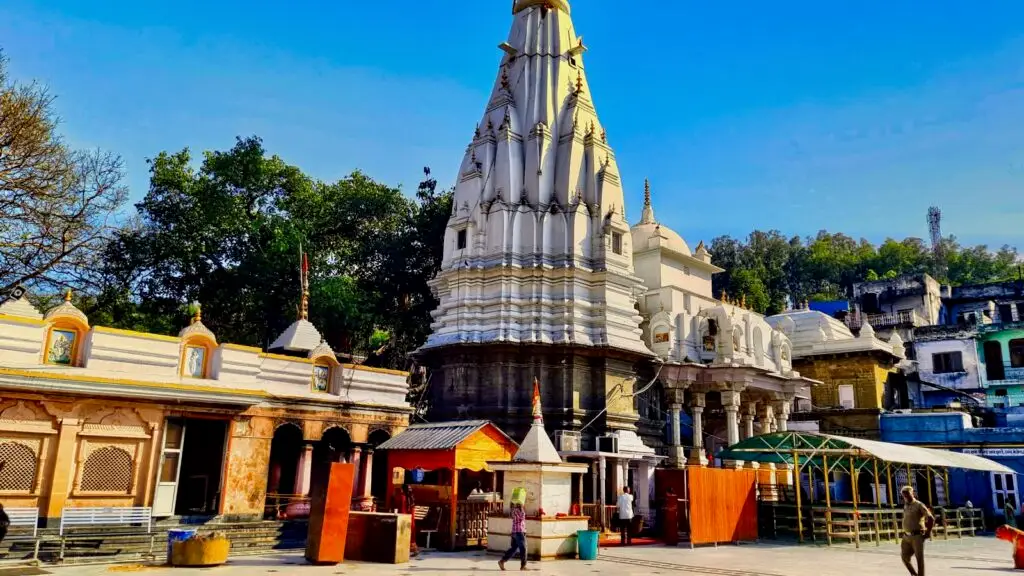
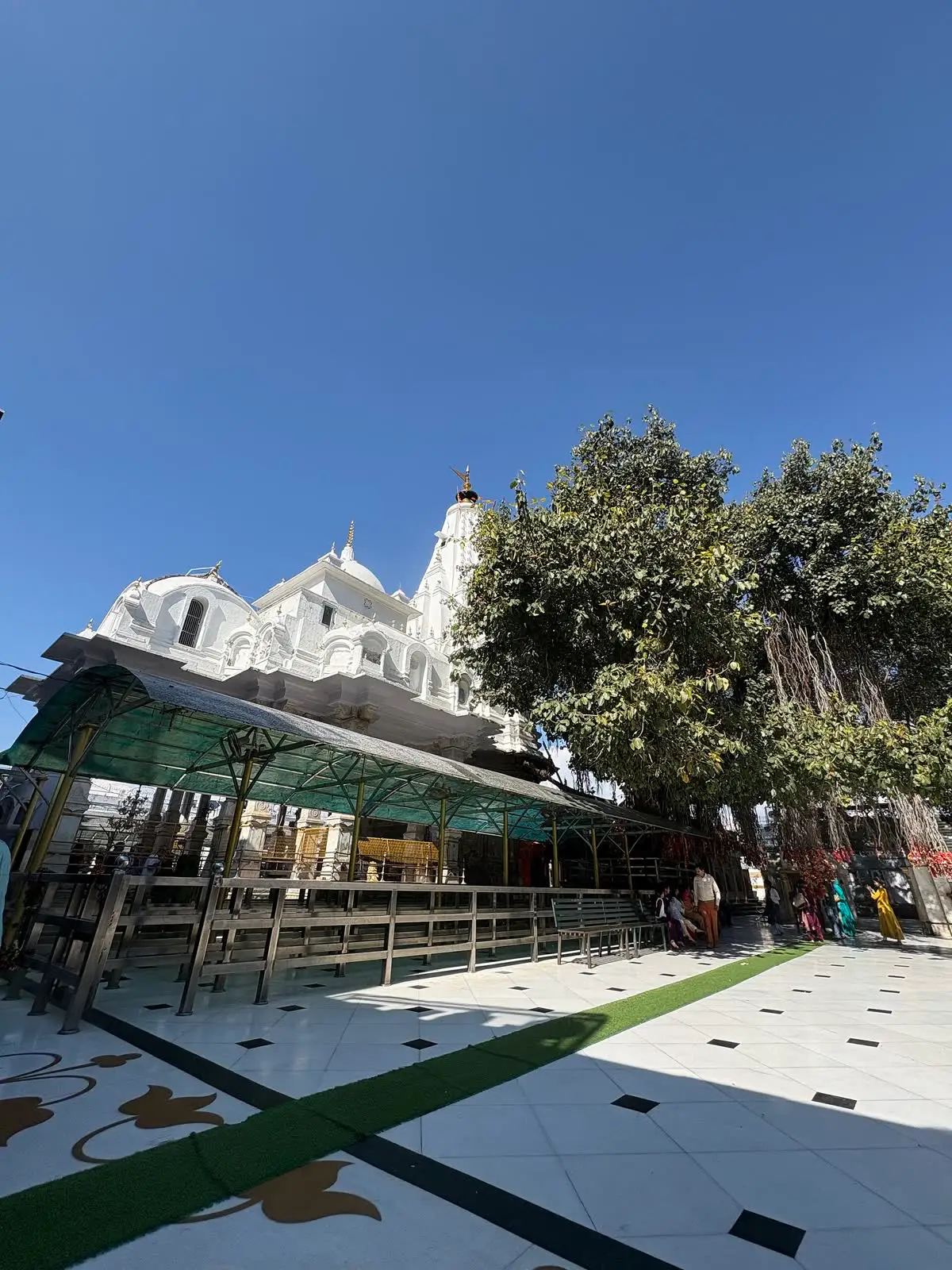
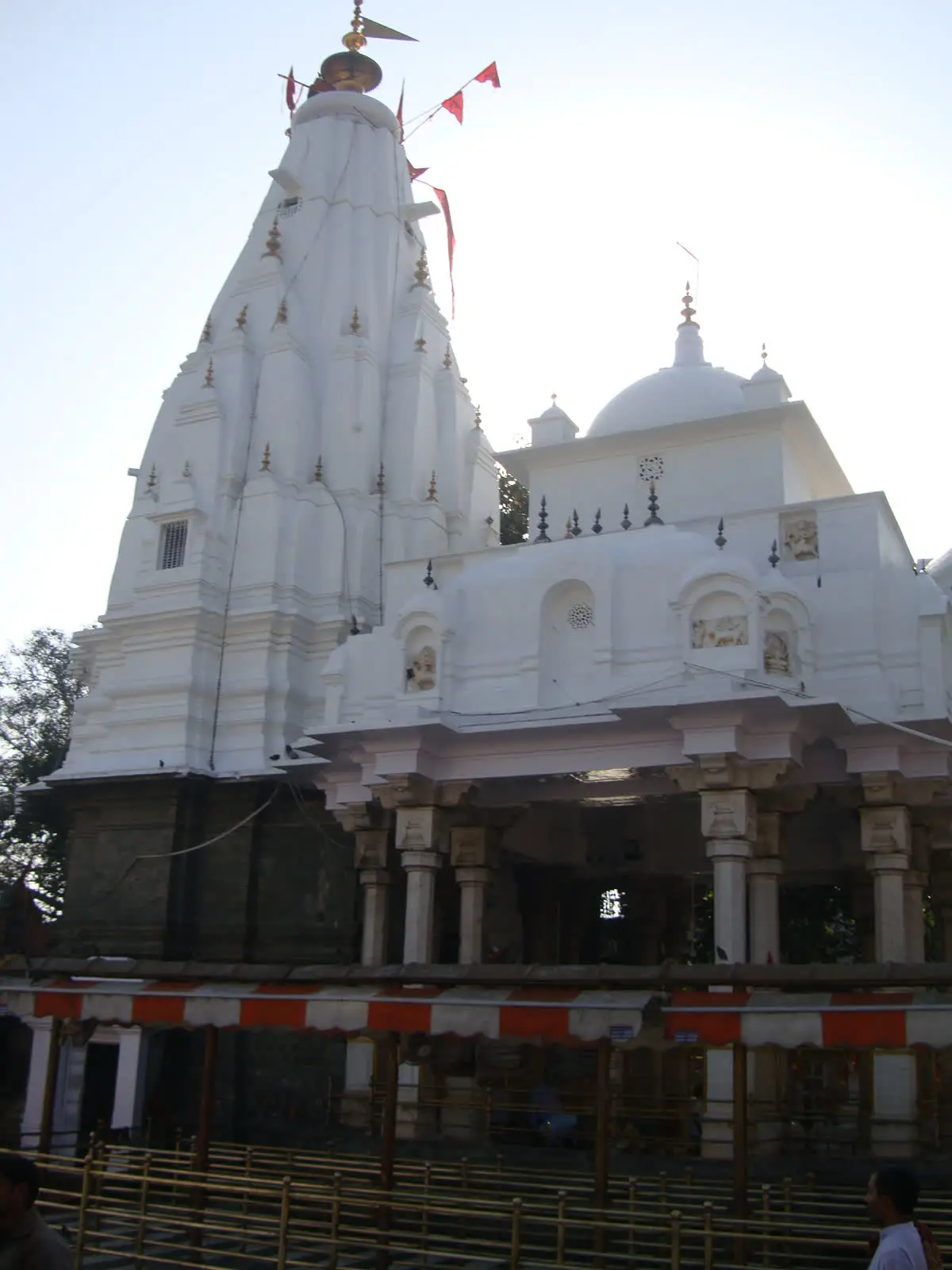
The temple that stands today is a relatively modern structure in engineering terms, rebuilt in the twentieth century after the catastrophe described in the next section, but its layout follows the older mediaeval pattern still visible at other regional shrines: a compact garbhagriha (inner sanctum) housing the pindi, a mandapa (assembly hall) before it where pilgrims gather for darshan and aarti, and an outer courtyard ringed by smaller shrines, including that of Bhairavnath, a shrine to Lord Ganesha, and often a Shivalinga, since Shakta and Shaiva worship at these sites tend to be practised together rather than kept doctrinally separate. The temple's spire (shikhara) is gilded, a detail that recalls - perhaps not coincidentally - the immense quantities of gold and precious offerings this shrine is recorded to have possessed across its long history, offerings that repeatedly made it a target for plunder, as we will see below.
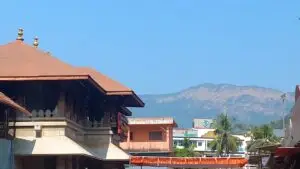
The temple's setting adds its own atmosphere to the experience of darshan: it sits at a modest elevation with views toward the Dhauladhar range, the outer wall of the Himalaya that rises with unusual abruptness in this part of Himachal Pradesh, so that pilgrims often find themselves looking from a warm, incense-filled courtyard directly toward snow-capped peaks in the middle distance, a juxtaposition many describe as part of what makes this particular pilgrimage memorable.
A History of Plunder and Rebuilding
The historical record of Brajeshwari Devi Temple reads, at points, more like a chronicle of conquest than a chronicle of worship - and yet the temple's survival through all of it is precisely why devotees consider it so potent. Mediaeval Kangra was renowned across northern India for the sheer accumulated wealth of this shrine: centuries of royal patronage, merchant offerings and pilgrim donations had filled its treasury with gold, jewels and precious stones, a reputation that reached well beyond the Himalayan foothills and, in time, attracted the attention of invaders from beyond the subcontinent.
The most infamous of these episodes came in 1009 CE, when Mahmud of Ghazni, having already raided several major temple towns of northern India, marched on Nagarkot and plundered the temple of what contemporary and later chronicles describe as an almost unimaginable quantity of gold, silver and jewels. This was not an isolated act; historical accounts describe the temple being ransacked on more than one occasion across the following centuries by different raiding forces drawn by its legendary riches. In 1360, the Delhi Sultan Feroz Shah Tughlaq is likewise recorded to have plundered and damaged the shrine during a campaign into the hill states. Each time, the temple was restored by local rulers and devoted communities, its worship resuming even where its treasury had been emptied.
A significant phase of restoration came under the Mughal period, when the temple is recorded to have been rebuilt with support connected to the era of Emperor Akbar, and later the temple and its fortunes were closely tied to the Katoch dynasty of Kangra, particularly under Maharaja Sansar Chand in the eighteenth century, a ruler celebrated for his patronage of the arts and of this shrine in particular, restoring much of its ceremonial grandeur after periods of decline.
The most dramatic modern chapter in this history is the Kangra earthquake of 4 April 1905, one of the deadliest seismic events recorded in the western Himalaya, which devastated Kangra town and the surrounding valley and razed the Brajeshwari Devi Temple to the ground along with a great many other structures in the region. Remarkably, reconstruction began almost immediately: a Kangra Restoration Committee was formed, and - according to widely repeated local and historical accounts - a new temple structure was raised on the same sacred spot within the same year, a testament to how central this shrine remained to the identity and resilience of the local community even amid widespread devastation elsewhere in the valley. The temple visible today is substantially the result of this early twentieth-century rebuilding, subsequently maintained and refurbished, though the pindi at its heart is held to be the same self-manifest form worshipped continuously since long before any of these episodes of destruction and renewal.
Festivals, Melas and the Unique Pind Ghee of Makar Sankranti
Brajeshwari Devi's ritual calendar follows the wider rhythm of Shakta worship across northern India, but it also carries at least one custom found almost nowhere else in quite the same form.
Navratri - both the spring (Chaitra) and autumn (Sharad) observances - draws the largest crowds of the year, with the temple decorated, extended darshan hours in effect, and continuous chanting and aarti through the nine nights. Tuesdays and Sundays are considered especially auspicious for visiting Devi temples in this region generally, and many local devotees time their visits accordingly even outside the festival calendar.
The most distinctive observance, however, belongs to Makar Sankranti, typically falling in the second week of January. According to local tradition connected to the goddess's mythology, Sati's body bore burns from the fire of her self-immolation, and it is said that ghee (clarified butter) was applied to soothe those wounds - a story that the temple re-enacts each year in a ritual unique to this shrine. In the days around Makar Sankranti, large quantities of desi ghee are washed repeatedly - in some accounts as many as 101 times - in the cold water of a well within the temple precincts until it takes on the texture of fresh butter (makhan). This freshly prepared butter is then applied to the pindi of the goddess, and the temple observes roughly a week of festivities around this rite before the butter-anointed prasad is distributed to devotees. Pilgrims travelling specifically to witness or take part in this custom should note that exact dates shift slightly year to year with the Makar Sankranti calendar and are best confirmed locally or with the temple trust in advance.
Beyond these major observances, smaller melas (fairs) gather around the temple through the year, particularly in the months bridging the two Navratri seasons, when the old town of Kangra becomes busy with pilgrim traffic, stalls selling prasad, bangles, shawls and devotional items, and the general festive commerce that has surrounded major Shakti Peethas for centuries.
| Occasion | Approximate Timing | Notable Observance |
|---|---|---|
| Chaitra Navratri | March-April | Nine nights of continuous worship, special decoration, larger crowds |
| Sharad Navratri | September-October | The principal autumn Navratri, heaviest pilgrim footfall of the year |
| Makar Sankranti | Second week of January | The Pind Ghee ritual - repeated washing of ghee into butter, applied to the pindi |
| Regular weekly worship | Every Tuesday and Sunday | Considered especially auspicious days for darshan by local devotees |
Dates for Navratri and Sankranti shift slightly each year according to the lunisolar calendar; pilgrims planning a visit around any of these occasions should verify exact dates for the year of travel with the temple trust or a current regional panchang.
Darshan and Aarti Timings
Like most major Shakti Peethas, Brajeshwari Devi Temple observes an extended daily schedule that expands further during festival periods. Typical timings reported by the temple and regional tourism authorities are as follows, though pilgrims should always confirm current hours locally, since they can shift seasonally and around major festivals.
| Season | Typical Opening Hours | Aarti Timings (approximate) |
|---|---|---|
| Summer months | Around 5:00 AM to 9:00 PM | Morning aarti near 5:30 AM; evening aarti near 8:30 PM |
| Winter months | Around 6:30 AM to 8:00 PM | Timings adjusted slightly earlier for evening aarti |
Timings, fees and travel details checked against official sources in October 2026 are in Plan Your Visit below.
During Navratri and Makar Sankranti, hours are generally extended and the mandapa remains open later into the night to accommodate the larger crowds; devotees intending an early-morning or late-evening darshan, particularly outside these festival windows, are advised to check the current schedule with the temple management a day or two ahead, since timings are subject to periodic revision.
How to Reach Brajeshwari Devi Temple
Kangra town, where the temple stands, is well connected to the rest of Himachal Pradesh and to the plains, though the final approach for most travellers passes through nearby Dharamshala, the better-known hill town roughly twenty kilometres away.
| Mode | Details |
|---|---|
| By Air | The nearest airport is Kangra Airport, also called Gaggal Airport (IATA: DHM), roughly 10-13 km from the temple, with regular flights connecting to Delhi and Chandigarh. Taxis and local buses run from the airport into Kangra town. |
| By Train | Kangra railway station, on the narrow-gauge Kangra Valley Railway between Pathankot and Joginder Nagar, lies only about 2 km from the temple, with several daily services. Travellers arriving by broad-gauge trains should disembark at Pathankot Junction, roughly 85 km away, and continue onward by road or the narrow-gauge line. |
| By Road | Kangra is connected by regular bus services to Dharamshala, Pathankot, Chandigarh and Delhi. The drive from Dharamshala takes under an hour; from Chandigarh it is a scenic but longer mountain drive of several hours, best undertaken in daylight. |
Most pilgrims combine a Brajeshwari Devi visit with a stay in Dharamshala, given its far larger range of hotels, restaurants and onward transport options, using it as a comfortable base from which to make the short trip down to Kangra town for darshan.
The Kangra Devi Circuit: Jwalamukhi, Chamunda and Chintpurni
Brajeshwari Devi is only one node, albeit a central one, in what devotees across northern India refer to informally as the Kangra Devi circuit - a cluster of four major Shakti temples within a relatively compact stretch of Himachal Pradesh, traditionally visited together by pilgrims undertaking a dedicated Devi yatra through the region.
The other principal shrines in this circuit are Jwalamukhi, where the goddess manifests as an eternal natural flame rather than an idol or pindi, and which we cover in full in our guide to the Jwalamukhi Jwala Ji Temple; Chamunda Devi, set beside the Baner river near Palampur, worshipped in her fierce form associated with the slaying of the demons Chanda and Munda; and Chintpurni, home to the goddess as Chhinnamastika, discussed in depth in our companion piece on the Chintpurni Chhinnamastika Temple.
| Temple | Approximate Distance from Kangra | Principal Form Worshipped |
|---|---|---|
| Brajeshwari Devi (Kangra) | - | Pindi form; Sati's left breast |
| Jwalamukhi | Roughly 30-35 km | Eternal flame; Sati's tongue |
| Chamunda Devi | Roughly 15-20 km | Fierce form beside the Baner river |
| Chintpurni | Roughly 60-70 km | Chhinnamastika; a Shakti Peetha of the feet |
Many pilgrims complete this circuit over two to three days, using Dharamshala, Kangra or Palampur as a base and hiring a taxi for the full loop, since public transport between the smaller towns can be infrequent. Undertaken slowly, with time given to each shrine rather than rushed between them, the circuit offers a rare, concentrated encounter with several distinct faces of the goddess within a single Himalayan valley.
Nearby Attractions and Where to Stay
Kangra town itself holds more than its central temple. The ruins of Kangra Fort, one of the oldest and largest forts in the Himalayan foothills, stand a short distance away and are well worth an unhurried visit, particularly for the historical continuity they offer with the temple's own turbulent past - the fort, like the temple, was repeatedly besieged and plundered across the centuries, including by the same Mahmud of Ghazni campaign of 1009 CE. The Kangra Art Museum in the town preserves miniature paintings from the celebrated Kangra school of art, along with sculpture, textiles and coins recovered from the region's long history.
For accommodation, most travellers base themselves in Dharamshala or its upper reaches around McLeod Ganj, both of which offer a full range of guesthouses, mid-range hotels and a handful of more premium properties, along with easy onward access to Kangra, Palampur and the wider Devi circuit. Kangra town itself has simpler lodging options closer to the temple, suited to pilgrims who prefer to stay near the shrine itself, particularly during festival periods when early darshan is a priority. Palampur, roughly an hour further into the valley, offers a quieter, greener base amid tea gardens, convenient for those combining the Devi circuit with a visit to Chamunda Devi.
Why Devotees Visit: Faith, History and Continuity
For many pilgrims, the pull of Brajeshwari Devi is not only devotional but historical in a way few other temples can match. To stand before her pindi is to stand at a site that has been worshipped, plundered, rebuilt, shattered by an earthquake and rebuilt again - and to recognise that none of these disruptions ever actually interrupted worship for long. Devotees often describe this endurance itself as a teaching: that the goddess's presence does not depend on gold, on architecture, or even on an unbroken building, but on the ground she is said to have chosen and the sincerity of those who continue to come to her.
Locally, she is approached for protection of the home and family, for courage in the face of difficulty (echoing the thunderbolt of her name), and for healing - an association reinforced by the Makar Sankranti butter ritual and its story of soothing the goddess's own wounds. Mothers bring young children for their first hair-cutting ceremony (mundan) here, as is common at many Devi temples across northern India, and newly married couples frequently visit for blessings early in their married life. Those who wish to understand how this local, place-bound devotion connects to the broader theology of the Divine Mother across Hindu tradition may find our guide to Adi Parashakti, the Supreme Divine Mother a useful companion reading, since Shakti Peethas such as this one are best understood as particular, embodied windows onto that larger, formless principle.
Plan Your Visit to Brajeshwari Devi: Timings, Tickets and Travel
The details below were checked on 3 October 2026 against the sources listed under each table. Timings and fees change on festival days, eclipses and special occasions, so confirm with the temple before you travel.
Visiting more than one Devi temple in the Kangra and Una hills? Our Himachal Devi temple circuit sets out the order, distances and days for Naina Devi, Chintpurni, Jwalamukhi, Brajeshwari and Chamunda.
Darshan and Aarti Timings
| Information | Details |
|---|---|
| Temple hours | Opens at about 5:00 to 6:00 am and closes at about 8:00 to 9:00 pm, depending on season. Confirm locally. |
| Midday break | About 12:00 to 12:30 pm |
| Mangal aarti | About 5:00 to 6:00 am, depending on season. Confirm locally. |
| Evening aarti | About 6:30 to 8:00 pm, depending on season. Confirm locally. |
| Langar | Free, twice a day: about 12:30 to 2:30 pm and 7:30 to 9:00 pm. Confirm locally. |
Sources: Incredible India (Ministry of Tourism): Brajeshwari Devi Temple, Kangra Temples, Govt of Himachal Pradesh: Shri Bajreshwari Mata Temple Nagar ..., District Kangra, NIC (hpkangra.nic.in): Shri Bajreshwari Devi Temple.
Tickets, Darshan Options and Sevas
| Option | Price | Notes |
|---|---|---|
| Entry | Free | Darshan parchi booking and e-puja are offered on the Kangra Temples portal. |
Entry and darshan are free. Free langar is served twice a day. The Kangra Temples portal (Government of Himachal Pradesh) offers darshan parchi booking, e-puja and live darshan for Brajeshwari.
Sources: Incredible India (Ministry of Tourism): Brajeshwari Devi Temple, Kangra Temples, Govt of Himachal Pradesh: Shri Bajreshwari Mata Temple Nagar ..., District Kangra, NIC (hpkangra.nic.in): Shri Bajreshwari Devi Temple.
How to Reach Brajeshwari Devi
Open Brajeshwari Devi in Google Maps for live directions.
| Mode | Nearest point | Distance to the temple |
|---|---|---|
| Air | Kangra (Gaggal) Airport | about 9 km |
| Rail | Kangra station (narrow gauge); Pathankot Junction is the broad gauge railhead | Kangra station about 3 to 11 km; Pathankot about 85 to 90 km |
Sources: District Kangra, NIC (hpkangra.nic.in): Shri Bajreshwari Devi Temple, Incredible India (Ministry of Tourism): Brajeshwari Devi Temple.
Approximate distances and journey times from the cities most pilgrims start from. Road times assume normal traffic; festival weekends take longer.
| From | By road | Road time | Train or flight |
|---|---|---|---|
| Dharamshala / McLeod Ganj | about 20 km | Gaggal airport is about 9 km from the temple | |
| Pathankot | about 85 to 90 km | Pathankot Junction (broad gauge) | |
| Jwalamukhi | about 30 to 35 km |
Sources: District Kangra, NIC (hpkangra.nic.in): Shri Bajreshwari Devi Temple, Incredible India (Ministry of Tourism): Brajeshwari Devi Temple, District Kangra, NIC: Kangra Pilgrimage.
The temple is in Kangra town near Kangra Fort, between the Banganga and Majhi rivers. It is connected by road to major towns in Himachal Pradesh.
When to Go and How Long to Allow
October to March is pleasant. Navratri and Makar Sankranti draw large crowds. Temperatures in September and October range from about 10 to 33 °C.
Sources: District Kangra, NIC (hpkangra.nic.in): Shri Bajreshwari Devi Temple, Incredible India (Ministry of Tourism): Brajeshwari Devi Temple.
Prasadam, Annadanam and Where to Stay
Free langar is served twice a day. Prasad is available at the temple.
Source: District Kangra, NIC (hpkangra.nic.in): Shri Bajreshwari Devi Temple.
Temples and Places Near Brajeshwari Devi
- Bagalamukhi Temple, near Kotla Fort / Kangra Fort: Listed among the Kangra pilgrimage temples
- Jwalamukhi Temple (about 30 to 35 km): Part of the Kangra Devi temple circuit
- Chamunda Devi Temple: Near Palampur and Dharamshala, part of the Kangra Devi temple circuit
Source: District Kangra, NIC: Kangra Pilgrimage.
Frequently Asked Questions
What is the Brajeshwari Devi Temple famous for?
It is famous as one of the fifty-one Shakti Peethas, the site where Sati's left breast is believed to have fallen, and for its long, turbulent history of repeated plunder - most notably by Mahmud of Ghazni in 1009 CE - followed each time by rebuilding. It is also known for the unique Makar Sankranti ritual in which ghee is churned into butter and applied to the goddess's pindi.
Is Brajeshwari Devi the same as Jwalamukhi?
No, though the two are closely linked and only about fifty kilometres apart in Kangra district. Brajeshwari Devi is worshipped as a pindi and associated with Sati's breast, while Jwalamukhi is worshipped as an eternal natural flame and associated with Sati's tongue. Some older regional lists vary slightly on these attributions, which is why pilgrims often visit both temples as a linked pair rather than treating either as a substitute for the other.
What form does the goddess take at this temple?
She is worshipped as a pindi, a naturally occurring, unhewn stone considered self-manifest rather than sculpted, draped in red cloth and adorned with a ceremonial silver or gold face mask (mukut) rather than represented as a carved idol.
Why was the temple plundered so many times in history?
Mediaeval Kangra's temple was renowned across northern India for its immense accumulated wealth in gold, silver and jewels, gathered over centuries of royal and pilgrim patronage. This reputation made it a repeated target for invading forces, most famously Mahmud of Ghazni in 1009 CE and later Feroz Shah Tughlaq in 1360, though the temple was rebuilt and re-endowed after each episode.
What happened to the temple in the 1905 earthquake?
The catastrophic Kangra earthquake of 4 April 1905 razed the temple to the ground, along with much of Kangra town. According to widely repeated local accounts, reconstruction began swiftly under a Kangra Restoration Committee, and a new temple structure stood on the same sacred site again within the same year.
What is the Pind Ghee ritual at Makar Sankranti?
It is a distinctive local rite in which large quantities of desi ghee are repeatedly washed in cold well water until they take on a buttery texture, which is then applied to the goddess's pindi around Makar Sankranti in mid-January. The ritual is connected to a local tradition that butter was originally applied to soothe wounds from Sati's self-immolation, and the associated festivities continue for about a week.
How do I reach Brajeshwari Devi Temple from Delhi?
The most common route is to fly or take an overnight train or bus to the Dharamshala-Kangra region, then travel the short remaining distance by road or narrow-gauge rail into Kangra town, where the temple stands about 2 km from the local railway station. Many travellers fly into Kangra (Gaggal) Airport directly from Delhi.
Are there dress or conduct guidelines for visiting?
As with most Devi temples in Himachal Pradesh, modest dress is expected, footwear is removed before entering the sanctum area, and photography inside the inner sanctum is typically restricted; devotees are advised to confirm current rules with temple staff on arrival, since these can be updated.
Can Brajeshwari Devi be combined with other temples in one trip?
Yes - this is, in fact, the traditional way many pilgrims approach the region, visiting Brajeshwari Devi alongside Jwalamukhi, Chamunda Devi and Chintpurni as a single circuit, often called the Kangra Devi circuit, typically spread across two to three days.
Is there an entry fee or special darshan ticket?
General darshan at Brajeshwari Devi Temple is typically free of charge, as with most Shakti Peethas in this region, though donation counters exist for those wishing to contribute toward the temple's upkeep and its associated dharamshalas (pilgrim rest houses). Timings and any special arrangements during festivals are best confirmed with the temple trust directly.
For readers wishing to go further into the surrounding history and pilgrimage geography, the Wikipedia entry on Bajreshwari Mata Temple, Kangra offers additional background as further reading.
To sit before the pindi at Nagarkot, amid a history of plunder, earthquake and endless rebuilding, is to feel how little the goddess's presence depends on stone or gold, and how entirely it depends on devotion returning again and again to the same sacred ground. If her story has stirred something in you, Musinara's channel carries 432 Hz recordings of Devi mantras and stotras suited to quiet evening listening - you are warmly invited to listen on YouTube and carry a little of Kangra's thunderbolt grace into your own daily practice.
Related reading
- Bhramaramba Devi Temple, Srisailam: The Complete Guide to the Bee Goddess's Shakti Peetha
- Naina Devi Temple: A Complete Guide to the Shakti Peetha of Bilaspur
- Mansa Devi & Chandi Devi: The Hilltop Goddesses of Haridwar (with Maya Devi Shakti Peetha)
- Ambaji Temple: The Shakti Peetha Where the Heart of Sati Fell (Gujarat)
Official and Reference Sources
- Shri Bajreshwari Mata Temple - Kangra Temples portal, Government of Himachal Pradesh
Planning a pilgrimage? All twenty Devi temple guides on this site are arranged by region, with practical circuits, in Devi Temples of India. For where each site sits in the disputed lists of 51, 52 and 108, see the Shakti Peeth list.