Introduction to Maa Chinnamasta
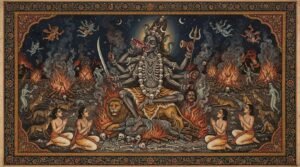
Maa Chinnamasta is the sixth and most visually striking of the Das Mahavidyas. She is depicted holding her own severed head in one hand while three streams of blood flow from her neck - one into her own mouth and two into the mouths of her attendants, Dakini and Varnini. She stands upon the copulating forms of Kamadeva (desire) and Rati (pleasure).
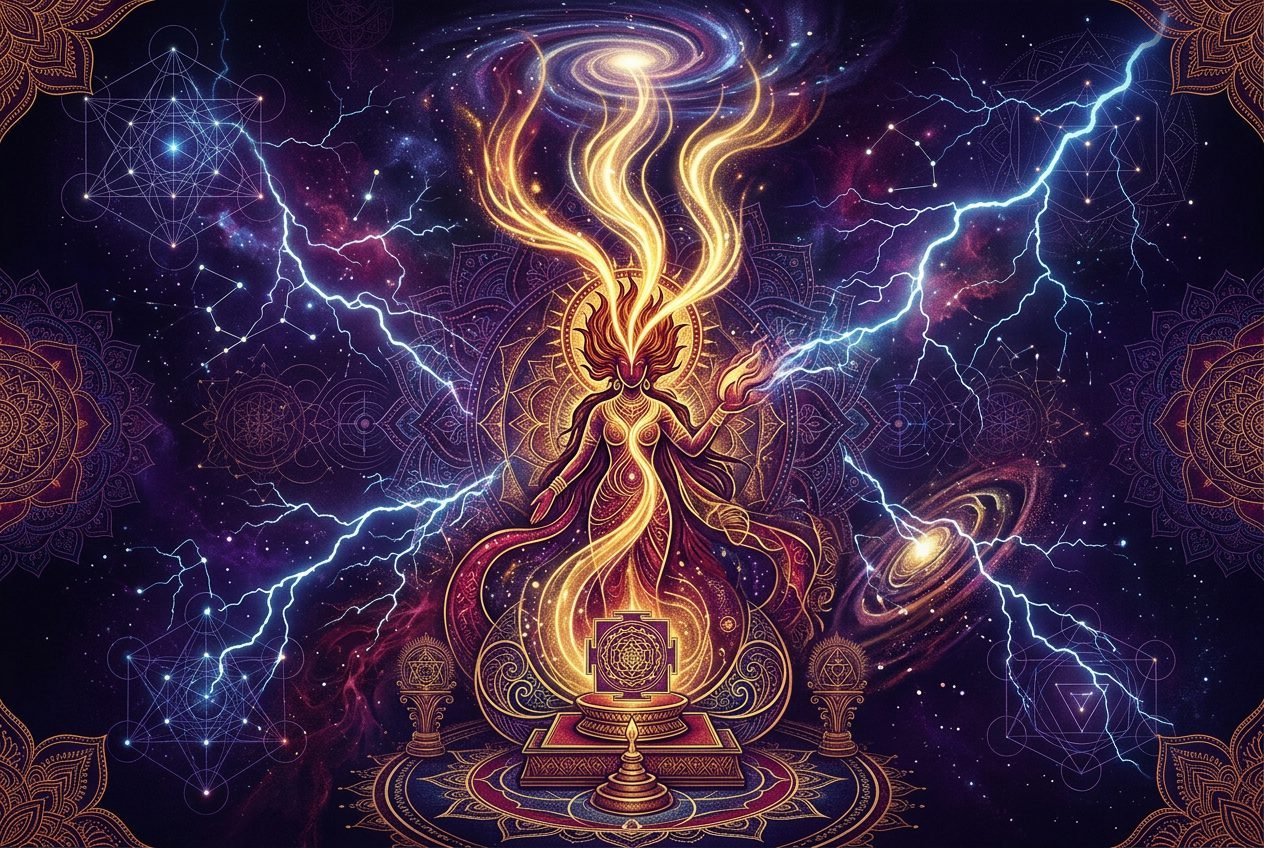
This powerful imagery symbolizes the most profound spiritual truths: the courage to sacrifice the ego-self, the simultaneous nature of creation and destruction, and the free flow of prana (life force) through the three main nadis (energy channels) - Ida, Pingala, and Sushumna. Chinnamasta represents the awakening of Kundalini energy that rises through the central channel, 'cutting off' the head of ordinary consciousness to reveal transcendent awareness.
Also known as Prachanda Chandika (the fierce fierce one), she embodies the radical teaching that true spiritual liberation requires the 'death' of the false self. Her worship is considered advanced Tantric practice and links to the most dramatic spiritual breakthroughs.
Formation and Incarnation
The Pranatosha Tantra narrates that once Parvati was bathing in the Mandakini River with her attendants Dakini and Varnini. After bathing, the attendants became hungry and asked for food. Parvati asked them to wait. But they persisted. In an act of supreme self-sacrifice, Parvati severed her own head with her fingernail, and the three streams of blood that emerged fed all three - the two attendants and herself through her severed head.
Another tradition from the Shakta texts describes Chinnamasta as the form of the goddess that appears at the moment of Kundalini awakening - when the energy pierces the Vishuddha chakra (throat), the practitioner's ordinary ego-consciousness is 'cut off' and replaced by cosmic awareness. The self-decapitation is thus a metaphor for the most intense form of spiritual transformation.
Importance and Benefits
Chinnamasta worship is sought for: dramatic spiritual breakthroughs and Kundalini awakening; complete ego dissolution and self-transcendence; courage for radical self-transformation; overcoming deep attachments and addictions; development of selfless service (she feeds others with her own life-blood); control over sexual energy (she stands on Kama-Rati); and breaking through spiritual stagnation.
She is the Mahavidya of radical transformation - not gradual, gentle change. But sudden, complete revolution of consciousness. Her worship is not for the faint-hearted. But for those ready to completely surrender the false self.
Beej Mantra of Maa Chinnamasta
| Sanskrit | ॐ श्रीं ह्रीं क्लीं ऐं वज्र वैरोचनीये हुं हुं फट् स्वाहा |
|---|---|
| Hindi | ओम् श्रीं ह्रीं क्लीं ऐं वज्र वैरोचनीये हुं हुं फट् स्वाहा |
| Transliteration | Om Shreem Hreem Kleem Aim Vajra Vairochaneeyai Hum Hum Phat Swaha |
| Meaning | I invoke the thunderbolt goddess Vajra Vairochani with prosperity (Shreem), grace (Hreem), desire mastery (Kleem), and knowledge (Aim). With fierce energy (Hum Hum), I cut through obstacles (Phat) and offer into sacred fire (Swaha). |
This elaborate mantra invokes Chinnamasta as Vajra Vairochani - 'She who shines like a thunderbolt.' It combines four major bija mantras, making it one of the most powerful Mahavidya mantras. Traditionally practiced for Kundalini awakening and ego dissolution.
Due to its intensity, this mantra should be approached with preparation and ideally under guidance. Best chanted at midnight facing south, using a rudraksha mala. Red flowers and camphor are the primary offerings.
Mool Mantra of Maa Chinnamasta
| Sanskrit | ॐ श्रीं ह्रीं ऐं छिन्नमस्तायै नमः |
|---|---|
| Hindi | ओम् श्रीं ह्रीं ऐं छिन्नमस्तायै नमः |
| Transliteration | Om Shreem Hreem Aim Chinnamastayai Namah |
| Meaning | I bow to Chinnamasta, invoking prosperity (Shreem), grace (Hreem), and wisdom (Aim). |
This simpler form is more accessible for regular practice. It invokes Chinnamasta's blessings without the full intensity of the Vajra Vairochani mantra. Suitable for those wanting to connect with her energy of self-transcendence gradually.
Core Sanskrit Root Words
Chinnamasta's symbolism is deeply connected to the yogic understanding of energy channels and consciousness.
- छिन्न (Chinna) - Cut, severed - the cutting of ego-consciousness
- मस्ता (Masta) - Head - representing the ego/individual identity
- वज्र (Vajra) - Thunderbolt/diamond - indestructible awakened consciousness
- नाडी (Nadi) - Energy channel - the three streams represent Ida, Pingala, Sushumna
- प्राण (Prana) - Life force - the blood streams represent flowing prana
- कुण्डलिनी (Kundalini) - Coiled energy at the spine's base that rises in awakening
- विशुद्ध (Vishuddha) - Throat chakra - where Chinnamasta's 'cutting' occurs
Major Temples
Chintpurni Temple (Una, Himachal Pradesh)
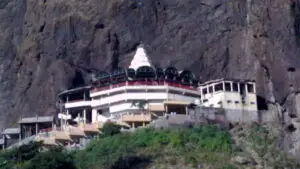
One of the most important Shakti Peethas, where the forehead (masta) of Sati is believed to have fallen. The temple is one of the seven major Shakti Peethas of Himachal Pradesh and attracts millions of devotees annually, especially during Navaratri.
- By Air: Chandigarh Airport (120 km) or Kangra Airport (95 km).
- By Train: Una Himachal station (12 km). Regular trains from Delhi and Chandigarh.
- By Road: NH-503 from Chandigarh (120 km). Regular bus services from Delhi, Chandigarh, and Pathankot.
Rajrappa Temple (Ramgarh, Jharkhand)
A powerful Chinnamasta temple at the confluence of the Damodar and Bhairavi rivers. The temple is known for intense Tantric worship and is one of the most important Shakti shrines in eastern India. The natural setting adds to its spiritual energy.
- By Air: Birsa Munda Airport, Ranchi (80 km).
- By Train: Ramgarh Cantt station (25 km). Regular trains from Ranchi and Kolkata.
- By Road: NH-33 from Ranchi (80 km). Local buses and taxis available.
Chinnamastika Temple (Rajnagar, Bihar)
An ancient temple near Nalanda, believed to be established during the Pala dynasty period. The temple maintains traditional Tantric worship practices and is an important pilgrimage site during Navaratri.
- By Air: Jay Prakash Narayan Airport, Patna (90 km).
- By Train: Rajgir station (15 km) or Bihar Sharif (20 km).
- By Road: Near the ancient Nalanda University ruins. Accessible from Patna via NH-31.
Festivals and Celebrations
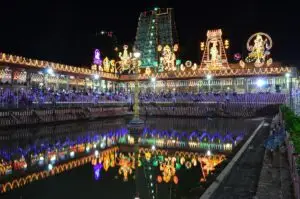
Chinnamasta receives worship most intensely during the sixth night of Navaratri, and during solar and lunar eclipses (believed to be particularly potent times for her mantras). The Chintpurni Mela during Navaratri attracts millions of devotees.
Makar Sankranti (January 14) is also important for Chinnamasta worship, as it represents the sun's transition - a cosmic 'cutting' of one cycle and beginning of another. Advanced practitioners perform all-night Chinnamasta sadhana during these celestial events.
Listen to the Mantra
Watch the mantra video on YouTube
🔱 Explore All Ten Mahavidyas
The Das Mahavidya are the ten aspects of the Divine Mother. Continue your journey through each Wisdom Goddess:
- Maa Kali - The First Mahavidya
- Maa Tara - The Second Mahavidya
- Maa Tripura Sundari - The Third Mahavidya
- Maa Bhuvaneshwari - The Fourth Mahavidya
- Maa Bhairavi - The Fifth Mahavidya
- Maa Dhumavati - The Seventh Mahavidya
- Maa Bagalamukhi - The Eighth Mahavidya
- Maa Matangi - The Ninth Mahavidya
- Maa Kamala - The Tenth Mahavidya
Frequently Asked Questions
Why did Maa Chinnamasta cut her own head?
The self-decapitation symbolizes the ultimate sacrifice of ego. The three blood streams represent prana flowing through the three nadis (Ida, Pingala, Sushumna). It teaches that spiritual awakening requires the 'death' of ego-consciousness.
Is Chinnamasta worship dangerous?
No deity worship is inherently dangerous when approached with devotion. However, Chinnamasta sadhana is considered advanced due to its powerful effect on Kundalini energy. Guru guidance is traditionally recommended.
What does standing on Kama-Rati mean?
Kamadeva (desire) and Rati (pleasure) under Chinnamasta's feet symbolize mastery over desire and sexual energy. She redirects this powerful energy upward toward spiritual awakening rather than suppressing it.
Where is the most famous Chinnamasta temple?
Chintpurni Temple in Una, Himachal Pradesh, is the most famous and well-visited. It is one of the major Shakti Peethas. Rajrappa in Jharkhand is the most important Tantric Chinnamasta site.
What is the Beej Mantra of Chinnamasta?
'Om Shreem Hreem Kleem Aim Vajra Vairochaneeyai Hum Hum Phat Swaha.' This elaborate mantra combines four major seed syllables, making it one of the most powerful Mahavidya mantras.
Can beginners worship Chinnamasta?
Beginners can start with the simpler 'Om Shreem Hreem Aim Chinnamastayai Namah.' The full Vajra Vairochani mantra is traditionally for more experienced practitioners.
What is the connection to Kundalini?
The three blood streams represent the three main energy channels (nadis). The severed head represents ego-consciousness being 'cut off' when Kundalini pierces the throat chakra. Chinnamasta IS the Kundalini awakening experience.
What offerings are appropriate?
Red flowers, camphor, red cloth, honey, and pomegranate are traditional offerings. Fire ceremonies (havans) are especially appropriate given her connection to radical transformation.
Is Chinnamasta related to Buddhist Chinnamunda?
Yes, the Buddhist deity Chinnamunda (Vajrayogini) is closely related. Both depict self-decapitation and share Tantric symbolism. This is one of several Hindu-Buddhist Tantric connections.
When is the best time for Chinnamasta worship?
Midnight is most powerful. Solar and lunar eclipses are especially potent. The sixth night of Navaratri honours her. Use rudraksha mala, face south, and chant with complete concentration.
Part of the Das Mahavidya series. All ten wisdom goddesses, the origin story, their beej mantras and temple guides are collected in one place: Das Mahavidya: The Ten Wisdom Goddesses.