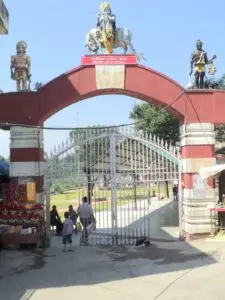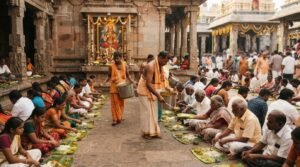
In the rolling, sun-baked hill country of Dharashiv district in Maharashtra, in a town that takes its very name from her, stands one of the most politically and spiritually consequential goddess temples in Indian history. The Tulja Bhavani Temple at Tuljapur is not merely a shrine of great antiquity and considerable architectural interest - though it is both - it is the temple most closely bound up with the rise of the Maratha empire, revered as kuldevi, family deity, by countless Maratha households and remembered above all as the goddess who is said to have placed a sword in the hands of Chhatrapati Shivaji Maharaj before he set out to build a kingdom. Few temples anywhere in India carry quite this weight of historical memory alongside their purely devotional significance.
This guide walks through the temple's place within the distinctive Maharashtrian tradition of the three-and-a-half Shakti Peethas, the legend of the demon who once tormented the sage's widow Anubhuti, the story - and the historical complexity - of the Bhavani sword associated with Shivaji, the temple's unusual daily rhythm of the goddess's rest and waking, the unique quadrangle known as Manik Chowk, and the practical matters of festivals, timings and travel. Readers exploring the wider Shakti Peetha tradition, or the goddess's role as slayer of Mahishasura that underlies so much of her iconography here, will find useful companion reading in our guide to the 51 Shakti Peethas and our account of the Mahishasura Mardini Stotram.
Who Is Tulja Bhavani?
Tulja Bhavani - often addressed simply as Bhavani Mata or Amba - is worshipped at Tuljapur as a swayambhu (self-manifested) form of the Devi, understood by most devotees as an aspect of Parvati and closely identified, in her iconography and legend, with Durga in her Mahishasuramardini form, the slayer of the buffalo demon. Her name is generally explained as deriving from tvarita, meaning swift, or from a related root suggesting the goddess who "comes quickly" to the aid of a devotee in distress - an etymology that fits closely with the central legend of her temple's founding, discussed below.
For a very large number of families across Maharashtra, and for many Rajput and other communities across western and central India as well, Tulja Bhavani holds the specific status of kuldevi - the hereditary family deity to whom major life events, from weddings to the naming of children, are traditionally reported and dedicated. This is a different, more intimate register of devotion than the pan-Indian reverence accorded to goddesses such as Durga or Kali; a kuldevi is approached as an ancestral protector bound to a specific lineage, and pilgrimage to her temple is often undertaken as an obligation of family continuity rather than purely personal piety. The temple's association with the Bhonsle clan, and through them with Chhatrapati Shivaji Maharaj, has made Tulja Bhavani perhaps the single most historically resonant kuldevi temple in the country.
The goddess is shown in her main sanctum image as ashtabhuja, eight-armed, seated rather than standing, an iconographic choice that distinguishes her somewhat from many other Mahishasuramardini images elsewhere in India, and is dressed daily in fresh silk and ornaments by the temple's priests as part of an elaborate schedule of ritual care discussed later in this guide.
The Legend of Anubhuti and the Demon Kukura
The temple's founding legend, as told at Tuljapur and recorded with some variation across regional Puranic sources, centres on a sage named Kardama and, following his death, his widow Anubhuti, who withdrew to this hill country to perform severe tapasya (penance) in her grief and devotion. During this period of austerity, she was harassed and threatened by a demon - named in most tellings Kukura (sometimes rendered Kukur, and in a smaller number of regional retellings associated with the name Matanga) - who sought to disrupt her penance and do her harm.
In her distress, Anubhuti called upon the Divine Mother, who is said to have appeared instantly - with the swiftness the name Tulja itself is thought to commemorate - mounted upon a lion, and to have slain the demon in defence of her devotee. Having delivered Anubhuti from this danger, the goddess is understood to have chosen to remain permanently on this hill, taking up residence at Tuljapur as Tulja Bhavani, available thereafter to any devotee who calls upon her with sincerity, just as she once answered the sage's widow.
As with many such foundational temple legends, the precise names and sequence of events vary somewhat between oral tradition, temple literature and the various regional Puranic sources that touch on Tuljapur, and devotees are encouraged to treat this as a broadly consistent core narrative rather than a single fixed text - a caution appropriate to most Shakta temple legends of this antiquity, and one best supplemented by the guidance of a temple priest or knowledgeable scholar for those wishing to explore the fuller textual variations.
One of the Three-and-a-Half Shakti Peethas of Maharashtra
While the pan-Indian network of fifty-one Shakti Peethas, tied to the scattered body of Sati, is the framework most widely known across India and discussed in our complete guide to the 51 Shakti Peethas, Maharashtra maintains its own distinct and much-loved regional tradition: the Saade Teen Shakti Peeth, the "three-and-a-half Shakti Peethas" particular to the state. Tulja Bhavani at Tuljapur is counted as one of these three full peethas, alongside Mahalakshmi at Kolhapur and Renuka Devi at Mahur (Matapur), with Saptashrungi near Nashik traditionally counted as the "half" peetha in the group.
This regional framework operates somewhat independently of the pan-Indian fifty-one-peetha network associated with Sati's body, reflecting instead a distinctly Maharashtrian devotional geography that has shaped pilgrimage patterns, temple architecture and popular memory across the state for centuries. Many Maharashtrian families structure a lifetime's pilgrimage aspirations around visiting all three-and-a-half of these sites, and Tulja Bhavani, given its historical prominence, is for many the first and most essential stop in that circuit.
The Legend of Shivaji Maharaj and the Bhavani Sword
No account of Tulja Bhavani is complete without the story that binds this temple most firmly to Indian history: the tradition that Chhatrapati Shivaji Maharaj, founder of the Maratha empire, received the blessing and, according to popular legend, a sword directly from the goddess before embarking on his campaigns to establish an independent Maratha kingdom in the seventeenth century. Shivaji is widely recorded, by Maratha court chronicles and popular memory alike, to have been a devoted worshipper of Bhavani, visiting Tuljapur to seek her blessing at pivotal moments in his career, and the goddess is remembered in Maratha tradition as having appeared to him in a dream or vision, urging him toward the founding of Swarajya, self-rule.
The specific tale of a sword gifted by the goddess - sometimes called the Bhavani talwar in popular retelling - occupies a particularly cherished place in Maratha folk memory, symbolising divine sanction for Shivaji's mission. It is worth noting, for readers interested in the historical record alongside the devotional tradition, that historians have long debated the exact provenance of any specific surviving sword associated with this legend; a sword popularly linked to Shivaji and known by the name Bhavani has at various times been housed outside India, and its precise identity and authenticity remain matters of historical discussion rather than settled fact. What is not in dispute is the depth and historical durability of the devotional tradition itself: Bhavani's blessing on Shivaji's sword remains one of the most widely told and deeply felt stories in all of Maratha religious memory, and the Bhonsle royal family's association with Tuljapur as their kuldevi temple continued long after Shivaji's own lifetime.
Devotees visiting Tuljapur today frequently connect this history directly to their own darshan, understanding a visit to the temple as, in some measure, walking in the footsteps of one of Indian history's most consequential rulers and his devotion to the Mother who, tradition holds, set his mission in motion.
This association has also shaped the temple's place in Maharashtrian public memory well beyond purely religious circles: Tuljapur features prominently in Marathi folk songs, powadas (ballads celebrating heroic deeds), and popular retellings of Shivaji's life, in which Bhavani's blessing is treated as inseparable from the founding of Swarajya itself. Successive generations of the Bhonsle dynasty, and later many other Maratha noble families who traced their own allegiance back to Shivaji's cause, continued to patronise and visit Tuljapur, reinforcing over time the temple's unusual dual identity as both a site of intense personal devotion and a monument to a specific, remembered moment in regional history.
The Movable Utsav Murti and the Goddess's Nidra
Tulja Bhavani's daily ritual life includes several distinctive practices that set the temple apart from many other major Devi shrines. Alongside the principal swayambhu image in the sanctum, the temple maintains a movable utsav murti - a smaller processional image used for certain daily rituals and taken in procession during festivals, a practice common at many older Hindu temples where the primary consecrated image itself is not moved.
Perhaps the most distinctive of the temple's daily customs concerns the goddess's rest. Temple tradition holds that at a designated hour each night, following the final aarti, the doors of the inner sanctum are closed so that the goddess may take her Nidra - her sleep or rest - much as a small number of other major Devi and Vishnu temples across India observe a comparable practice of ritually closing the sanctum for the deity's repose before the doors are reopened the following morning for the mangala aarti, the dawn awakening ritual. Devotees describe this nightly cycle of waking, worship and rest as a way of honouring the goddess not as a distant, abstract power but as a living presence whose daily rhythms of activity and repose are treated with the same reverence and intimacy as those of an honoured member of the household.
Daily Ritual Life and Offerings
The rhythm of worship at Tuljapur is unusually elaborate for a temple of its size, reflecting the depth of royal and popular patronage it has received across the centuries. Priests attached to the temple, drawn from families who have served the goddess across many generations, perform a sequence of daily sevas that includes bathing and dressing the image in fresh silk, offering naivedya (food offerings) at set hours, and conducting aarti at the principal junctures of the day - dawn, midday, and night. Devotees frequently sponsor a specific seva on a chosen day, whether to mark a birthday, an anniversary, or simply as an act of personal thanksgiving, and the temple trust maintains a published schedule of such sponsorable rituals for pilgrims wishing to participate more directly in the goddess's daily care rather than merely observing from the courtyard.
Offerings brought by pilgrims typically include a green sari (often called a khann or chunari in local usage), bangles, turmeric, vermilion, coconuts, and a garland of fresh flowers, mirroring offerings made at many other Devi temples across the Deccan and reflecting the goddess's identity as a married, auspicious mother-figure as much as a fierce protector. Many devotees also bring a small quantity of foodgrain or jaggery to be blessed and later distributed as prasad among family members who were unable to make the journey themselves, a practice that extends the sense of the goddess's blessing beyond the temple courtyard and into the household of every pilgrim who visits on their family's behalf.
Manik Chowk and the Temple's Architecture
The temple complex at Tuljapur has grown across many centuries of continuous worship and periodic royal patronage, including significant contributions traditionally associated with the Bhonsle rulers and other regional dynasties who sought the goddess's favour. Among its most distinctive architectural features is Manik Chowk, a spacious stepped quadrangle within the complex that serves as a gathering space for pilgrims and hosts a number of subsidiary shrines dedicated to other deities associated with the goddess and her attendant tradition.
Manik Chowk's stepped, tank-like design gives the temple complex a layered, almost fortress-like quality distinct from the soaring single-tower gopuram style more commonly associated with South Indian Devi temples; here the architecture reflects the more compact, defensively-minded temple building traditions of the Deccan hill country, shaped by centuries in which temples of considerable wealth needed also to withstand periods of regional instability. Pilgrims typically pass through or pause within Manik Chowk as part of their circumambulation of the wider temple precinct before proceeding to the main sanctum for darshan of the goddess herself.
Festivals: Navratri and Shakambhari at Tuljapur
Sharad Navratri, observed in the Hindu month of Ashwin (typically September-October), is the single largest festival at Tuljapur, drawing very large crowds of pilgrims, many of them fulfilling a family's kuldevi obligation to visit at least once during the nine nights. The goddess is elaborately adorned across the festival, and the final days culminate in observances echoing the wider Navadurga tradition of honouring different aspects of the goddess across the nine-night cycle.
Alongside Sharad Navratri, Tuljapur - in common with a number of other major Devi shrines across Maharashtra and the neighbouring Karnataka border region - observes a further Navratri-linked festival period associated with Shakambhari Devi, the aspect of the goddess particularly connected with the provision and nourishment of food and vegetation, typically falling in the month of Paush (December-January) around Shakambhari Purnima. This second, quieter festival period is less widely known outside the region but is observed with genuine devotion locally, and pilgrims planning a visit around either festival window are advised to confirm the specific dates for their year of travel with the temple trust, since the Hindu lunisolar calendar shifts these observances from year to year.
| Occasion | Approximate Timing | Notable Observance |
|---|---|---|
| Sharad Navratri | September-October | Nine nights of elaborate adornment; the temple's largest festival, very heavy pilgrim traffic |
| Shakambhari Navratri | December-January (Paush month) | Quieter regional observance honouring the goddess's nourishing aspect |
| Chaitra Navratri | March-April | Spring Navratri observance, celebrated with somewhat less scale than Sharad Navratri |
| Gudi Padwa | March-April | Maharashtrian new year, marked with special puja at the temple |
As with all festival dates set by the lunisolar calendar, pilgrims should verify exact timings for their year of travel directly with the Shri Tulja Bhavani Devasthan before finalising plans.
Darshan and Aarti Timings
The temple maintains long daily hours to accommodate pilgrims travelling from across Maharashtra and beyond, though - as noted above - the sanctum doors close for a period each night for the goddess's Nidra. Typical timings, as generally reported by the temple trust, are given below, though these should always be confirmed shortly before travel.
| Aspect | Typical Timing |
|---|---|
| General darshan hours | Approximately 5:00 AM to 10:00 PM daily, with the exact closing period for Nidra varying somewhat |
| Mangala aarti (morning awakening) | Early morning, generally the first ritual of the day |
| Evening aarti / Shej aarti (night rest) | Late evening, preceding the closing of the sanctum for the night |
| Special darshan | Often available during Navratri and other peak periods for an additional fee |
Timings, fees and travel details checked against official sources in October 2026 are in Plan Your Visit below.
Given the heavy pilgrim volume during Navratri in particular, visitors are strongly advised to check current queue arrangements and any temporary timing changes with the Devasthan's official channels before travelling.
What Is Changing at Tuljapur?
In June 2025 the Maharashtra government announced a ₹1,865 crore plan to develop the temple precinct and the town around it, with a foundation-laying ceremony planned for Navratri. Transport Minister Pratap Sarnaik said it should be finished within three to three and a half years. The same report put annual visitors to Tuljapur at over one crore. (Swarajya, 18 June 2025.)
We have not been able to confirm that construction has begun, so read this as an announced plan rather than a project under way.
How to Reach Tulja Bhavani Temple, Tuljapur
Open Tulja Bhavani Temple in Google Maps for live directions from where you are.
Tuljapur lies in Dharashiv (formerly Osmanabad) district in Maharashtra, and while the town itself is relatively compact, it is well served by nearby transport hubs.
| Mode | Details |
|---|---|
| By Air | The nearest airports with reasonable connectivity are at Solapur (roughly 45 km) with limited flights, and the larger airports at Aurangabad and Hyderabad, each several hours away by road; many pilgrims fly into Pune or Hyderabad and continue onward by road or rail. |
| By Train | Osmanabad (Dharashiv) railway station, roughly 19-20 km from Tuljapur, and the considerably larger Solapur Junction, roughly 45 km away with far more frequent long-distance connections, are the two most commonly used rail gateways; onward travel is by taxi or bus. |
| By Road | Tuljapur is well connected by state and national highway to Solapur, Osmanabad, Latur and Pune, with regular state transport and private bus services; the drive from Solapur takes roughly 1-1.5 hours, and from Pune approximately 5-6 hours. |
Given the town's relatively modest size and the limited direct rail and air connectivity, most pilgrims plan their journey around Solapur or Osmanabad as the practical gateway, with the final stretch completed by road.

Nearby Attractions and Where to Stay
Tuljapur and its surrounding region offer several points of interest for pilgrims extending their visit. The Naldurg Fort, a substantial hill fort with an unusual water-powered mechanism historically used to charge its dungeon moat, lies within a reasonably short drive and is of particular interest to visitors interested in Deccan military architecture. Solapur itself, the nearest major town with fuller transport links, offers additional temples, a fort, and a wider range of accommodation and dining options for pilgrims who prefer to base themselves there rather than in Tuljapur.
Accommodation directly in Tuljapur ranges from simple pilgrim dharamshalas, several affiliated with the temple trust, to a modest number of private lodges, with availability tightening considerably during Sharad Navratri. Given the relatively limited hotel capacity in the town itself, pilgrims travelling during peak festival periods are strongly advised to book well ahead, or to consider basing themselves in Solapur or Osmanabad and making a day trip to the temple.
Benefits of Worship and Pilgrimage at Tuljapur
For the very large number of families who hold Tulja Bhavani as their kuldevi, pilgrimage here carries a weight distinct from devotion to any more generally worshipped form of the goddess: it is experienced as an act of continuity with one's ancestors, a renewal of a bond understood to stretch back through generations of the family line. For others, drawn more by her role as protector of the devoted - as in the legend of Anubhuti - and as the goddess remembered for having set Shivaji Maharaj's historic mission in motion, worship at Tuljapur is associated with courage in adversity, protection in difficult undertakings, and the sense of being answered swiftly, in keeping with the very meaning of her name.
Those wishing to deepen their understanding of the goddess's wider mythological identity as slayer of Mahishasura, a role central to her iconography at Tuljapur as at so many other Devi temples, are encouraged to read our guide to the Mahishasura Mardini Stotram and to seek guidance from a qualified priest or guru on the finer points of ritual practice and pronunciation, since correct recitation and observance are considered essential elements of devotion here rather than optional refinements.
Plan Your Visit to Tulja Bhavani: Timings, Tickets and Travel
The details below were checked on 3 October 2026 against the Shri Tulja Bhavani Mandir Sansthan and the other sources listed under each table. Timings and fees change on festival days, eclipses and special occasions, so confirm with the temple before you travel.
This is one of Maharashtra's three and a half Shakti Peeths; the Sade Teen Shakti Peeth route guide covers Kolhapur, Tuljapur, Mahur and Saptashrungi in one trip. For what happens here during Navratri 2026 (11 to 19 October), see Navratri 2026 at major Devi temples.
Darshan and Aarti Timings
| Information | Details |
|---|---|
| Morning charanamelika | 4:30 am |
| Charanamelika on busy days | Opens as early as 1:00 am during busy periods and festivals. |
| Morning abhishek puja | 6:00 am to 10:00 am |
| Morning vastralankar puja, aarti and dhoop aarti | 11:00 am |
| Evening abhishek puja | 7:00 pm to 9:00 pm |
| Evening vastralankar puja, aarti and dhoop aarti | After the evening abhishek. A night washing ritual follows at 9:30 pm. |
| Darshan hours | Darshan usually runs from the early morning, about 4:00 to 4:30 am, until about 10:00 pm. Confirm locally. |
| Busy periods | Worship timings may be adjusted during busy periods. |
| Temple office | 10:00 am to 6:00 pm, Monday to Sunday |
Sources: Shri Tulja Bhavani Mandir Sansthan: Daily worship timings, Shri Tulja Bhavani Mandir Sansthan: Daily programme, TemplesTalk: Tulja Bhavani Temple Darshan 2026: Pass Booking, Timings, 1 AM O..., Shri Tulja Bhavani Mandir Sansthan: Shri Tuljabhavani Temple home.
Tickets, Darshan Options and Sevas
| Option | Price | Notes |
|---|---|---|
| Donation darshan pass | Rs 300 | Available at the basement of the administrative building and online on the temple portal. |
| Abhishek | Rs 50 | |
| Sinhasana puja with shrikhand | Rs 1,001 | |
| Sinhasana puja with curd | Rs 901 | Booking based: 5 morning and 2 evening slots. |
| Munja | Rs 151 |
A general (free) queue is open to all. The Rs 300 donation darshan pass gives access to a faster queue. Waiting time is not fixed and varies widely by day. Bookings are handled on online.shrituljabhavani.org. Darshan pass, abhishek, sinhasana puja and donations can be booked online. An account login is needed. Temple phone numbers: 9422956830 and 9067257215. Musinara is not connected with the temple and does not take bookings.
Sources: Shri Tulja Bhavani Mandir Sansthan: Shri Tuljabhavani Temple home, Shri Tulja Bhavani Mandir Sansthan: Ritual price list (dharmik shulk), Shri Tulja Bhavani Mandir Sansthan: Daily programme, TemplesTalk: Tulja Bhavani Temple Darshan 2026: Pass Booking, Timings, 1 AM O..., Shri Tulja Bhavani Mandir Sansthan: Online booking portal.
Temple Rules and Dress Code
- Gondhal puja is performed outside the main temple, at the police guard point.
- A police station stands at the main gate, and security staff manage the queues.
Sources: Shri Tulja Bhavani Mandir Sansthan: Daily programme, Shri Tulja Bhavani Mandir Sansthan: Services and facilities in the temple.
How to Reach Tulja Bhavani
| Mode | Nearest point | Distance to the temple |
|---|---|---|
| Air | Solapur airport | about 52 km |
| Rail | Dharashiv (Osmanabad) station; Solapur is the main railhead | about 22 (Dharashiv); about 45 (Solapur) |
| Bus | Tuljapur bus stand (the temple is 500 m west of it) | about 0.5 km |
Source: Shri Tulja Bhavani Mandir Sansthan: How to get to the temple.
Approximate distances and journey times from the cities most pilgrims start from. Road times assume normal traffic; festival weekends take longer.
| From | By road | Road time | Train or flight |
|---|---|---|---|
| Solapur | about 45 km | about 1 to 1.5 hours | Solapur is the main railhead; Solapur airport is about 52 km away |
| Pune | about 294 km | about 5 to 6 hours | Train from Pune to Solapur, then about 45 km by road |
| Hyderabad | about 300 km | about 5.5 to 6.5 hours | |
| Mumbai | about 442 km | Train from Mumbai to Solapur, then about 45 km by road; Flights between Mumbai and Solapur are mentioned on the temple site | |
| Dharashiv | about 22 km | ||
| Latur | about 77 km |
Sources: Shri Tulja Bhavani Mandir Sansthan: How to get to the temple, Zingbus: Distance Pune to Tuljapur, distancebetween2.com: Distance Pune to Tuljapur, Yatra.com: Distance Hyderabad to Tuljapur.
State transport (ST) buses run to Tuljapur from Latur, Solapur, Dharashiv and Naldurg at about half-hourly intervals. The temple is 500 m west of the bus station.
When to Go and How Long to Allow
The big festivals are Sharadiya Navratri (Ashwin) and Shakambhari Navratri (Paush, December to January). Tuesday, Friday and Sunday are usually the most crowded days.
Sources: Shri Tulja Bhavani Mandir Sansthan: Shri Tuljabhavani Temple home, Shri Tulja Bhavani Mandir Sansthan: Festival list (Sharadiya Navratri programme), TemplesTalk: Tulja Bhavani Temple Darshan 2026: Pass Booking, Timings, 1 AM O....
Prasadam, Annadanam and Where to Stay
The temple facilities page lists several dharamshalas: Sarai Dharmshala, Surekh Smriti Dharmshala, Yeshwant Yad, Tulja Bhavani Vishramdham (run by the temple trust), Padmashali on Latur Road and Lohiya behind the ST depot. A state rest house and circuit house can be booked through PWD Dharashiv, and there is an MTDC guesthouse. Check rates and availability locally.
Source: Shri Tulja Bhavani Mandir Sansthan: Services and facilities in the temple.
Temples and Places Near Tulja Bhavani
- Dharashiv (Osmanabad) town (about 22 km): District headquarters.
- Naldurg (about 32 km): Fort town with a bus link to Tuljapur.
Source: Shri Tulja Bhavani Mandir Sansthan: How to get to the temple.
Frequently Asked Questions
Why is Tulja Bhavani considered kuldevi by so many families?
Historical and devotional tradition ties Tulja Bhavani closely to the Bhonsle royal family and, through them, to Chhatrapati Shivaji Maharaj, whose devotion to the goddess is deeply woven into Maratha history. Over centuries, a very large number of Maharashtrian and other families adopted her as their hereditary kuldevi, a status distinct from general pan-Indian goddess worship and tied specifically to family lineage and obligation.
What is the story of the demon connected to this temple's founding?
Temple tradition holds that the sage Kardama's widow, Anubhuti, was harassed during her penance by a demon most commonly named Kukura (in some regional retellings associated with the name Matanga). She called upon the Divine Mother, who appeared swiftly, slew the demon, and thereafter chose to remain permanently at Tuljapur.
Is the sword said to have been given to Shivaji Maharaj still preserved?
Popular tradition holds that Bhavani blessed and gifted Shivaji Maharaj a sword before his campaigns, an episode deeply cherished in Maratha memory. However, the precise provenance and present whereabouts of any specific surviving sword associated with this legend remain a matter of historical debate among scholars, and readers interested in the historical record are encouraged to consult dedicated historical sources alongside the devotional tradition.
What are the three-and-a-half Shakti Peethas of Maharashtra?
This is a distinctly Maharashtrian devotional tradition, separate from the pan-Indian fifty-one Shakti Peethas. It counts Tulja Bhavani at Tuljapur, Mahalakshmi at Kolhapur, and Renuka Devi at Mahur as the three full peethas, with Saptashrungi near Nashik traditionally regarded as the "half" peetha.
What is the significance of the goddess's Nidra each night?
Temple tradition holds that the sanctum doors are closed for a period each night, after the final aarti, so that the goddess may rest, before being reopened the following morning for the mangala aarti. This daily cycle of waking, worship and repose reflects a devotional practice found at several major Hindu temples across India.
What is Manik Chowk?
Manik Chowk is a distinctive stepped quadrangle within the Tuljapur temple complex, housing several subsidiary shrines and serving as a central gathering and circumambulation space for pilgrims before they proceed to the main sanctum.
When is the best time to visit for festivals?
Sharad Navratri, typically in September-October, is by far the largest festival, drawing very heavy pilgrim traffic. A quieter Shakambhari-linked Navratri observance in the Paush month (December-January) is also kept locally, and Chaitra Navratri in spring is observed with somewhat less scale.
What are the typical darshan timings at the temple?
General darshan is typically available from around 5:00 AM to 10:00 PM daily, with mangala aarti in the early morning and a closing Shej aarti in the late evening before the sanctum shuts for the goddess's nightly rest, though visitors should confirm current timings with the temple trust before travelling.
How do I reach Tuljapur if arriving by train?
The most commonly used rail gateways are Osmanabad (Dharashiv) station, about 19-20 km away, and the larger Solapur Junction, about 45 km away with considerably more frequent long-distance train connections; onward travel from either station is by taxi or bus.
Can this pilgrimage be combined with the other Shakti Peethas of Maharashtra?
Yes - many devotees plan a circuit covering all three-and-a-half Maharashtrian Shakti Peethas, visiting Tulja Bhavani at Tuljapur alongside Mahalakshmi at Kolhapur, Renuka Devi at Mahur and Saptashrungi near Nashik, though the considerable distances between these sites mean most pilgrims spread the full circuit across more than one journey.
For further reading on the broader Shakti Peetha tradition within which Tuljapur is sometimes also discussed, see the Wikipedia entry on Shakti Peetha.
To stand before Bhavani at Tuljapur, in the quadrangle where centuries of Maratha devotion have gathered before you, is to feel history and faith fold into a single, unbroken thread - a goddess who came swiftly for a grieving widow's sake, and who Maratha memory holds close as the Mother who set an empire's founding in motion. If her story has drawn you closer to the Devi, Musinara's channel offers 432 Hz recordings of goddess mantras and chants for quiet reflection - we invite you to listen on YouTube and carry something of Tuljapur's ancient devotion into your own practice.
Related reading
- Kanaka Durga Temple, Vijayawada: A Complete Guide to the Goddess of Indrakeeladri
- Mahalakshmi Temple, Kolhapur: A Complete Guide to Ambabai, the Karavir Nivasini
- Sringeri Sharada Peetham: A Complete Guide to Goddess Sharada's First Matha
- Bhramaramba Devi Temple, Srisailam: The Complete Guide to the Bee Goddess's Shakti Peetha
In Marathi households, the Goddess also comes home each Bhadrapada as Jyeshtha Gauri. See our Marathi guide to ज्येष्ठा गौरी आवाहन, पूजन आणि विसर्जन.
Official and Reference Sources
- Shri Tuljabhavani Mandir Sansthan - the public trust that administers the temple
Planning a pilgrimage? All twenty Devi temple guides on this site are arranged by region, with practical circuits, in Devi Temples of India. For where each site sits in the disputed lists of 51, 52 and 108, see the Shakti Peeth list.