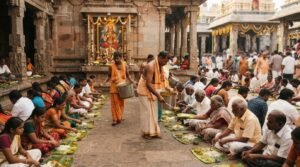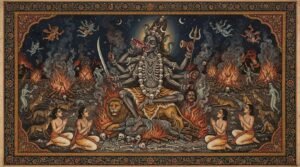
Beej mantras of the goddess are single seed syllables, such as Hreem, Shreem, Kreem, Aim, Kleem and Dum, each holding the complete essence of one form of the Divine Mother. Hreem invokes Bhuvaneshwari, Shreem draws Lakshmi's abundance, Kreem awakens Kali's transformative fire, and chanting them 108 times daily with devotion is a direct path to the Mother's grace.
Long before temples were carved or scriptures written down, the sages of India heard the universe as sound. In the Vedic and Tantric traditions, sound is not a description of reality; it is the very substance of it. The Divine Mother, Adi Shakti, is said to vibrate at the heart of creation, and her many forms can be touched directly through single, concentrated syllables called beej (seed) mantras. These are the most compressed, most potent sonic formulas in all of mantra-shastra: tiny seeds that hold the entire tree of a deity's energy within them.
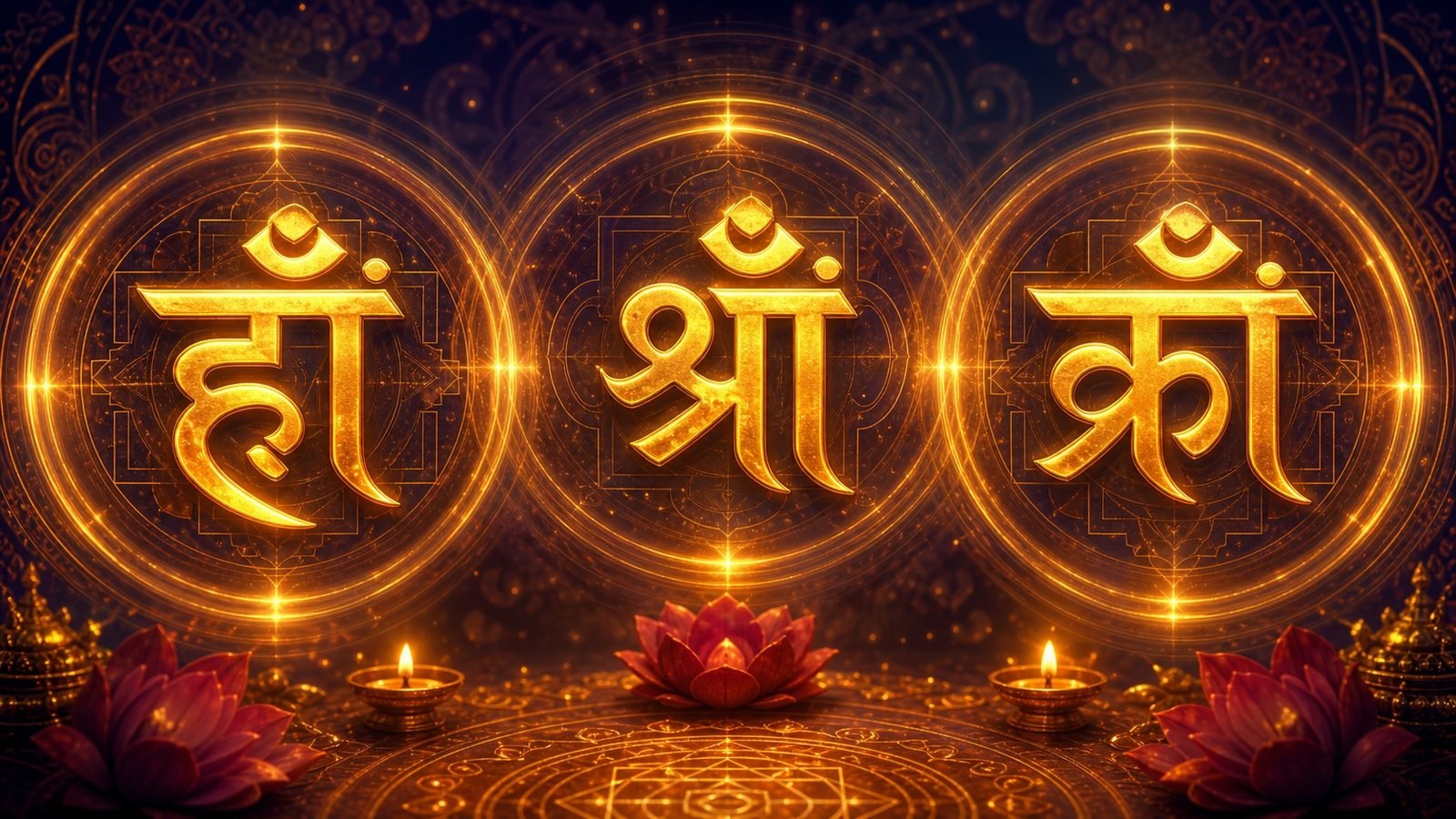
Hreem, Shreem, Kreem, Aim, Kleem, Dum. To the untrained ear these may sound like fragments. But to the sadhaka each one is a living doorway. Hreem opens the heart to Bhuvaneshwari, the Queen of the Universe. Shreem draws the abundance of Lakshmi. Kreem sets the transformative fire of Kali in motion. Each seed carries a specific Shakti, a specific frequency of the Mother's grace, and learning to chant them with understanding and devotion is one of the oldest and most direct paths of Indian spirituality.
This guide explains what a beej mantra truly is, how seed sounds are understood to work in the Tantric tradition, and then walks through the major Devi beej mantras one by one: their deity, meaning, benefits, and a sample line for practice. You will also find a master reference table, complete instructions on how to chant with a mala, the do's and don'ts of sadhana, the role of a guru and diksha, and answers to the questions seekers ask most. Throughout, remember the heart of the matter: with these sacred sounds, sincerity always matters more than mechanics.
Key Takeaways
- A beej mantra is a single seed syllable believed to contain the entire essence of a deity in condensed sonic form.
- Hreem belongs to Bhuvaneshwari and Mahamaya, Shreem to Lakshmi, Kreem to Kali, Aim to Saraswati, Kleem to Kamadeva and Tripura Sundari, and Dum to Durga.
- The long vowel in each seed is always sounded "ee," so Hrim, Shrim and Krim are correctly chanted Hreem, Shreem and Kreem.
- Japa is traditionally counted on a 108-bead mala, moved with the thumb and middle finger, ideally during Brahma Muhurta between about 4:00 and 6:00 AM.
- Simple universal seeds are open to all sincere seekers, while fierce or composite Tantric mantras require diksha, formal initiation from a qualified guru.
What Is a Beej Mantra?
A beej mantra is a monosyllabic mantra, usually a single syllable such as Hreem or Kreem, believed to contain the entire essence of a deity in condensed form. The Sanskrit word beej (बीज, also written bija) means "seed": just as a banyan seed holds the towering tree within it, a seed mantra holds the complete vibratory signature of the divine power it represents.
This is why mantra-shastra calls the beej the most powerful class of mantra: nothing is wasted, nothing is diluted, the whole deity is present in one sound. Just as a single seed contains branches, leaves and millions of future seeds, the syllable contains the deity's full field of energy.
Most beej mantras are built from a few sacred components. There is usually a consonant that names the deity or force (Ka for Kali, Ha for prana and Shiva, Sha for the Moon), often the fire-seed Ra which adds light, energy and order, and almost always the long vowel ī, pronounced "ee," which is the primal sound of Shakti herself. The syllable is then sealed with the nasal bindu (the "m" resonance, written ं), representing the point of cosmic concentration from which creation springs. So Kreem is read by traditional commentators as Ka (Kali) + Ra (fire/Brahman) + Ī (Mahamaya) + M (dissolution): an entire cosmology folded into one breath.
Beej mantras rarely have a literal, dictionary-style meaning the way an ordinary sentence does. Their meaning is their effect: the state of consciousness and the flow of energy they awaken in the one who chants them sincerely. They function in two ways. Alone, a single seed (for example Om Hreem Namah) is chanted to attune to one specific power. Combined, several seeds are strung together to build the great composite mantras of Tantra; the Navarna mantra Om Aim Hreem Kleem Chamundaye Vichche, for instance, fuses the seeds of Saraswati, Mahamaya and Kali into a single invocation of the Goddess. Learning the seeds is therefore learning the alphabet of the Mother's entire language.
How Do Seed Sounds Work in Tantra?
In the Tantric worldview, seed sounds work because the cosmos itself is woven from vibration. Each deity is a particular frequency of the one Consciousness, and the beej mantra is the precise tuning-fork that lets a human being resonate with that frequency. Chanting brings body, breath and mind into harmony with a force already present everywhere.
The tradition speaks of Shabda Brahman, the Absolute experienced as sound, and of Nada, the primordial cosmic hum from which all forms emerge. Before there is shape, there is sound; before there is light, there is vibration. Chanting is not asking a distant god for favours; it is tuning one's own instrument to a divine frequency.
The sages mapped these sound-forces onto the subtle body. Each of the chakras along the spine is described as a lotus whose petals carry specific Sanskrit syllables, and the great seed mantras are said to hold, move and awaken the Kundalini Shakti, the coiled creative energy at the base of the spine. Some seeds carry particular affinities: Hreem is closely linked with the heart, Kreem with the awakening and upward movement of energy, Kleem with magnetism and the waters of feeling. When a beej is chanted correctly, with the bindu resonating in the skull, it is felt as a physical vibration that gradually draws the practitioner's scattered awareness inward and upward.
Teachers such as Vamadeva Shastri (Dr. David Frawley) describe the Shakti bija mantras as carrying the great forces of nature, not as external chemistry but as inner potentials of light and energy: solar and lunar, fire and water, electric and magnetic. Hreem is said to project solar energy, Shreem lunar nourishment, Kreem electrical and transformative force, Kleem magnetic attraction. The repetition itself matters: sustained, rhythmic chanting entrains the breath, steadies the mind, and creates a standing wave of attention that the older texts call the building of mantra-shakti, the accumulated power of the sound. This is the quiet science behind the practice, less about belief than about disciplined, repeated resonance.
Which Are the Main Devi Beej Mantras? The Master Table
The main beej mantras of the goddess are Hreem (Bhuvaneshwari), Shreem (Lakshmi), Kreem (Kali), Aim (Saraswati), Kleem (Kamadeva and Tripura Sundari) and Dum (Durga), supported by Om, Gam and the fierce protective seeds. The table below gathers them in a single reference, with pronunciation following the convention that the Sanskrit short i is sounded as a long "ee."
| Beej | Devanagari | Transliteration | Associated Deity | Energy / Benefit |
|---|---|---|---|---|
| Om / Aum | ॐ | Om | Ishvara / Cosmic Self (Shiva) | Pranava - opens and clears the mind; precedes every mantra |
| Aim | ऐं | Aim ("aym") | Saraswati (also Matangi) | Speech, wisdom, learning, focus, the guru's grace |
| Hreem | ह्रीं | Hreem | Bhuvaneshwari / Mahamaya (Adi Shakti) | The great Maya bija; heart, captivation, bliss, solar power |
| Shreem | श्रीं | Shreem | Lakshmi (also Tripura Sundari) | Abundance, prosperity, beauty, devotion, lunar nourishment |
| Kreem | क्रीं | Kreem | Kali | Transformation, action (kriya), Kundalini, the "seed of yoga" |
| Kleem | क्लीं | Kleem | Kamadeva / Krishna / Tripura Sundari | Kama-bija - attraction, love, magnetism, fulfilment of wishes |
| Dum | दुं | Dum ("doom") | Durga | Protection, strength, victory, removal of obstacles and enemies |
| Gam | गं | Gam ("gum") | Ganesha (supporting deity) | Removes obstacles before sadhana; clarity and an auspicious start |
| Hoom / Hum | हूं | Hum ("hoom") | Shiva / fierce Devi (Chandi) | Fire, protection, cutting through negativity |
| Strim | स्त्रीं | Strim ("streem") | Tara (Durga-Tara) | Stability, peace, the Divine Feminine that protects and guides |
| Treem | त्रीं | Trim ("treem") | Tara / Trishula of Shiva | Crossing over difficulties; courage, valour (tejas) |
| Krowm | क्रौं | Kraum / Krowm | Ganesha / fierce protective forms | Sharp protective force; sometimes paired with Gam |
A note on variation: beej mantras are flexible by design. Hreem belongs primarily to Bhuvaneshwari and Mahamaya yet appears in the worship of almost every form of the Goddess; Shreem is the seed of Lakshmi but is also a core bija of Tripura Sundari; Kleem is the kama-bija of Kamadeva and Krishna and is equally central to Tripura Sundari and many love-and-attraction practices. This overlap is not a contradiction. It reflects the Tantric understanding that all the Goddesses are faces of one Adi Shakti, a truth explored fully in our Das Mahavidya origin story.
What Does Each Major Beej Mantra Mean?
Each entry below gives the associated deity, the inner meaning and energy of the seed, its principal benefits, and a simple sample mantra line for daily practice. Begin every chant with Om, which clears the mind and opens the inner space, and seal it with Namah ("I bow") or Swaha when offering into fire.
Hreem (ह्रीं): The Seed of Bhuvaneshwari and Maya
Hreem is the supreme bija of the Goddess in her cosmic aspect: Bhuvaneshwari, the Queen of the Universe, and Mahamaya, the great power of illusion and manifestation. It is traditionally read as Ha (Shiva, prana, space) + Ra (fire, light) + Ī (Mahamaya) + the bindu. Often called the Shakti-bija, it is to the Goddess what Om is to the Absolute. Energetically it is a solar, heart-centred force of captivation, empowerment and bliss.
Benefits: opens and energises the heart on every level, spiritual, emotional and physical; dissolves the sense of separateness; brings joy, charisma and clarity; and serves as a universal seed that can be attached to almost any deity to draw that presence into the heart.
Sample line: Om Hreem Namah (ओं ह्रीं नमः), or, for Bhuvaneshwari, Om Hreem Bhuvaneshwaryai Namah.
Shreem (श्रीं): The Seed of Lakshmi and Abundance
Shreem is the seed mantra of Mahalakshmi, Goddess of prosperity, beauty and auspiciousness, and a central bija of Tripura Sundari. The root shri means splendour, radiance, the soft beautiful light of the Moon. It is the most benefic of the seed sounds, lunar and nourishing in quality, and is the great mantra of faith, devotion, refuge and surrender. In the Mahavidya tradition this Lakshmi-power appears as Maa Kamala, the lotus goddess.
Benefits: draws material and spiritual abundance; promotes health, harmony, fertility and well-being; supports women's health; calms the emotions; and deepens devotion (bhakti). On the outer level it grants the wealth of the world; on the inner level, the wealth of bliss and beautiful perception.
Sample line: Om Shreem Namah (ओं श्रीं नमः), or Om Shreem Mahalakshmyai Namah.
Kreem (क्रीं): The Seed of Kali and Transformation
Kreem is the seed mantra of Maa Kali, Goddess of time, death and transformation, and the consort of Shiva the transformer. It is built from Ka (Kali) + Ra (fire/Brahman) + Ī (Mahamaya) + the bindu of dissolution. Kreem carries Kriya Shakti, the power of action, and the basic electrical, transformative energy behind all things. It is famously called the Yoga-bija, the "seed syllable of yoga practice."
Benefits: ignites inner transformation and the burning away of ego, fear and attachment; awakens and raises the Kundalini; strengthens willpower and the capacity for sustained spiritual effort; and energises perception, concentration and meditation. This is a powerful, fiery seed and is best approached with respect and steadiness.
Sample line: Om Kreem Kalikayai Namah (ओं क्रीं कालिकायै नमः), meaning "I bow to Goddess Kalika."
Aim (ऐं): The Seed of Saraswati and Wisdom
Aim (pronounced "aym") is the seed mantra of Saraswati, Goddess of knowledge, speech, music and the arts, and is also a key bija of Matangi, the Tantric Saraswati among the Mahavidyas. After Om it is the next most common seed; it is the feminine counterpart of Om, the directed, manifest form of primal sound, and the mantra of the guru and of higher intelligence (buddhi).
Benefits: sharpens intellect, memory and concentration; strengthens speech, voice and creative expression; supports students, teachers, writers, musicians and seekers of any subject; and orients the mind toward whatever wisdom one is seeking. It is often used to direct the awareness and intention toward the deity.
Sample line: Om Aim Saraswatyai Namah (ओं ऐं सरस्वत्यै नमः).
Kleem (क्लीं): The Kama-Bija of Attraction and Love
Kleem is the Kama-bija, the seed of desire, associated with Kamadeva (the god of love), with Krishna who grants bliss, and with Tripura Sundari, the Goddess of love and beauty. It is the softer, watery, magnetic counterpart of the fiery Kreem: where Kreem projects, Kleem attracts. It carries Akarshana Shakti, the power of magnetic attraction, and is one of the safest and most widely used of all seeds.
Benefits: increases magnetism and the power to attract what one truly needs, right relationships, opportunities and harmony; opens and softens the heart; promotes love, devotion and unity; and helps fulfil sincere wishes. Because it amplifies desire, it is best chanted with a pure and selfless intention.
Sample line: Om Kleem Namah (ओं क्लीं नमः), or Om Kleem Krishnaya Namah.
Dum (दुं): The Seed of Durga and Protection
Dum (pronounced "doom") is the seed mantra of Durga, the invincible protective Mother who rides the lion and slays the demons of negativity. Traditional readings take Da for Durga and the long u as the force that protects and shelters. It is a strong, fortress-like seed of guarding power.
Benefits: protection from harm, enemies, accidents and negative energies; strength, courage and victory in difficult situations; removal of obstacles and grave problems; health, willpower and all-round success. It is the seed to turn to when one needs a shield.
Sample line: Om Dum Durgayai Namah (ओं दुं दुर्गायै नमः).
🎧 Listen - ओं दुं दुर्गायै नमः (Om Dum Durgayai Namah) chanted 108 times at 432 Hz - a Musinara recording of the Durga seed mantra to chant along with.
Other Important Seeds: Gam, Strim, Treem, Hoom and Krowm
Gam (गं) is the seed of Ganesha, the remover of obstacles. Strictly a supporting deity rather than a form of the Mother, Ganesha is invoked first in almost every sadhana to clear the path: Om Gam Ganapataye Namah. Chant it before beginning any Devi practice to remove obstacles and ensure an auspicious start.
Strim (स्त्रीं) is the seed of Maa Tara, the Hindu Goddess Tara, often called Durga-Tara, not the Buddhist deity of the same name. Called the Shanti-bija or seed of peace, it carries the power of the Divine Feminine (stri-shakti) to give birth, nourish, protect and guide. It is stabilising, peace-giving, and a powerful healing seed for women.
Treem (त्रीं) is a related Tara seed, more specifically a mantra of tejas or subtle fire and of Shiva's trident (Trishula). It helps carry the practitioner across difficulties and grants courage, valour and fearlessness.
Hoom / Hum (हूं) is the great fire and protection seed of Shiva, also used in the fierce forms of the Goddess such as Chandi and Chinnamasta. It enkindles inner fire, destroys negativity, and protects. As a sharp seed, it asks for careful and guided use.
Krowm (क्रौं) is a sharp protective seed, sometimes associated with Ganesha in his fierce obstacle-cutting aspect and used in certain protective combinations. Because attributions vary by lineage, it is best learned from a qualified teacher rather than self-prescribed.
How Do You Chant Beej Mantras Correctly?
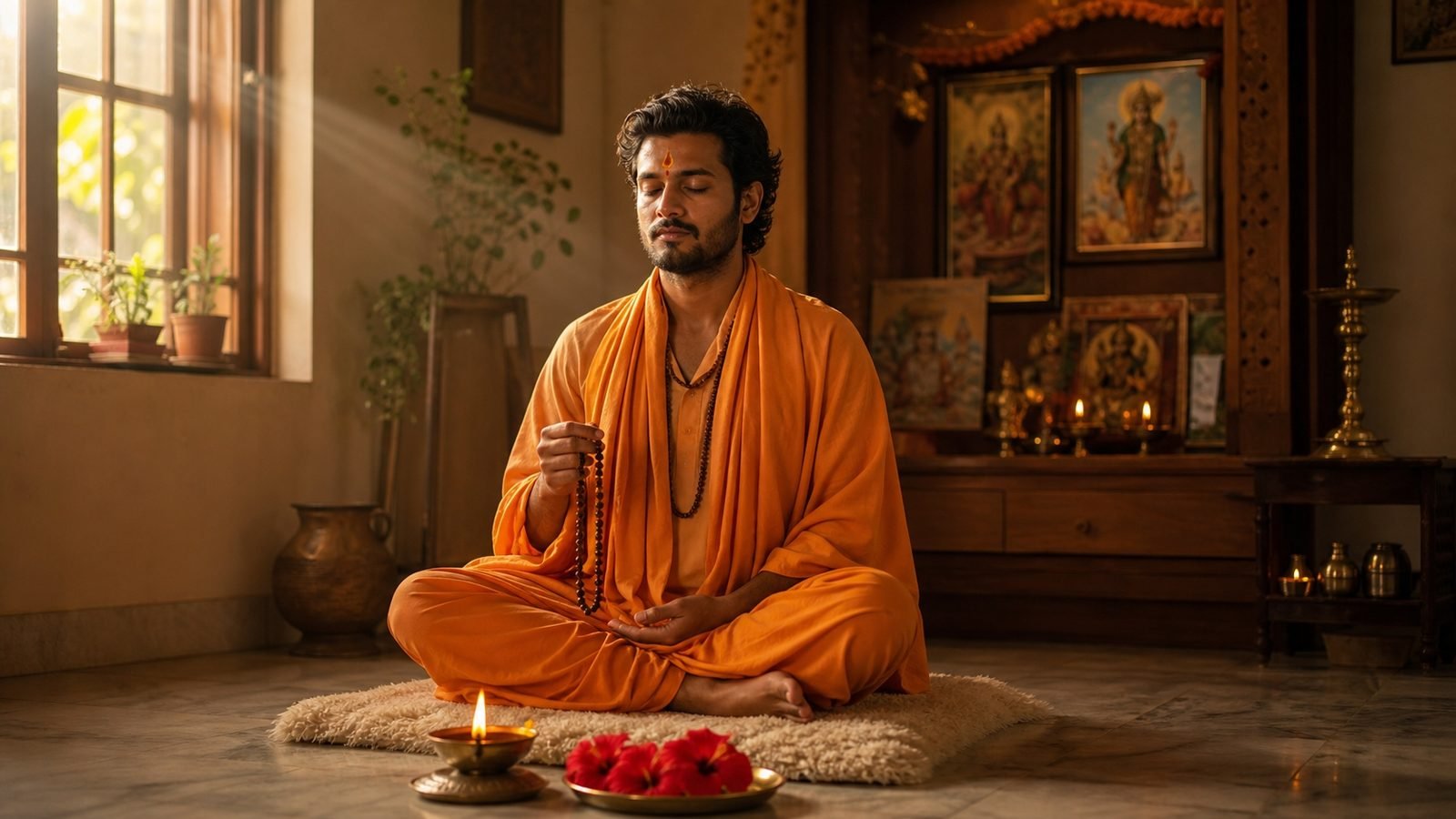
Chant beej mantras on a 108-bead mala, seated upright, facing east or north (south for fierce forms like Kali), ideally during Brahma Muhurta between about 4:00 and 6:00 AM. Sound the vowel as a long "ee," let the closing bindu hum, and favour a short daily practice done with full attention.
Beej mantras reward consistency far more than intensity. A brief daily sitting with complete presence will take you deeper than long, distracted sessions. The traditional framework below has been used for centuries; adapt it gently to your circumstances rather than abandoning it because conditions are not perfect.
The Mala and the Count of 108
Japa, the repetition of a mantra, is traditionally counted on a mala of 108 beads. The number 108 is deeply sacred in Indian cosmology, woven into astronomy, the chakras and the structure of sound itself, and it gives the mind a fixed container so it can let go and absorb.
Hold the mala in the right hand and move each bead with the thumb and middle finger; never use the index finger, which is said to represent the ego. When you reach the larger "Meru" bead, do not cross over it; turn the mala around and continue in the other direction. One full circuit is one mala, 108 repetitions. Beginners may start with a single mala a day and increase gradually.
Posture, Direction and Time
- Posture: Sit upright and comfortable on a cotton or woollen mat, spine naturally straight, body relaxed. A stable seat (sukhasana or padmasana) keeps the breath even and the mind alert.
- Direction: Face east (the direction of rising light and new beginnings) or north (associated with spiritual growth) for most Devi mantras. For fierce forms such as Kali, the tradition often prescribes facing south.
- Time: The most powerful window is Brahma Muhurta, roughly 4:00 to 6:00 AM, when the mind is calm and the world is still. Dusk and a fixed time each day also work well. Tuesdays, Fridays and the days sacred to your chosen deity are especially auspicious.
- Setting: A clean, quiet corner kept only for practice, a ghee lamp, incense and perhaps an image of the deity all help the mind settle and return day after day.
Pronunciation and Modes of Chanting
Pronunciation matters because the power of a beej lives in its sound. Remember that the i in Hrim, Krim and Shrim is always sounded "ee" (Hreem, Kreem, Shreem), and let the closing bindu (the m / ं) hum and resonate rather than being clipped.
There are three classical modes: vachika (chanting aloud), best for beginners and for steadying a restless mind; upamshu (whispering, lips moving but barely audible), more inward and considered more potent; and manasika (purely mental repetition), the subtlest and most powerful, suited to those with a settled practice. Begin aloud, and let the chant naturally grow quieter and more internal over time.
What Are the Do's and Don'ts of Beej Mantra Practice?
The essentials are simple: begin with Om and Ganesha's seed, chant daily at the same time and place with devotion, keep body and setting clean, and let the bindu resonate. Avoid careless or boastful practice, constant switching of mantras, and fierce Tantric seeds taken up without guidance.
Do
- Do begin with Om to clear the mind, and chant Om Gam Ganapataye Namah first to remove obstacles.
- Do chant at the same time and place daily; regularity builds mantra-shakti, the accumulated power of the sound.
- Do keep your body and surroundings clean; bathe before practice when you can.
- Do maintain a sattvic (light, vegetarian, fresh) diet during periods of intensive sadhana.
- Do chant with feeling and devotion; the heart's sincerity is the true engine of the practice.
- Do keep a steady, moderate pace and let the bindu resonate.
Don't
- Don't chant carelessly, while distracted, or with harmful intentions; a seed grows whatever is planted with it.
- Don't constantly change mantras; pick one and stay with it long enough to take root.
- Don't use the index finger to move the beads, and don't cross the Meru bead.
- Don't take up fierce or complex Tantric mantras on your own without proper guidance.
- Don't turn the count into a mechanical chore; quality of attention outweighs quantity.
- Don't broadcast or boast about your sadhana; the tradition values quiet, inward practice.
Do You Need a Guru and Diksha for Beej Mantras?
For simple universal seeds such as Om Hreem Namah, Om Shreem Namah or Om Kreem Kalikayai Namah, no initiation is needed; anyone may chant them with devotion. For deeper, fierce or composite Tantric mantras, the tradition insists on diksha, formal initiation from a qualified guru.
Diksha (दीक्षा) is far more than receiving information; it is understood as a living transmission of energy that activates the mantra, much as a seed needs not only soil but the spark of life to germinate. A guru also provides what no book can: correct pronunciation, the right practice schedule and intensity for your temperament, protection and guidance if powerful energies stir, and the accumulated grace of an unbroken lineage.
Teachers note that the most powerful seed mantras may require hundreds of thousands of guided repetitions to ripen, and that such practice is best undertaken with proper support. If you feel drawn toward serious sadhana, seek out an authentic teacher in a living tradition. Until then, practise the open, universal seeds with humility; sincere chanting itself often draws the right guidance in time.
What Common Mistakes Should You Avoid?
The most frequent errors are mispronouncing the long "ee," rushing the count, mismatching seed and intention, mixing many mantras, practising inconsistently, attempting advanced mantras without initiation, and obsessing over mechanics while forgetting devotion. Each is easy to correct once noticed.
- Mispronouncing the long "ee": chanting Hrim as "hrim" instead of "Hreem," which weakens the seed's resonance.
- Treating japa as a race: rushing through 108 beads to "finish" rather than resting in each repetition.
- Mismatching seed and intention: for example, using fierce Kreem when steadying Shreem or Hreem is what is actually needed.
- Mixing many mantras at once before any single one has had time to establish itself.
- Inconsistency: practising intensely for a week, then stopping; the power lies in unbroken daily contact.
- Attempting advanced Tantric or fierce mantras without initiation, then becoming discouraged or unsettled.
- Focusing on mechanics, perfect posture and perfect count, while forgetting the devotion that gives the practice its life.
What Are the Benefits of Regular Beej Mantra Practice?
Regular practice calms the nervous system, steadies the breath, sharpens concentration and eases anxiety, while on the deeper level it purifies the subtle channels, balances the chakras and builds mantra-shakti. Each seed adds its own gift, from Shreem's abundance to Kreem's transformative courage.
Physically and mentally, the rhythmic resonance of chanting acts almost like a tuning of the whole instrument of body and mind. Practitioners often report clearer thinking, better sleep, and a more even emotional life within a few weeks of daily japa.
On the energetic and spiritual level, the seeds do their deeper work: purifying the subtle channels, gradually awakening and balancing the chakras, and building a reservoir of mantra-shakti that begins to colour daily life with steadiness and grace. Each seed brings its own gift: Shreem its abundance and harmony, Hreem its open-hearted joy, Kreem its transformative courage, Dum its protective strength, Aim its clarity and wisdom.
Above all, sustained practice cultivates an inner relationship with the Divine Mother that becomes a quiet, dependable source of refuge. Begin with a single seed and a single mala a day, stay faithful to it, and let the seed grow at its own pace.

Listen: Subscribe to Musinara Sounds for 432 Hz mantra chants
🕉️ Hear these sacred mantras come alive. Subscribe to Musinara Sounds on YouTube for 432 Hz Devi mantra chants, sung slowly enough to follow and repeat.
Frequently Asked Questions
Can I chant beej mantras without a guru?
Yes. Simple, universal seeds such as Om Hreem Namah, Om Shreem Namah and Om Kreem Kalikayai Namah are considered open to all sincere seekers and can be chanted at home with devotion. A guru and formal diksha become important for advanced, fierce, or composite Tantric mantras, where correct transmission, pronunciation and guidance are essential.
What does the Hreem beej mantra mean?
Hreem is the seed mantra of Bhuvaneshwari and Mahamaya, the Goddess as Queen of the Universe and the great creative power of manifestation. It is read as Ha (Shiva/prana) + Ra (fire) + Ī (Mahamaya) + the bindu, and is often called the Shakti-bija, the seed equivalent to Om for the Divine Mother. Its energy is heart-opening, captivating and blissful.
What is the difference between Kreem and Kleem?
Both share the "ee" vowel and the bindu but carry opposite movements. Kreem (Kali) is fiery, electrical and projective, the seed of transformation and action. Kleem (Kamadeva, Krishna, Tripura Sundari) is watery, magnetic and attractive, the kama-bija of love and drawing things toward you.
Which beej mantra is best for prosperity and wealth?
Shreem, the seed of Lakshmi, is the classic mantra for abundance, prosperity and auspiciousness. Chant Om Shreem Mahalakshmyai Namah daily. For removing obstacles to success, pair it with Ganesha's Om Gam Ganapataye Namah at the start of your practice.
How many times should I chant a beej mantra each day?
A traditional unit is one mala of 108 repetitions. Beginners can start with a single mala daily; intermediate practitioners often chant three malas (324). Consistency at the same time each day matters more than large numbers.
What is the right time and direction for chanting beej mantras?
Brahma Muhurta (about 4:00 to 6:00 AM) is ideal, as is a fixed time at dusk. Face east or north for most Devi mantras; for Kali and other fierce forms the tradition often prescribes facing south.
Why is the vowel in beej mantras pronounced "ee" and not "ih"?
The long ī ("ee") is the primal sound of Shakti herself and the vibratory core of most seed mantras. So Hrim, Krim and Shrim are correctly sounded Hreem, Kreem and Shreem; the "ee" carries the seed's energy.
Are beej mantras safe to chant?
The benefic, universal seeds, Hreem, Shreem, Kleem, Aim, Dum and Gam, are gentle and safe when chanted with devotion and right intention. Fierce seeds such as Hoom, and intensive or composite Tantric practices, are powerful and should be taken up under a qualified teacher's guidance.
Can I combine different beej mantras?
Yes. Combining seeds is the very foundation of Tantric mantra. Classic combinations like the Navarna mantra (Om Aim Hreem Kleem Chamundaye Vichche) join several seeds into one invocation. For your own daily practice, however, it is wise to establish one seed first; learn complex combinations from a teacher.
Do I need a special mala for beej mantras?
A rudraksha mala is traditional and widely used for Devi and Shiva mantras; crystal (sphatik) malas are favoured for Lakshmi and peace-giving practices. What matters most is that the mala has 108 beads, is kept clean and is reserved for your practice.
Sound is the first prayer. Choose one seed of the Divine Mother, hold it faithfully on your mala each day, and let its quiet vibration carry you home.
Beyond the Devi, the same principle governs the seed mantras of other deities. Hear Om Hum Hanumate Namah, the Hanuman beej mantra, chanted for strength and freedom from fear.
New to chanting? Two short guides cover the practicalities: how to chant a mantra (mala, count, pronunciation and the three traditional modes of japa), and Devi worship at home (a simple altar and a ten minute daily sequence).