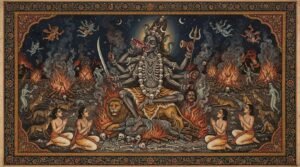
Kali, Durga and Parvati are not three separate goddesses but three forms of the one Adi Shakti, the primordial Divine Mother. Parvati is her gentle, nurturing face, Durga her invincible warrior form, and Kali her fierce, ego-dissolving power. They differ in mood and method, never in essence.
To many seekers, these three can seem like entirely different deities: one gentle and golden, one armed and lion-riding, one dark and fierce with a garland of skulls. Yet the deeper truth of the Shakta tradition is that they are radiant expressions of a single, indivisible reality. Understanding how they relate is one of the most rewarding doorways into devotion to the Divine Mother.
This guide untangles the confusion that surrounds these names. We will look at the scriptural origins of each goddess in the Devi Mahatmya (Markandeya Purana), the Shiva Purana, the Devi Bhagavata Purana and the Skanda Purana; their distinct iconography and temperaments; the threads that bind Parvati to Durga, and Durga to Kali; and the practical question every devotee eventually asks: which form of the Mother should I worship, and when?
Whether you are drawn to the tender grace of Gauri, the protective courage of Durga, or the liberating fire of Kali, you are reaching toward the same Mother. By the end of this article you will be able to explain the differences clearly, see the connections that make them one, and chant a mantra for each with understanding and love.
Key Takeaways
- Kali, Durga and Parvati are all manifestations of the one Adi Shakti, the supreme feminine power of the Shakta tradition.
- Parvati, born to the mountain king Himavan, is the gentle consort of Shiva and the mother of Ganesha and Kartikeya.
- Durga arose from the combined energies of all the gods and slew the buffalo-demon Mahishasura after a nine-night battle.
- Kali emerged from Durga's brow in the Devi Mahatmya and destroyed the demons Chanda, Munda and Raktabija.
- Devotees worship Parvati to build and nurture, Durga to protect and overcome, and Kali to dissolve fear and attain liberation.
Are Kali, Durga and Parvati One Goddess?
Yes. At the heart of Shakta theology lies one sweeping idea: there is a single supreme feminine power, Adi Shakti, also called Adi Parashakti or Mahadevi, and every goddess is a face of her. Parvati, Durga and Kali are the same Mother stepping forward in the form each moment requires.
The Devi Mahatmya, the foundational 700-verse hymn embedded in the Markandeya Purana (composed roughly between the 4th and 6th centuries CE), repeatedly declares that the Goddess is one even as she appears in countless forms. She is the energy that animates Brahma to create, Vishnu to preserve and Shiva to dissolve; without her, the gods themselves are inert.
When the cosmos needs nurturing and union, she is Parvati. When it needs a warrior to restore dharma, she becomes Durga. When even Durga's fury must be exceeded to destroy what cannot otherwise be destroyed, she bursts forth as Kali. The Devi Bhagavata Purana frames all of these as manifestations of the one Mahadevi.
Holding this principle in mind dissolves most of the confusion beginners feel. The forms differ in mood, mythology and method, gentle, martial and fierce. But the essence is identical. To worship any one of them sincerely is to worship the whole. As the tradition puts it, the gold is one even when the ornaments are many.
Who Is Parvati, the Gentle Mother and Consort of Shiva?
Parvati is the Mother in her most approachable, benevolent and domestic form: the loving consort of Shiva and the archetype of devotion, beauty, fertility and harmony. Born as the daughter of the mountain king Himavan, she is also called Shailaputri, Uma and, most lovingly, Gauri, "the fair one".
According to the Shiva Purana and the Devi Bhagavata Purana, when Himavan and his queen Mena performed intense penance, Adi Parashakti herself consented to be born as their daughter. Hence her name Parvati, "daughter of the mountain" (parvata).
Parvati's central story is her unwavering tapasya to win Shiva, the great ascetic, as her husband: a love that draws Shiva out of his meditative withdrawal and back into the cosmic dance of householder life. Their union is the very model of the balance between consciousness (Shiva) and energy (Shakti).
As a mother, Parvati gives the world two of its most beloved deities: Ganesha, the remover of obstacles, whom she fashioned from turmeric paste and brought to life, and Kartikeya (Skanda, Murugan), the commander of the celestial armies. In this form the Mother is approached for marital harmony, family well-being, fertility, devotion and steadiness of heart. She is grace embodied. But, as we shall see, that grace contains within it the seeds of the fiercest power in the universe.
Who Is Durga, the Invincible Warrior Who Slew Mahishasura?
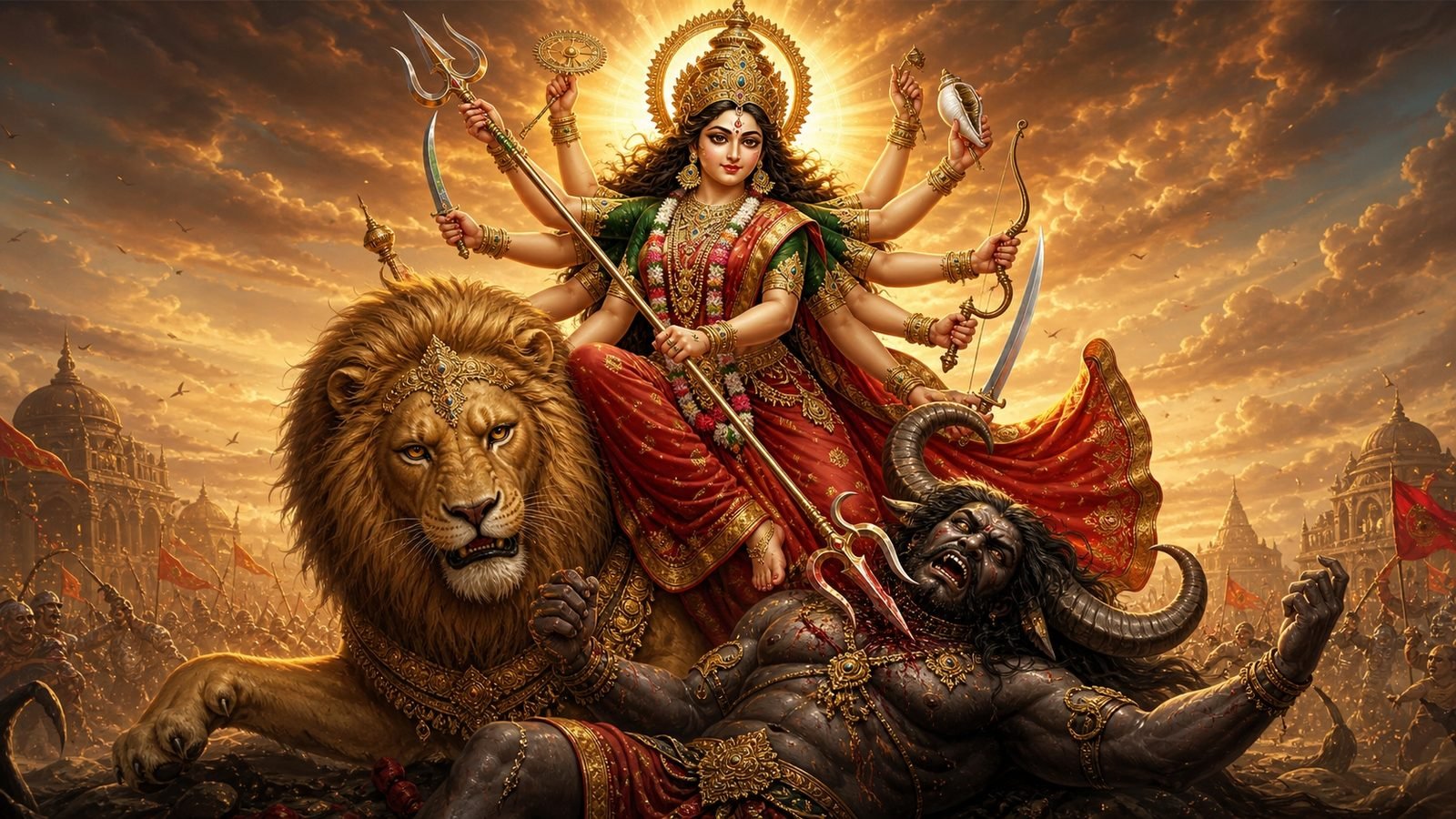
Durga is the Mother as the supreme warrior, formed from the combined energies of all the gods to slay the buffalo-demon Mahishasura. Her name means "the one who is difficult to reach" or "the impassable fortress": she who cannot be conquered. She is the divine protector of dharma.
Her defining myth is told in the Devi Mahatmya. Mahishasura had won a boon that no man or god could kill him, and grew so powerful that he drove the devas from heaven. Helpless, the gods released their concentrated energies (tejas), which blazed together like a thousand suns and coalesced into a single dazzling female form: Durga.
Each deity armed her. Shiva gave his trident, Vishnu his discus, Varuna his conch, Agni his spear, Vayu his bow, Indra his thunderbolt, and Himavan offered a lion as her mount. Thus Durga is the combined might of all the gods made manifest as one woman.
Riding her lion, radiant and serene even in battle, Durga fought Mahishasura for nine days and nights, finally slaying him on the tenth, the day celebrated as Vijayadashami or Dussehra. Her iconography fixes this victory forever: typically eight or ten arms, each bearing a divine weapon, calm-faced and majestic, with the buffalo-demon defeated beneath her. Devotees turn to Durga for protection, courage, victory over obstacles and inner enemies, and the strength to uphold what is right. She is fierce. But her fierceness is sovereign and composed: the warrior-queen of the cosmos.
Who Is Kali, the Fierce Mother Who Dissolves Ego and Time?
Kali is the Mother in her most radical form: the dark goddess of time, dissolution and ultimate liberation. Her name comes from kala, "time", so Kali is "she who is Time" and "she who devours time itself". She destroys not the devotee but the devotee's ego, fear, ignorance and attachment.
Beneath her terrifying appearance lies the most compassionate intention of all: clearing the way for the infinite bliss of pure consciousness. She is also honoured as the first of the ten Mahavidyas, the great wisdom goddesses of the Tantric tradition.
Her most famous origin appears in the Devi Mahatmya. During the war against the demon generals Chanda and Munda, and later the army of Shumbha and Nishumbha, the Goddess's anger grew so intense that her face turned black as ink, and from her furrowed brow sprang Kali: gaunt, dark-skinned, clad in tiger-skin, garlanded with severed heads, sword in hand and tongue lolling. She devoured the demon hordes and beheaded Chanda and Munda, for which she earned the title Chamunda.
Kali's most dramatic feat was the slaying of Raktabija ("blood-seed"), a demon from each drop of whose spilled blood a thousand new demons sprang. To end him, Kali spread her tongue across the battlefield and drank every drop before it touched the earth, then consumed the demon himself. Her iconography is unmistakable: dark or blue-black skin (the colour of the limitless void), a garland of fifty skulls (the letters of the Sanskrit alphabet, the seeds of all sound), a skirt of severed arms (the exhaustion of karma), four arms holding a sword and a severed head alongside gestures of fearlessness and blessing, and her lolling tongue.
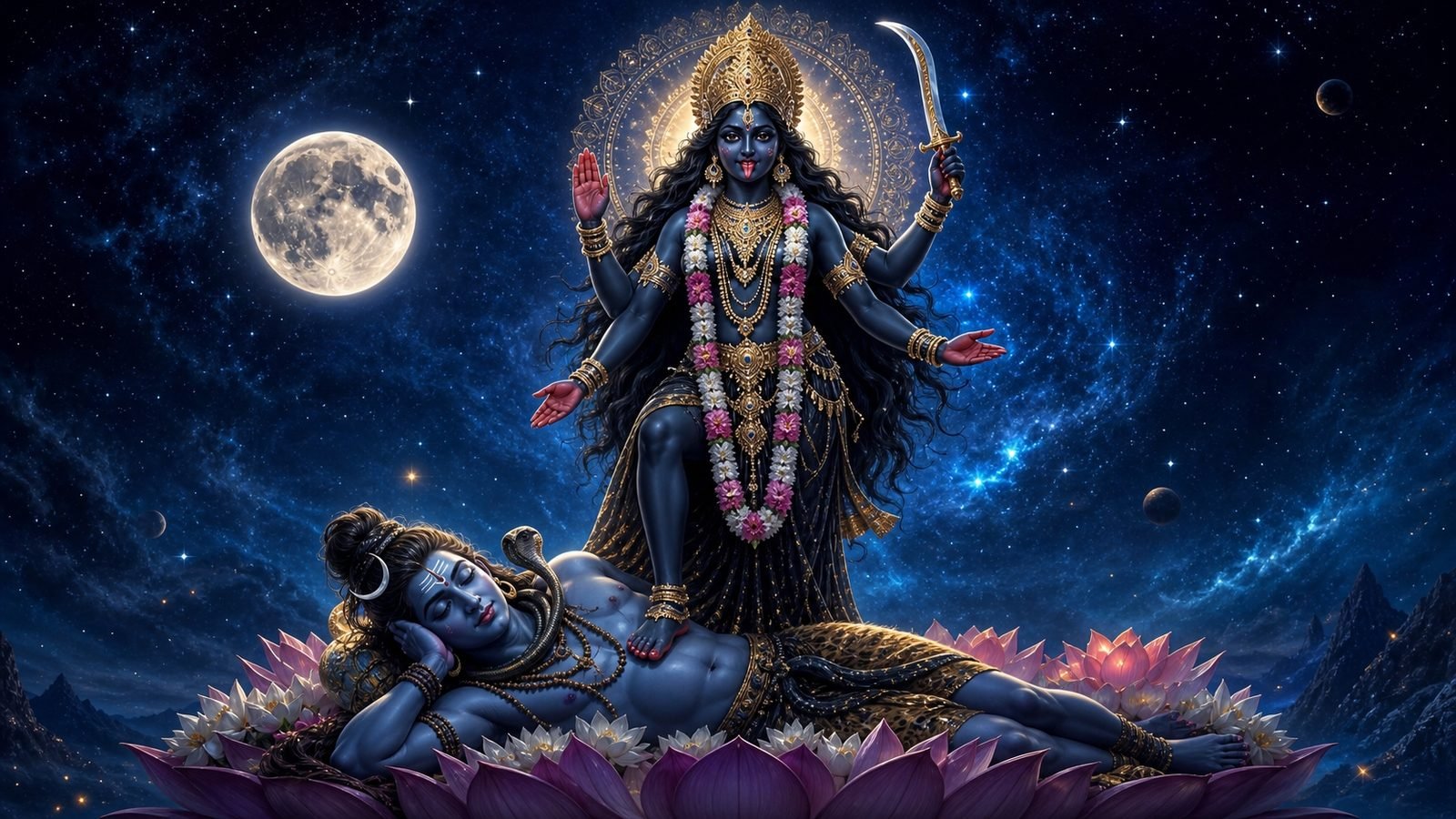
Perhaps her most discussed image is Kali standing with one foot upon a supine Shiva. In the story, Kali's victory-dance threatened to destroy creation itself; Shiva lay down in her path, and the moment she stepped on her own consort she bit her tongue in lajja (modesty) and halted. Philosophically, the image teaches that without Shakti, Shiva is shava (a corpse), inert consciousness, while without Shiva's grounding, Shakti's power runs wild. Reality requires their union. Devotees approach Kali for fearlessness, the dissolution of ego, protection from negativity, emotional healing and the fastest path to moksha. For a full portrait of the Dark Mother, read our complete guide to Maa Kali.
How Are Parvati, Durga and Kali Connected?
The scriptures connect them as a single continuum of intensifying power: Parvati is the source form, Durga is her battle-ready aspect, and Kali emerges from Durga's own brow at the peak of her wrath. They are three settings of the same divine flame, rising to meet the need of the hour.
Parvati as the Source
Many traditions treat Parvati, Adi Parashakti incarnate, as the home form from which the warrior and fierce forms emerge when needed. The Navadurga, the nine forms worshipped across the nine nights of Navratri, are explicitly described in the Devi Bhagavata Purana as the stages of Parvati's own journey, beginning as Shailaputri (the mountain's daughter) and culminating as Siddhidatri. Durga, in this sense, is Parvati's battle-ready aspect.
Parvati Becomes Durga / Kaushiki
In one well-known episode, when the gods needed a champion against Shumbha and Nishumbha, Parvati shed her dark outer sheath and stepped forth as the warrior Kaushiki, while the fair residue of her remained as Gauri (later identified with Mahagauri). This single story neatly contains all three temperaments: the serene Gauri, the martial Kaushiki/Durga, and the dark intensity that will become Kali.
Durga Becomes Kali
The most direct link of all is in the Devi Mahatmya: Kali does not arrive from elsewhere. She emerges from Durga's own brow at the peak of her wrath. When Durga's fury can no longer be contained, it crystallises into Kali, who accomplishes what even the warrior-goddess holds back from. Kali is therefore Durga's rage made autonomous: the Mother's power taken to its absolute, ego-dissolving extreme.
Read together, the arc is unmistakable: Parvati (grace and union) to Durga (protective, ordered power) to Kali (boundless, liberating fury). They are three settings of the same divine flame, a candle, a hearth and a wildfire, all the same fire.
What Are the Key Differences Between Parvati, Durga and Kali?
Parvati is the serene consort and mother who blesses marriage and family; Durga is the composed warrior who protects dharma and grants victory; Kali is the wild dissolver of ego, time and ignorance who grants liberation. These are differences of expression, not of essence.
The table below summarises how the three forms differ across the aspects devotees most often ask about. Remember that the underlying Adi Shakti is one.
| Aspect | Parvati | Durga | Kali |
|---|---|---|---|
| Role | Gentle consort and mother; grace, love, harmony | Invincible warrior and protector of dharma | Fierce dissolver of ego, time and ignorance |
| Temperament | Serene, nurturing, devoted (saumya) | Brave, sovereign, composed in battle | Wild, intense, boundless (raudra) |
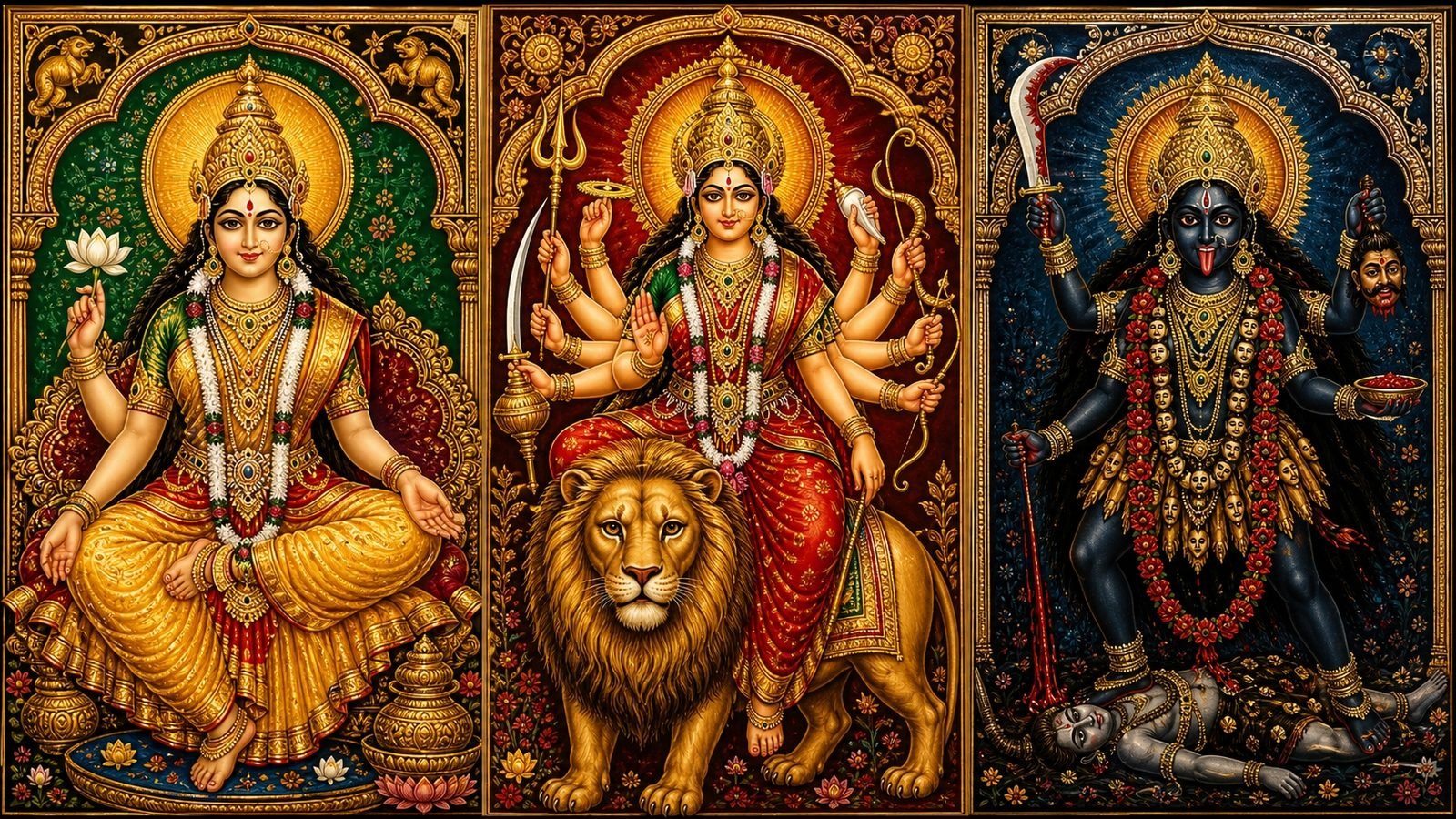
| Iconography | Fair (Gauri), lotus, calm, beside Shiva | 8-10 arms, divine weapons, rides a lion | Dark, skull garland, sword and severed head, lolling tongue |
| Consort / Origin | Born to Himavan and Mena; wife of Shiva | Formed from the combined tejas of all gods | Sprang from Durga's brow; consort Shiva (Mahakala) |
| When worshipped | Marriage, family, devotion; Teej, Gauri Puja | Protection, courage, victory; Navratri, Durga Puja | Fearlessness, liberation; Kali Puja, Amavasya, Tuesdays and Saturdays |
What Does Their Iconography Symbolise?
Every element in the Mother's imagery is a teaching: Parvati's lotus speaks of spiritual unfolding, Durga's ten armed weapons show the powers of all gods focused in one protector, and Kali's garland of fifty skulls holds the seed-sounds of all creation. Reading the symbols turns a picture into scripture.
Parvati / Gauri
- Fair, golden complexion: purity, gentleness and luminous grace.
- Lotus in hand: spiritual unfolding and detachment amid the world.
- Seated beside Shiva: the inseparable union of consciousness and energy.
- Children Ganesha and Kartikeya: fertility, motherhood and the nurturing of dharma.
Durga
- Eight to ten arms with divine weapons: the combined powers of all the gods focused in one protector.
- Lion (or tiger) mount: mastery over fear, ego and raw animal force.
- Calm face in the heat of battle: power wielded without losing inner peace.
- Mahishasura beneath her: the triumph of dharma over deluded ego.
Kali
- Dark or blue-black skin: the infinite, formless void from which all arises and into which all dissolves.
- Garland of fifty skulls: the letters of the Sanskrit alphabet, the seed-sounds of all creation; also the conquest of death.
- Skirt of severed arms: the cutting away of accumulated karma and the fruits of action.
- Sword and severed head: the cutting of the ego and ignorance.
- Lolling tongue and foot on Shiva: the moment power meets pure consciousness and pauses in recognition, Shakti and Shiva in eternal balance.
Which Mantras Belong to Each Goddess?
🎧 Listen - ओं दुं दुर्गायै नमः (Om Dum Durgayai Namah) chanted 108 times at 432 Hz - a Musinara recording of the Durga seed mantra to chant along with.
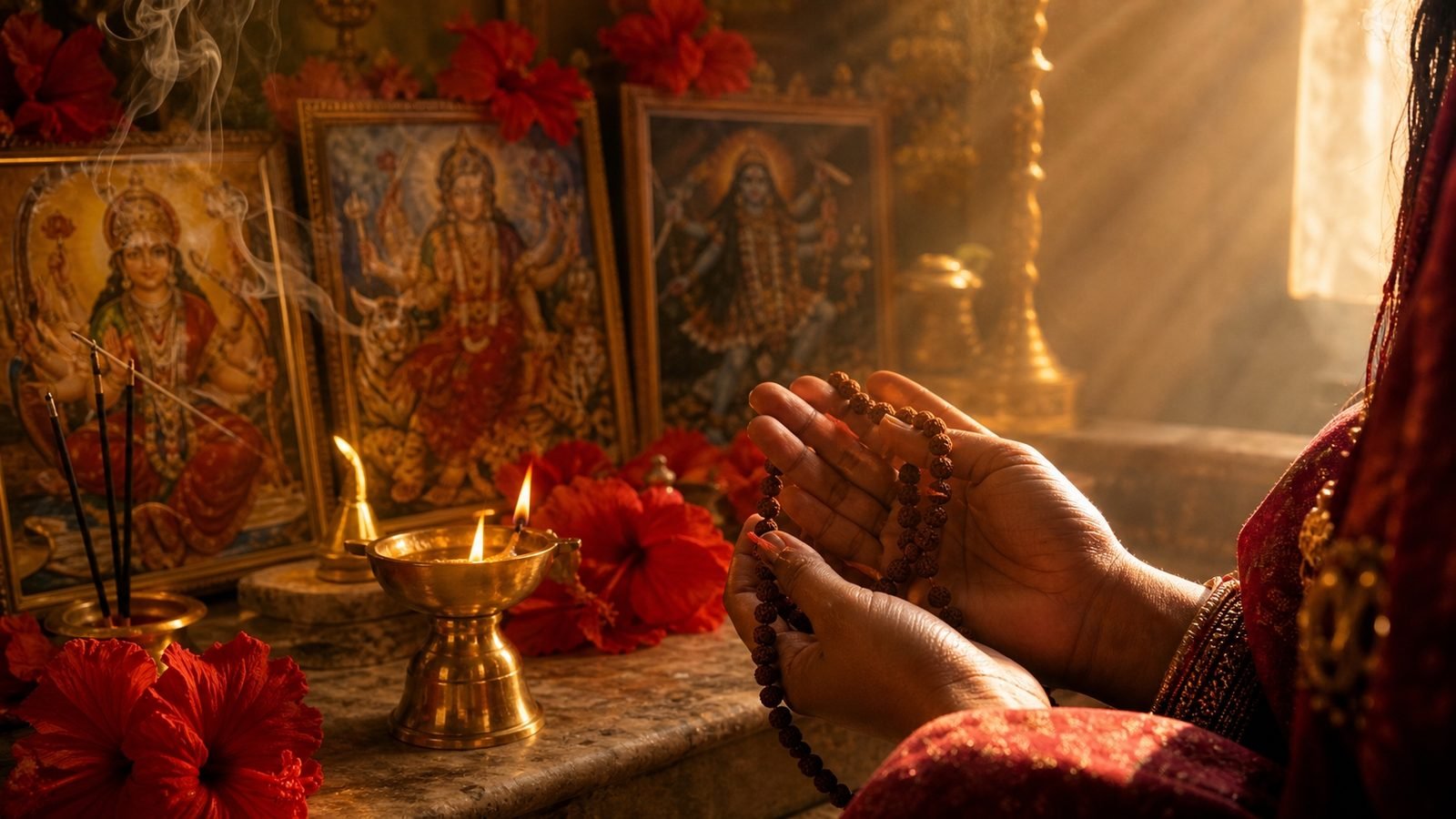
Each form of the Mother has widely chanted beej (seed) and mool mantras: "Om Aim Hreem Kleem Parvatyai Namah" for Parvati, "Om Dum Durgayei Namah" for Durga, and "Om Kreem Kalikayai Namah" for Kali. Chant with a mala for 108 repetitions, with a clean heart and steady devotion.
Below are the principal mantras for each form. Chant ideally facing east, using a rudraksha or crystal mala. Consistency and devotion matter far more than speed.
| Goddess | Sanskrit | Hindi | Transliteration | Meaning |
|---|---|---|---|---|
| Parvati (Gauri) | ॐ ह्रीं नमः शिवाय गौरी पतये नमः | ओम् ह्रीं नमः शिवाय गौरी पतये नमः | Om Hreem Namah Shivaya Gauri Pataye Namah | I bow to Gauri (Parvati) and to her lord Shiva, uniting the seed of the Goddess (Hreem) with devotion. |
| Parvati (beej) | ॐ ऐं ह्रीं क्लीं पार्वत्यै नमः | ओम् ऐं ह्रीं क्लीं पार्वत्यै नमः | Om Aim Hreem Kleem Parvatyai Namah | I bow to Goddess Parvati through the seeds of wisdom (Aim), grace (Hreem) and love (Kleem). |
| Durga (beej) | ॐ दुं दुर्गायै नमः | ओम् दुं दुर्गायै नमः | Om Dum Durgayei Namah | Om, I bow to Goddess Durga, invoking her through her seed-syllable Dum of protection. |
| Durga (mool) | ॐ ऐं ह्रीं क्लीं चामुण्डायै विच्चे | ओम् ऐं ह्रीं क्लीं चामुण्डायै विच्चे | Om Aim Hreem Kleem Chamundayai Vichche | The Navarna mantra: salutation to Chamunda (the Goddess as slayer of Chanda-Munda) through the three great seeds. |
| Kali (beej) | ॐ क्रीं कालिकायै नमः | ओम् क्रीं कालिकायै नमः | Om Kreem Kalikayai Namah | I bow to Goddess Kalika, embodying the seed Kreem, the primordial sound of transformation. |
| Kali (mool) | ॐ क्रीं क्रीं क्रीं हुं हुं ह्रीं ह्रीं दक्षिणे कालिके स्वाहा | ओम् क्रीं क्रीं क्रीं हुं हुं ह्रीं ह्रीं दक्षिणे कालिके स्वाहा | Om Kreem Kreem Kreem Hum Hum Hreem Hreem Dakshine Kalike Swaha | Invocation of benevolent Dakshina Kali through the seeds of transformation (Kreem), fierce power (Hum) and grace (Hreem). |
Which Goddess Should You Worship and When?
A simple rule of thumb: approach Parvati to build and nurture, Durga to protect and overcome, and Kali to dissolve and be set free. Because all three are the one Mother, you cannot choose wrongly; your ishta-devi may simply be the form your heart loves most.
Devotees often align a particular form with their present need, temperament and stage of life. The following is guidance, not law.
- Worship Parvati / Gauri for marital harmony, finding a life partner, family well-being, fertility, devotion, patience and gentle inner steadiness. Especially auspicious on Mondays, during Teej and Gauri Puja, and throughout the month of Shravan.
- Worship Durga for protection, courage, victory over obstacles and adversaries, success in difficult endeavours, and the strength to uphold dharma. Especially powerful during Navratri and Durga Puja, and on Tuesdays and Fridays.
- Worship Kali for fearlessness, the dissolution of ego and deep-rooted fear, protection from negativity, emotional healing, profound transformation and the swift path to liberation. Traditionally honoured on Tuesdays, Saturdays, Amavasya (new-moon) nights and during Kali Puja.
Beginners can chant any of the beej mantras above without formal initiation; the more elaborate Tantric mool mantras are traditionally received from a qualified guru through diksha.
Where Are the Major Temples of the Mother Goddess?
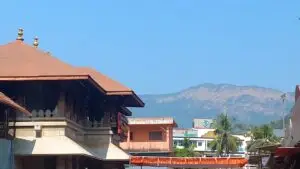
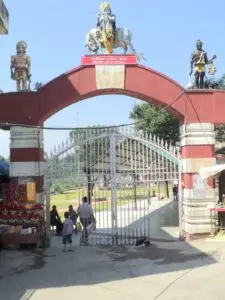
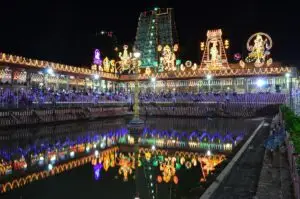
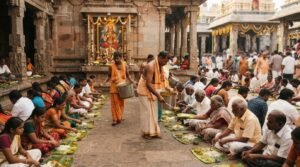
Parvati reigns as Meenakshi at Madurai and in her creative form at Kamakhya; Durga receives worship at Vaishno Devi and as Chamundeshwari at Mysuru; and Kali is enshrined at Dakshineswar, Kalighat and Tarapith. Together these shrines map the Mother's presence across India.
| Form | Temple | Location and Significance |
|---|---|---|
| Parvati | Meenakshi Amman Temple | Madurai, Tamil Nadu: Parvati as Meenakshi, consort of Sundareswarar (Shiva) |
| Parvati | Kamakhya Temple | Guwahati, Assam: the supreme Shakti Peetha, where the Mother is worshipped in her creative, yoni form |
| Parvati | Mansa Devi and Himalayan Gauri shrines | Across the Himalayas, honouring her as the mountain's daughter |
| Durga | Vaishno Devi | Katra, Jammu and Kashmir: one of the most visited shrines in the world, where the Mother is worshipped as the protective Durga |
| Durga | Durga Puja pandals and Dakshineswar | Kolkata, West Bengal: the warrior-goddess slaying Mahishasura is celebrated each autumn |
| Durga | Chamundeshwari Temple | Mysuru, Karnataka: Durga as Chamundi, slayer of the demon Mahishasura who gave the city its name |
| Kali | Dakshineswar Kali Temple | Kolkata: where Sri Ramakrishna worshipped the Mother as Bhavatarini |
| Kali | Kalighat Kali Temple | Kolkata: one of the 51 Shakti Peethas and the namesake of the city |
| Kali | Tarapith, Kamakhya and Kodungallur | Birbhum, Guwahati and Kerala: major centres of Tantric Kali worship, with Kodungallur Bhagavathy honouring the fierce southern form |
How Are Navratri, Durga Puja and Kali Puja Connected?
The great autumn festivals celebrate the very continuum of the Mother's forms: Navratri traces Parvati's journey through the nine Navadurga, Durga Puja celebrates the warrior Mother's victory over Mahishasura, and Kali Puja on the new-moon night of Kartik honours the Dark Mother who grants liberation.
Navratri: Nine Nights of the Goddess
Navratri ("nine nights") honours the Navadurga, the nine forms tracing Parvati's spiritual journey from Shailaputri to Siddhidatri. Across the nine nights the Mother receives worship in her gentle, martial and fierce aspects in turn: a living map of the Parvati to Durga to Kali continuum. The festival culminates on the tenth day, Vijayadashami (Dussehra), marking Durga's victory over Mahishasura and the triumph of good over evil.
Durga Puja: The Warrior Mother's Homecoming
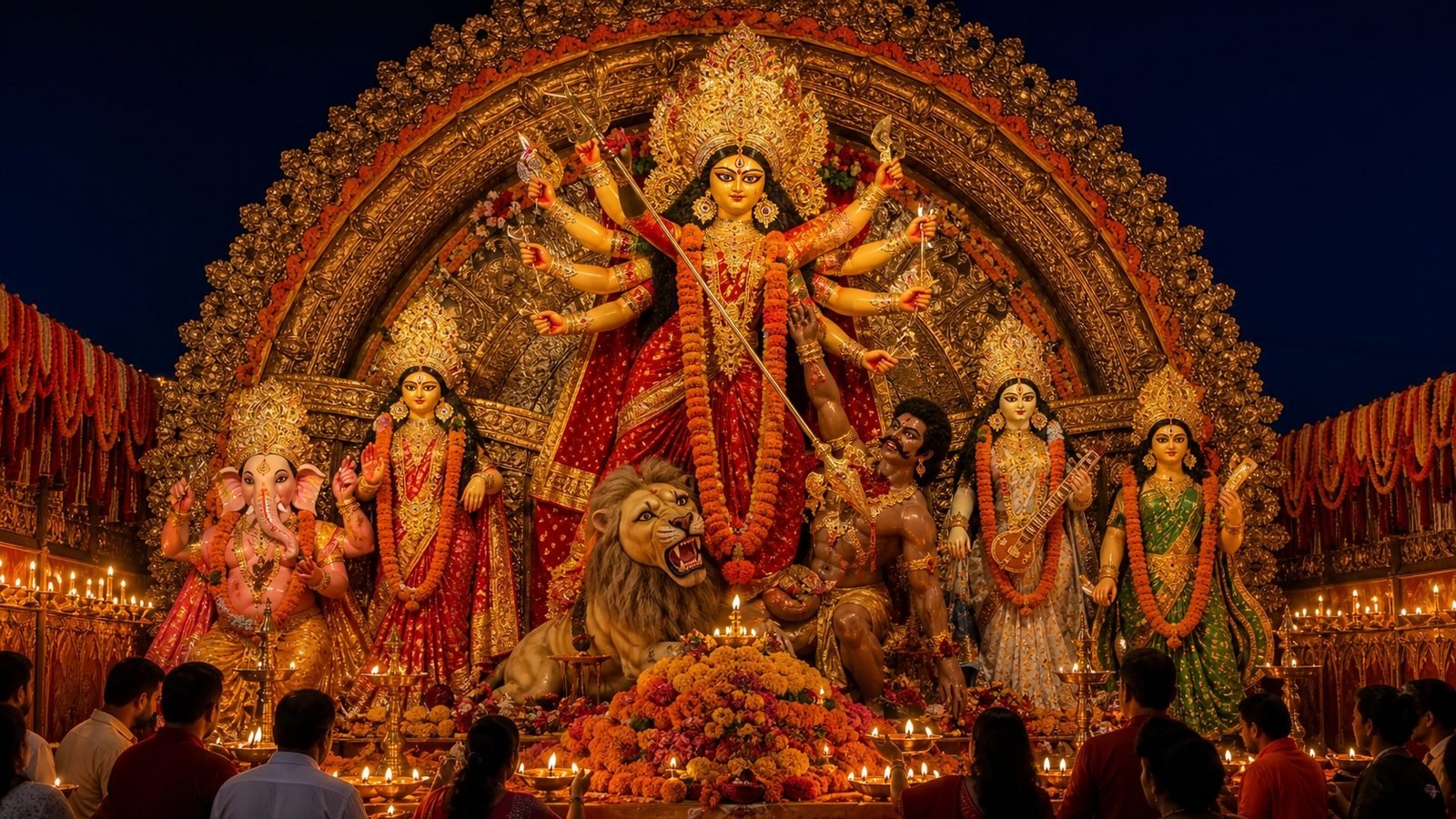
Especially in Bengal, Assam and Odisha, the last days of Navratri swell into Durga Puja, the grandest celebration of the year. Elaborate clay idols depict Durga slaying Mahishasura, flanked by Lakshmi, Saraswati, Ganesha and Kartikeya: the Mother surrounded by her divine family. After days of devotion, the idols are immersed in rivers, symbolising the Mother's return to the formless.
Kali Puja: The Dark Mother's Night
On the new-moon night of Kartik, coinciding with Diwali, Bengal, Assam and Odisha turn from lamps for Lakshmi to the worship of Kali. Through the night, devotees offer red hibiscus, sweets and heartfelt surrender to the Dark Mother who dissolves fear and grants liberation: the fierce climax of the Mother's festival cycle.
Listen: Maa Kali mantra chant in 432 Hz by Musinara Sounds
🕉️ Hear these sacred mantras come alive. Subscribe to Musinara Sounds on YouTube for 432 Hz Devi mantra chants, sung slowly enough to follow and repeat.
Frequently Asked Questions
Are Kali, Durga and Parvati the same goddess?
Yes. At the deepest level all three are forms of the one Adi Shakti, the primordial Divine Mother. They differ in mood, mythology and method, gentle Parvati, warrior Durga, fierce Kali. But their essence is identical. Worshipping any one of them sincerely is worshipping the whole Mother.
Is Kali the same as Durga?
Kali and Durga are forms of the same Goddess but are not identical in expression. In the Devi Mahatmya, Kali emerges from Durga's brow at the height of her wrath. Durga is the composed, sovereign warrior who slays Mahishasura; Kali is the boundless, ego-dissolving fury that completes what Durga begins, slaying Chanda, Munda and Raktabija.
What is the main difference between Durga and Kali?
Durga is the ordered, protective warrior: calm-faced, lion-riding, ten-armed, upholding dharma. Kali is the wild, transformative force of time and dissolution: dark-skinned, garlanded with skulls, destroyer of ego and fear. Durga restores cosmic order; Kali transcends it to grant liberation.
Is Parvati the same as Durga and Kali?
Parvati is widely regarded as the source form from which Durga and Kali emerge when the situation demands. The Navadurga of Navratri are described as stages of Parvati's own journey, and in scripture she sheds her sheath to become the warrior Kaushiki (Durga), while her wrath becomes Kali. So Parvati, Durga and Kali are one Mother in three intensities.
How did Kali originate?
Her most famous origin is in the Devi Mahatmya: during the battle with Chanda and Munda, the Goddess's anger turned her face black as ink and Kali sprang from her brow, dark, skull-garlanded and sword in hand. Other texts (Linga Purana, Vamana Purana) give complementary accounts in which Parvati's dark aspect becomes Kali.
Why does Kali stand on Shiva?
When Kali's victory-dance threatened to destroy creation, Shiva lay in her path; stepping on her own consort, she bit her tongue in modesty and stopped. The image teaches that Shakti (energy) and Shiva (consciousness) are inseparable: without Shakti, Shiva is inert; without Shiva, Shakti runs wild. Reality needs their union.
Who are Parvati's children?
Parvati is the mother of Ganesha, the remover of obstacles whom she created from turmeric paste and gave life, and Kartikeya (Skanda or Murugan), the commander of the gods' armies. Both are central to her identity as the nurturing Divine Mother.
Which goddess should a beginner worship?
Begin with the form your heart is drawn to. Parvati suits those seeking love, family harmony and gentle devotion; Durga suits those seeking protection and courage; Kali suits those ready to face fear and seek transformation. The simple beej mantras for each can be chanted by anyone, without formal initiation.
What is the connection of Parvati to Durga to Kali?
Think of them as one flame at three intensities: Parvati is grace and union, Durga is protective ordered power, and Kali is boundless liberating fury. Scripturally, Parvati becomes the warrior Kaushiki/Durga, and Durga's wrath becomes Kali: a single continuum of the one Mother.
Can I worship all three forms together?
Absolutely. Because they are one Adi Shakti, honouring Parvati, Durga and Kali together is a complete and traditional practice. Navratri itself worships the gentle, martial and fierce forms across its nine nights, and a home altar may lovingly hold all three.
Parvati, Durga and Kali are three names for the one love that births, protects and frees us. May the Mother in whichever form calls to you bless your path. Sound is the first prayer: chant her name with devotion.
Part of the Das Mahavidya series. All ten wisdom goddesses, the origin story, their beej mantras and temple guides are collected in one place: Das Mahavidya: The Ten Wisdom Goddesses.