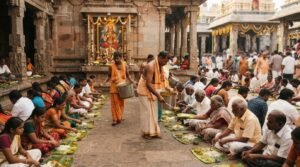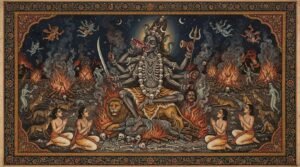
Kali is never born idly. In the Shakta scriptures she erupts - from Durga’s brow in mid-battle, from Parvati’s dark sheath, from Shiva’s request when no one else could act. Each emergence has a cause, each cause leaves behind a distinct form, and each form is still worshipped somewhere in India tonight. This is a guide to the fierce avatars: who each one is, why she arose, and where she reigns.
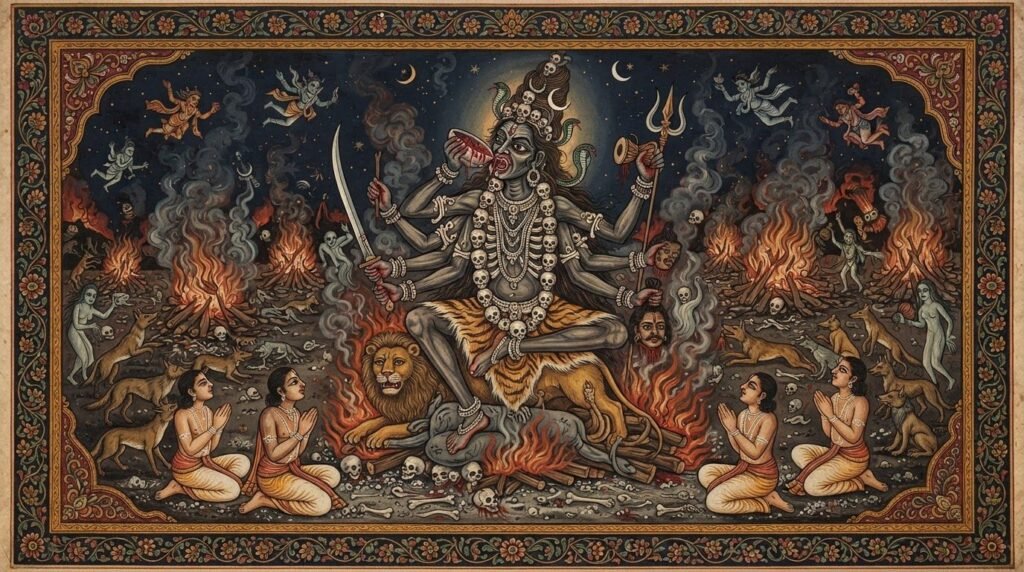
The Forms at a Glance
| Form | Arose because… | Where she reigns |
|---|---|---|
| Kali (Kalika) | Durga’s fury condensed at the sight of Chanda and Munda’s army | Pan-Indian; the first Mahavidya |
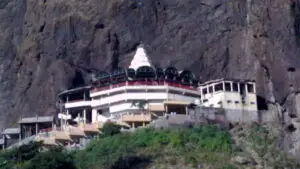
| Chamunda | She took the heads of Chanda and Munda and carried the name home | Chamundi Hill, Mysuru; Chamunda Devi, Himachal |
| Dakshina Kali | The gentle-facing form revealed for householder worship | Bengal - Kalighat and Dakshineswar |
| Bhadrakali | Born of Shiva’s wrath (Daruka’s slaying, in Kerala’s telling) | Kerala’s kavu shrines; Kodungallur |
| Mahakali | The cosmic devourer of time itself, beyond all episodes | Ujjain; the Mahavidya scheme’s summit |
Raktabija: Why the Battlefield Needed Her Tongue
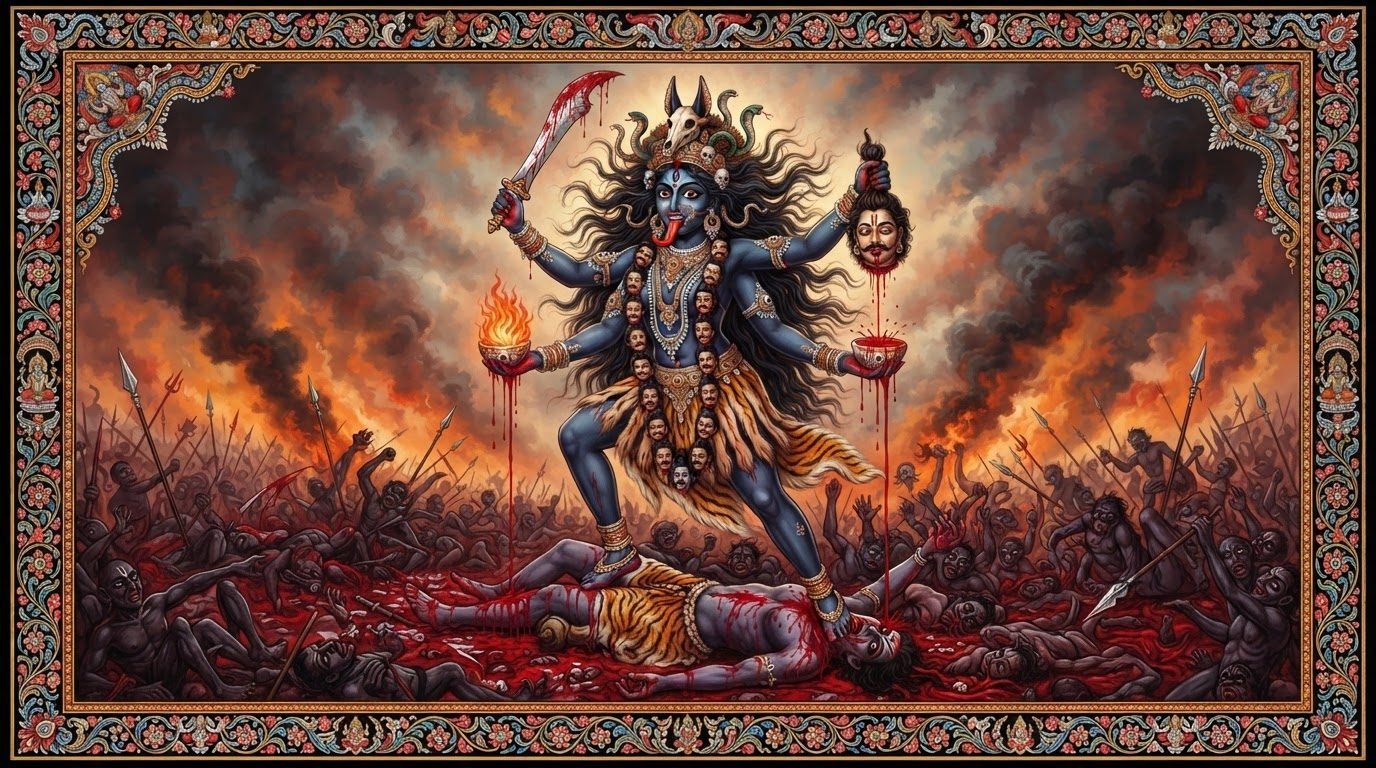
The Devi Mahatmya’s most vivid emergency: the demon Raktabija held a boon that every drop of his spilled blood birthed a full copy of him. The more the Devi’s forces wounded him, the larger his army grew. Durga’s answer was Kali - sprung from her darkened brow - who spread her tongue across the battlefield and drank each drop before it landed, until Raktabija stood bloodless and alone. The iconography Bengal paints every autumn - the extended tongue, the garland of heads - is that battlefield remembered.
The lesson devotees draw is precise: some tendencies multiply when struck. Anger fought with anger is Raktabija’s blood. Kali is invoked for the habits that grow back - the ones that must be consumed at the root, not cut.
Region by Region
Bengal: Shyama, the mother at midnight
Bengal domesticated the terror without dulling it. As Dakshina Kali - right foot forward, the face a mother’s - she receives worship at Kalighat and Dakshineswar, and on Kali Puja night (8 November 2026) every para raises her pandal where the rest of India lights Lakshmi’s lamps. The Shyama Sangeet tradition - Ramprasad’s songs to the dark mother - treats her as a mother who can be argued with, pleaded with, even scolded. Bengali guide: কালী পূজা ২০২৬.
Kerala: Bhadrakali of the kavu
Kerala’s Kali is Bhadrakali, born - in the southern telling - from Shiva’s third eye to end the demon Daruka, whom only a woman could slay. She lives in sacred-grove shrines and in the great body of ritual arts: theyyam’s blazing headdresses, mudiyettu’s enacted battle, the Kodungallur Bharani’s raw intensity. Here the avatar never became gentle; Kerala kept her voltage and built art strong enough to hold it.
Karnataka and Himachal: Chamunda enthroned
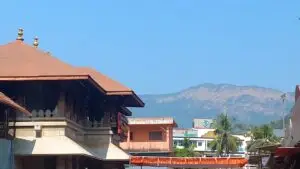
The name won at Sandhi Puja’s midnight moment - slayer of Chanda and Munda - became a throne twice over: Chamundeshwari above Mysuru, sovereign of the Dasara procession, and Chamunda Devi on the Baner river in Kangra, one of Himachal’s great Shakti seats. The same episode, enshrined two thousand kilometres apart.
The Mahavidya summit
In the tantric map of ten Wisdom Goddesses, Kali stands first - the door through which the rest are approached. Her beej, Kreem, is the seed of transformation: Om Kreem Kalikayai Namah, chanted 108 times.
Frequently Asked Questions
Are Kali and Durga the same goddess?
The tradition answers yes and no: one Shakti, distinct forms for distinct causes. Kali emerges from Durga in the Devi Mahatmya, yet receives her own worship, her own night and her own mantras.
Why does Kali stand on Shiva?
When her battle-fury would not subside, Shiva lay in her path; the moment her foot touched him, recognition stilled her - the extended tongue marks that instant. Consciousness lies still beneath energy: Shiva and Shakti in one image.
What is the difference between Dakshina Kali and Bhadrakali?
Dakshina Kali is Bengal’s benign-facing householder form, right foot forward. Bhadrakali is the southern emergence from Shiva’s wrath, fiercest in Kerala’s kavu and theyyam traditions. Same Goddess, different cause, different temperament.
When is Kali Puja in 2026?
Sunday 8 November 2026, on the Kartik amavasya - the same new moon as Lakshmi Puja in the rest of India. Full guide: musinara.com/kali-puja-2026/.
Is it safe for a beginner to chant Kali’s mantra?
The Kreem beej chanted with reverence as japa is a mainstream devotional practice. What tradition reserves for initiated practitioners are the tantric upasanas beyond simple japa - approach those only with a qualified guru.
Official Sources
- Mysuru Dasara - Government of Karnataka’s official portal for Chamundeshwari’s festival
- Kerala Tourism - Theyyam - the state’s official documentation of the ritual art of Bhadrakali
- Utsav - Ministry of Tourism, Government of India - official festival listings
Continue Your Journey
- Maa Kali: The Complete Guide
- How the Ten Mahavidyas Arose
- Mahishasura Mardini and Durga Puja 2026
- Sati and the Daksha Yagna
Fierce for our sake, never at us - that is the grammar of every form on this page.
Part of the Das Mahavidya series. All ten wisdom goddesses, the origin story, their beej mantras and temple guides are collected in one place: Das Mahavidya: The Ten Wisdom Goddesses.