The Mahishasura Mardini Stotram, popularly known as Ayi Giri Nandini, is a Sanskrit hymn of twenty-one verses praising Goddess Durga as the slayer of the buffalo-demon Mahishasura. Traditionally attributed to Adi Shankaracharya, it retells the victories of the Devi Mahatmya in a thunderous, fast-moving meter, each verse sealed with the refrain Jaya Jaya He.
Few hymns in the Sanskrit tradition are as thrilling to hear. Known to millions by its opening words, 'Ayi Giri Nandini Nandita-medini', it is a cascade of thunderous rhythm and radiant imagery, sung in praise of the Divine Mother who slew the buffalo-demon. When chanted at speed, its interlocking rhymes seem to gallop like the Goddess's own war-charge, yet its closing verses melt into the tenderest surrender at her lotus feet.
This stotram is far more than a poem. It is a compressed retelling of the great victory narrated in the Devi Mahatmya, the defeat of Mahishasura, Chanda and Munda, Raktabija, and Shumbha and Nishumbha, woven into a single garland of verses. For devotees, especially during Navaratri and Durga Puja, reciting it is a way of standing shoulder to shoulder with the gods as they cheer the Mother to victory. In this complete guide we explore the hymn's authorship and origin, the story of Mahishasura, the meaning of selected verses with transliteration, the extraordinary meter that makes it unforgettable, and the traditional ways and times to chant it, along with the benefits devotees have cherished for centuries.
Key Takeaways
- The Mahishasura Mardini Stotram is a twenty-one verse Sanskrit hymn to Durga, popularly called Ayi Giri Nandini after its opening line.
- Its authorship is most widely attributed to Adi Shankaracharya, though some sources credit the poet Ramakrishna Kavi.
- Every verse ends with the refrain 'Jaya Jaya He Mahishasura-mardini Ramya-kapardini Shaila-sute'.
- The hymn condenses the battle narratives of the Devi Mahatmya, naming Mahishasura, Madhu-Kaitabha, Chanda-Munda, Dhumralochana, Raktabija and Shumbha-Nishumbha.
- It is chanted most powerfully during Navaratri and Durga Puja, and is open to all sincere devotees, beginners included.
What Is the Mahishasura Mardini Stotram?
The Mahishasura Mardini Stotram (Sanskrit: महिषासुरमर्दिनी स्तोत्रम्) is a devotional hymn of twenty-one verses praising the Goddess Durga as Mahishasura-mardini, literally 'the crusher of the demon Mahisha'. A stotra is a hymn of praise, and this one belongs to the Shakta tradition, which venerates the Divine Feminine as the supreme power (Shakti) behind all creation.
Popularly, the hymn is simply called 'Ayi Giri Nandini' after its first line, which addresses the Goddess as the daughter of the mountain. It is celebrated equally for its devotional depth and for its dazzling literary craftsmanship: a torrent of internal rhyme, alliteration and rhythmic momentum that few compositions in any language can match.
Who Wrote the Ayi Giri Nandini Stotram?
The Mahishasura Mardini Stotram is most widely attributed to Adi Shankaracharya, the eighth-century philosopher-saint who reformed and unified much of Hindu devotional and non-dual thought. Many traditional and reference sources list him as the author, and the hymn is sometimes said to appear in the Shivarahasya Purana.
Is the Authorship Debated?
It should be noted honestly that the authorship is debated. Alongside Adi Shankaracharya, several sources attribute the composition to a poet known as Ramakrishna Kavi. Scholars point out that the hymn's dense, ornate style and elaborate meter differ somewhat from Shankaracharya's other well-known devotional works, which has kept the question open.
In practice, devotional editions commonly print both names, and the hymn is honoured regardless of which hand first shaped it.
How Is the Hymn Rooted in the Devi Mahatmya?
Whatever its author, the stotram draws directly on the Devi Mahatmya (also called the Durga Saptashati or Chandi Path), the foundational fifth-to-sixth-century text of Goddess worship embedded in the Markandeya Purana. The hymn condenses several of the Devi Mahatmya's great battle narratives into verse, which is why so many demons are named in quick succession as the Goddess's victories are recalled.
What Is the Story of Mahishasura?
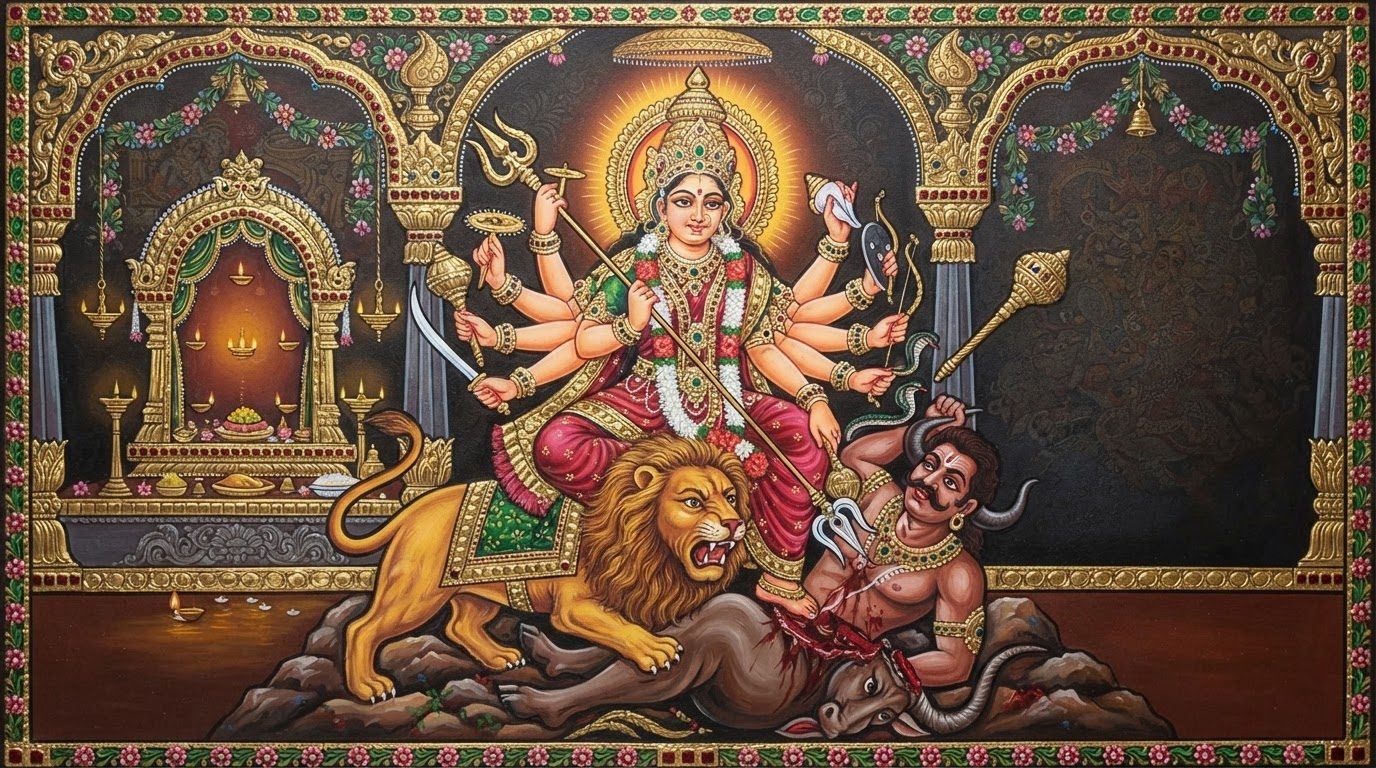
According to the Devi Mahatmya, Mahishasura was a buffalo-demon who had won a boon that no man or god could kill him. When he seized the three worlds, the gods poured out their combined energies, and from that blaze of light arose the Goddess Durga, who alone could destroy him.
Grown invincible, Mahishasura drove the devas out of heaven. In their distress, the gods released their combined tejas, and from that column of radiance a resplendent Goddess arose, armed by each deity with a weapon and adorned with their powers.
Mounted on a lion, the Goddess confronted Mahishasura, who shifted shape into a lion, an elephant and finally back into a buffalo-warrior to escape her. At last she pinned him down and slew him, restoring heaven to the gods. Because no male could defeat him, it was the Divine Feminine, Shakti herself, who accomplished what none other could. This is the victory the entire stotram celebrates, verse after verse.
What Do the Verses of the Stotram Mean?
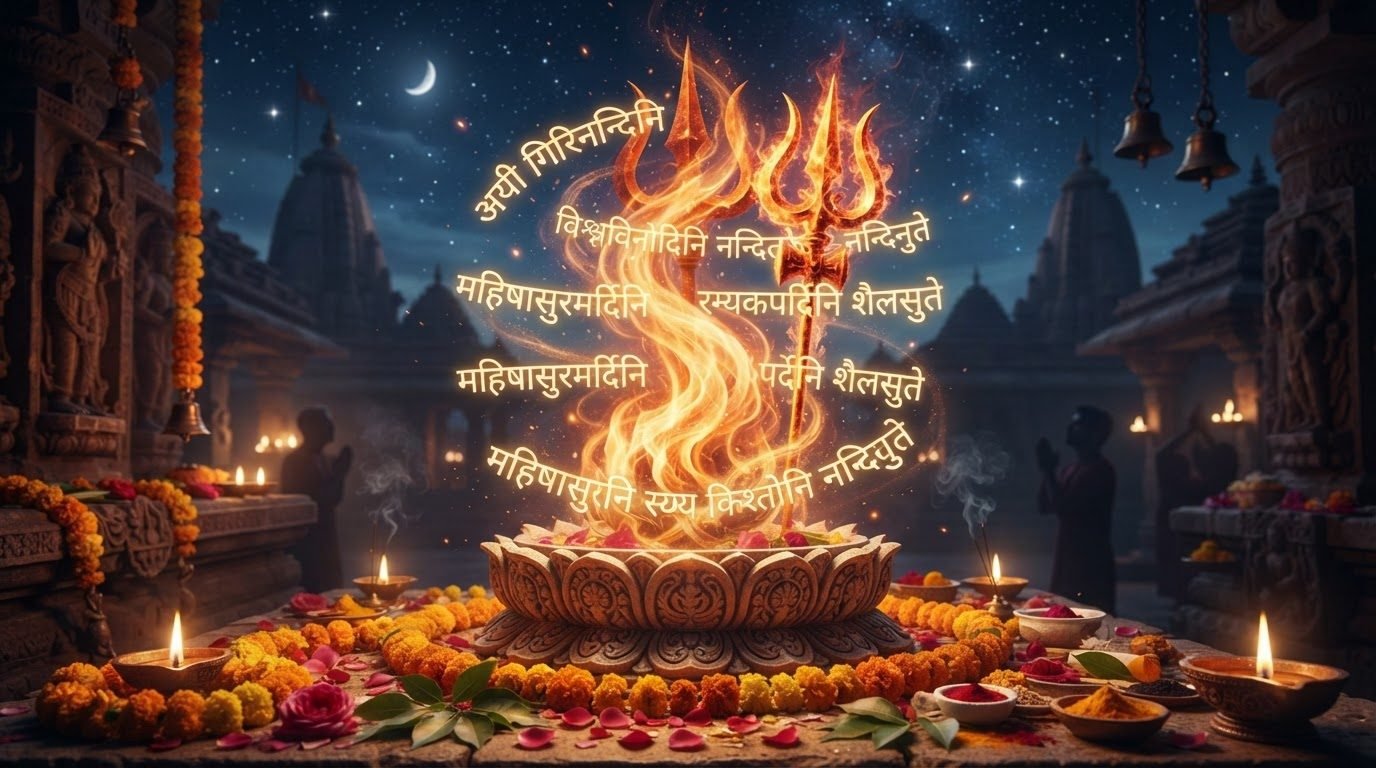
The full hymn runs to twenty-one verses. Below is a curated selection, the opening invocation, several of the great battle verses, and the tender concluding prayers, presented with Sanskrit, IAST transliteration and a faithful English rendering. Spellings and minor wordings vary slightly across printed editions; the meanings below follow widely accepted readings.
Note: These are selected excerpts, not the complete text. Ellipses indicate omitted portions of a verse. Always refer to a trusted printed edition or a qualified teacher for the full stotram.
| Sanskrit | Transliteration (IAST) | Meaning |
|---|---|---|
| अयि गिरिनन्दिनि नन्दितमेदिनि विश्वविनोदिनि नन्दिनुते … जय जय हे महिषासुरमर्दिनि रम्यकपर्दिनि शैलसुते ॥ १ ॥ | Ayi Giri-Nandini Nandita-Medini Vishva-Vinodini Nandi-Nute … Jaya Jaya He Mahishasura-Mardini Ramya-Kapardini Shaila-Sute | Salutations, O daughter of the mountain, who delights the whole earth and gladdens the universe, praised by Nandi; dweller on the Vindhya peak, joy of Vishnu, praised by Indra; consort of the blue-throated Shiva. Victory, victory to you, slayer of Mahishasura, fair-tressed daughter of the mountain. |
| अयि जगदम्ब मदम्ब कदम्ब वनप्रियवासिनि हासरते … मधुकैटभगञ्जिनि कैटभभञ्जिनि … ॥ ३ ॥ | Ayi Jagad-Amba Mad-Amba Kadamba Vana-Priya-Vaasini Haasa-Rate … Madhu-Kaitabha-Ganjini Kaitabha-Bhanjini … | O Mother of the universe, my own Mother, who loves to dwell in the kadamba groves and delights in mirth; who abides amid the lofty Himalayan crests; sweet as honey, subduer of the demons Madhu and Kaitabha. Victory to you. |
| अयि शतखण्ड विखण्डितरुण्ड गजाधिपते … निपातितखण्ड विपातितमुण्ड … ॥ ४ ॥ | Ayi Shata-Khanda Vikhandita-Runda Vitundita-Shunda Gaja-Adhipate … Nipaatita-Khanda Vipaatita-Munda … | Conqueror of the enemy's war-elephants, who shatters their trunks and severs their heads into a hundred pieces; who felled the heads of the demons Chanda and Munda by the might of her own arms. Victory to you. |
| अयि निजहुङ्कृति मात्रनिराकृत धूम्रविलोचन धूम्रशते समरविशोषित शोणितबीज … ॥ ७ ॥ | Ayi Nija-Hunkrti Maatra-Niraakrta Dhumravilochana Dhumra-Shate Samara-Vishoshita Shonita-Bija … | Who reduced the demon Dhumralochana to ashes by a mere roar (hunkara); who dried up in battle the blood of Raktabija, from whose every drop a new demon sprang; the great sacrifice of Shumbha and Nishumbha that fed the attendant spirits. Victory to you. |
| सुरललना ततथेयि तथेयि कृताभिनयोदर नृत्यरते … धीर मृदंग निनादरते … ॥ ९ ॥ | Sura-Lalanaa Tatatheyi Tatheyi Krta-Abhinayo-dara Nrtya-Rate … Dhira Mrdanga Ninaada-Rate … | To whose battle-rhythm the celestial dancers move to 'ta-theyi, ta-theyi', enacting the drama of war; whose combat unfolds to the steady deep booming of the mridanga drum. Victory to you. |
| पदकमलं करुणानिलये वरिवस्यति योंनुदिनं सुशिवे … तव पदमेव परम्पदम् … ॥ १८ ॥ | Pada-Kamalam Karuna-Nilaye Varivasyati Yo-anudinam Su-Shive … Tava Padam-Eva Param-Padam … | Whoever daily serves your lotus feet, O abode of compassion, those feet that are the dwelling of Lakshmi, how will he not himself become an abode of grace and abundance? Your feet alone are the supreme refuge. Victory to you. |
| अयि मयि दीन दयालुतया कृपयैव त्वया भवितव्यमुमे … दुरुतापमपाकुरुते … ॥ २१ ॥ | Ayi Mayi Dina Dayaalu-Tayaa Krpayaiva Tvayaa Bhavitavyam-Ume … Duru-Taapam-Apaakurute … | O Uma, compassionate to the lowly, you must surely bestow your grace on me; O Mother of the world, as your mercy is showered so are your arrows scattered; do whatever is fitting now, and remove the sorrow too heavy to bear. Victory to you. |
Why Is the Meter of the Stotram So Powerful?
The signature feature of the Mahishasura Mardini Stotram is its meter: each line is built from rapid, near-identical rhythmic units packed with internal rhyme and alliteration, syllables that tumble over one another like the drumbeat of battle. This is why the hymn is so exhilarating to hear and so demanding to chant.
It is essentially a musical composition disguised as a prayer, which is why so many melodic settings of it exist.
What Is the Refrain 'Jaya Jaya He'?
Every one of the twenty-one verses ends with the same triumphant line: 'Jaya Jaya He Mahishasura-mardini Ramya-kapardini Shaila-sute', meaning 'Victory, victory to you, O slayer of Mahishasura, the beautifully-tressed daughter of the mountain.' This recurring shout of triumph turns the whole hymn into a collective cheer, as if the gods themselves are roaring the Goddess on to victory.
Why Does the Rhythm Matter?
The relentless cadence is not mere ornament. The compound-rich lines force the reciter to control the breath and sharpen concentration, so that chanting becomes a natural exercise in focus and pranic discipline. Many devotees find that the very difficulty of the meter draws the mind away from distraction and into an absorbed, almost meditative state, one reason the hymn is so beloved in group recitation during the festival nights.
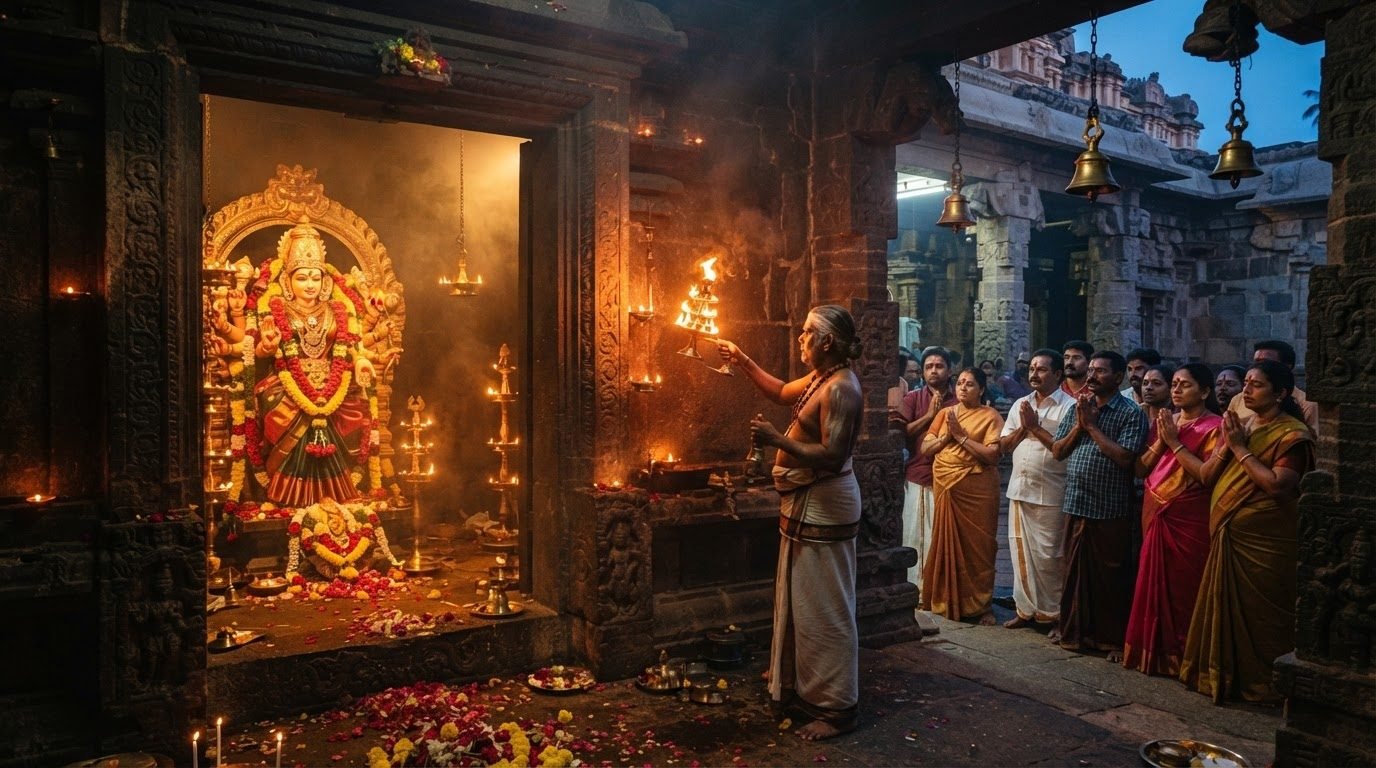
Which Deities and Images Does the Hymn Invoke?
The hymn is crowded with names drawn from the Devi Mahatmya and the wider Puranic world: the mountain-born Goddess, the demons she conquered, her consort Shiva, and the Lakshmi imagery of her closing verses. Understanding a few of them makes the verses come alive.
| Name / Image | Who / What It Refers To |
|---|---|
| Shailasuta / Girinandini | Daughter of the mountain (Himavan): Parvati, the Goddess in her mountain-born form. |
| Mahishasura | The buffalo-demon whose slaying gives the hymn and the Goddess her name. |
| Madhu & Kaitabha | Primordial demons subdued at the dawn of creation, recalled in verse 3. |
| Chanda & Munda | Demon generals beheaded by the Goddess (verse 4), origin of the name Chamunda. |
| Dhumralochana | Demon reduced to ash by the Goddess's mere roar (verse 7). |
| Raktabija | The demon whose every fallen blood-drop became a new demon (verse 7). |
| Shumbha & Nishumbha | Demon brothers whose defeat completes the Devi Mahatmya cycle (verse 7). |
| Shitikantha | The 'blue-throated one': Lord Shiva, the Goddess's consort. |
| Kamala / Kamalanilaya | Lakshmi imagery invoked in the closing verses (18-19). |
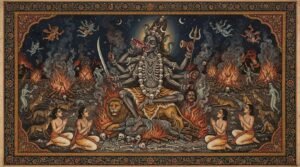
The name Chamunda points to the fierce dimension of the Mother celebrated in our complete guide to Maa Kali. Alongside these, the hymn dwells on the Goddess's beauty, her moon-like face, lotus-petal forehead, voice sweeter than the cuckoo, and anklets that captivate even Shiva. In its final verses, Lakshmi and Saraswati imagery presents the one Goddess as the source of power, prosperity and wisdom alike, the same truth unfolded in the origin story of the Das Mahavidyas.
How and When Should You Chant the Ayi Giri Nandini?
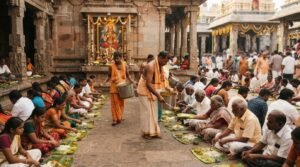
The stotram is best chanted during Navaratri and Durga Puja, on Tuesdays and Fridays, or as part of a daily morning sadhana. Learn the refrain first, follow a reliable recording or teacher for the rapid pronunciation, and build up verse by verse with devotion rather than speed.
The Best Times to Chant
- Navaratri: the nine nights of the Goddess, especially the fierce first three nights and the culminating Ashtami and Navami.
- Durga Puja: during the great autumn festival, particularly at the times of Sandhi Puja and the Goddess's worship.
- Tuesdays and Fridays: days traditionally sacred to the Divine Mother.
- Daily practice: as part of a morning sadhana, after bathing and before one's other duties.
How to Chant with Devotion
- Begin by learning the refrain, then add verses gradually; do not rush to chant all twenty-one at once.
- Follow a reliable recording or a qualified teacher to get the rapid pronunciation right; chant slowly first, then build up tempo.
- Sit in a clean, quiet place facing east or north, ideally before an image of the Goddess with a lit lamp.
- Keep the mind on the meaning and on the Mother's presence; devotion (bhakti) matters far more than speed or perfection.
There are no restrictions on who may recite this stotram. It is open to all sincere devotees, beginners included. The essential ingredient is heartfelt reverence.
What Are the Benefits of Chanting the Mahishasura Mardini Stotram?
Devotees traditionally associate sincere recitation of this hymn with courage, protection, the removal of obstacles and enmity, sharpened focus, deepened devotion and auspiciousness for the family. These benefits span the spiritual, psychological and material planes and have been cherished across generations.
| Dimension | Traditional Benefit |
|---|---|
| Courage & Fearlessness | The martial imagery is said to dissolve fear and instil the resolve to face inner and outer 'demons'. |
| Removal of Obstacles | Chanting during Navaratri is believed to clear negativity, enmity and stagnation. |
| Focus & Discipline | The demanding meter trains breath and concentration, steadying a restless mind. |
| Devotion (Bhakti) | The tender closing verses cultivate surrender and loving refuge at the Mother's feet. |
| Auspiciousness | Recitation is traditionally associated with prosperity, protection and family well-being. |
As with all devotional practice, these benefits are understood to flow from regular, sincere and reverent recitation rather than from mechanical repetition. The hymn is ultimately a means of drawing close to the Divine Mother, who, as the final verse pleads, showers her grace on the lowly and removes sorrows too heavy to bear.
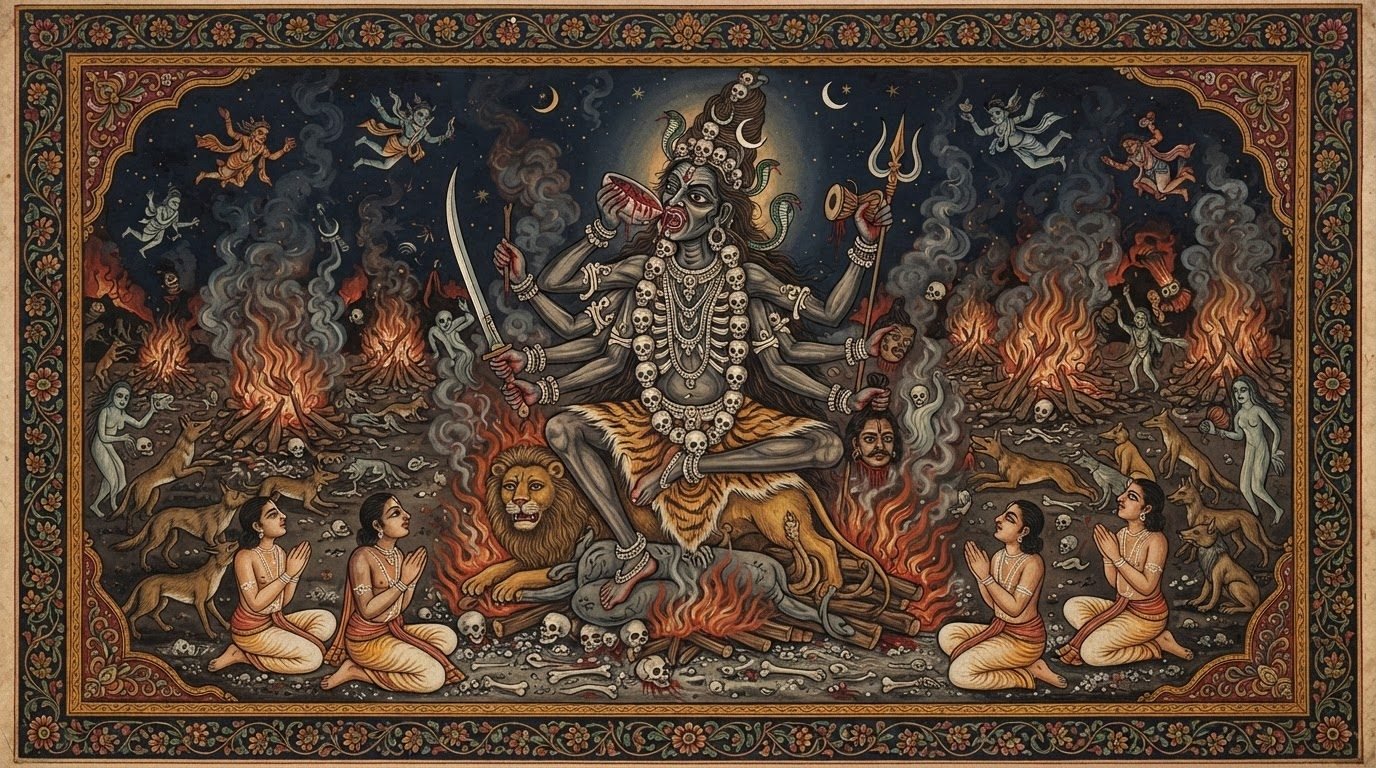
How Does the Stotram Live in Tradition Today?
The Mahishasura Mardini Stotram has travelled far beyond the pages of the scriptures. It is sung in temples and homes across India, broadcast on the airwaves at dawn during the festival season, and rendered by classical and devotional singers whose recordings have introduced it to listeners worldwide. Its rhythmic drive lends itself naturally to music, and countless melodic settings exist.
For many families the sound of 'Ayi Giri Nandini' at first light is inseparable from Navaratri itself, a signal that the Mother's nine nights have begun. In this way the hymn is not a relic but a living current of devotion, carrying the ancient victory of Shakti over darkness into every new generation.
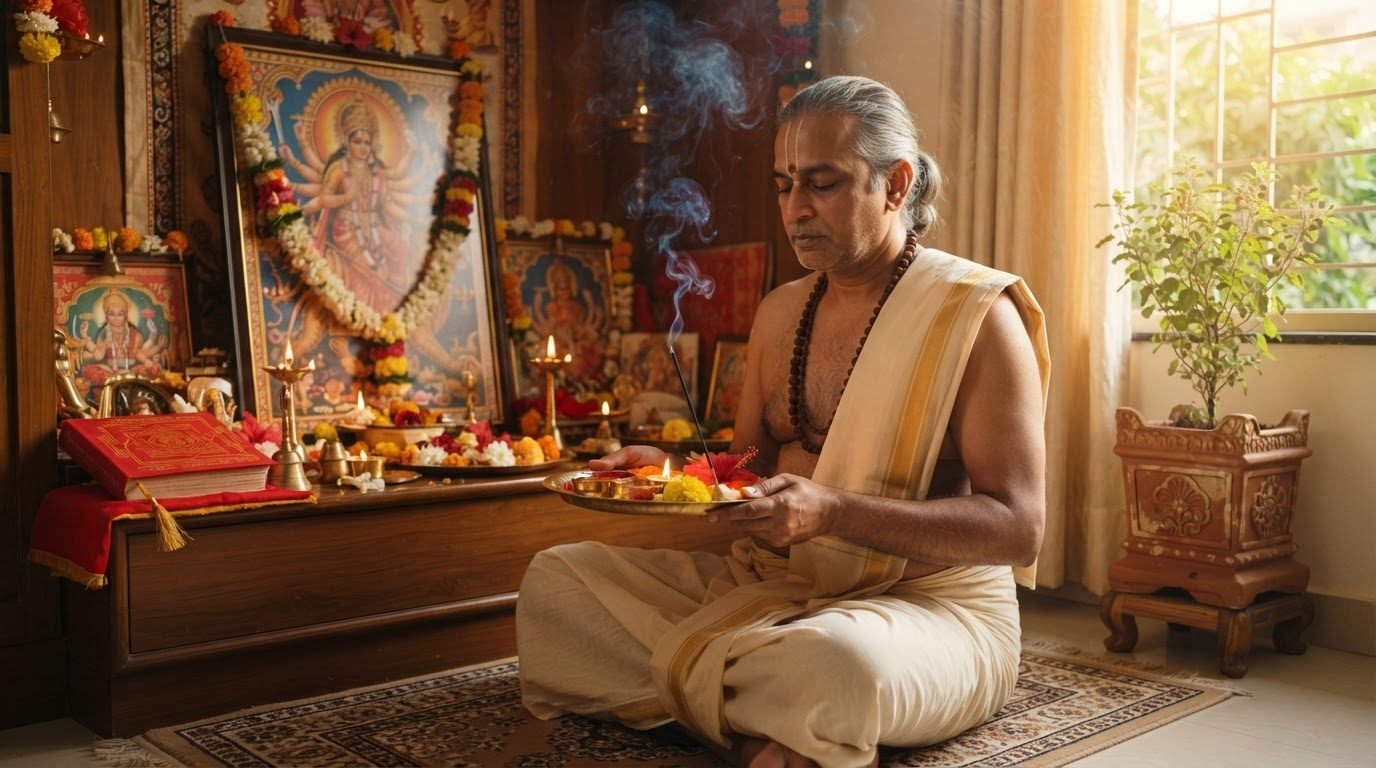
Conclusion
The Mahishasura Mardini Stotram is at once a battle-cry and a prayer of surrender: a hymn that begins by cheering the Goddess to victory over the demon and ends by taking refuge at her compassionate feet. Whether you are drawn to its exhilarating rhythm, its retelling of the Devi Mahatmya, or the deep devotion it awakens, chanting 'Ayi Giri Nandini' is a timeless way to invite the strength, protection and grace of the Divine Mother into your life. May her victory be yours.
Jaya Jaya He Mahishasura-mardini Ramya-kapardini Shaila-sute.
Listen: Subscribe to Musinara Sounds for 432 Hz mantra chants
🕉️ Hear these sacred mantras come alive. Subscribe to Musinara Sounds on YouTube for 432 Hz Devi mantra chants, sung slowly enough to follow and repeat.
Frequently Asked Questions
What is the Mahishasura Mardini Stotram?
It is a Sanskrit devotional hymn of twenty-one verses praising the Goddess Durga as the slayer of the buffalo-demon Mahishasura. It is popularly known by its opening words, 'Ayi Giri Nandini', and belongs to the Shakta tradition of Goddess worship.
Who wrote the Ayi Giri Nandini stotram?
The authorship is traditionally attributed to Adi Shankaracharya, and this is the most widely cited attribution. However, some sources also credit a poet known as Ramakrishna Kavi. The attribution remains debated, and both names are commonly mentioned in devotional and scholarly texts.
How many verses does the Mahishasura Mardini Stotram have?
The standard version has twenty-one verses. Each verse ends with the same refrain, 'Jaya Jaya He Mahishasura-mardini Ramya-kapardini Shaila-sute.' Minor variations in wording exist between printed and regional editions.
What does 'Ayi Giri Nandini' mean?
It means 'O daughter of the mountain', an address to the Goddess Parvati/Durga, born to Himavan, the king of the Himalayas. The first line praises her as one who delights the whole earth.
What is the refrain of the stotram?
Every verse closes with 'Jaya Jaya He Mahishasura-mardini Ramya-kapardini Shaila-sute', meaning 'Victory, victory to you, O slayer of Mahishasura, the beautifully-tressed daughter of the mountain.'
When should the Mahishasura Mardini Stotram be chanted?
It is most powerfully chanted during Navaratri and Durga Puja, especially on Ashtami and Navami. It may also be recited on Fridays, on Tuesdays, or daily as part of one's morning practice.
What are the benefits of chanting this stotram?
Devotees traditionally associate it with courage, protection, the removal of obstacles and enmity, mental focus, prosperity and deepened devotion. Its powerful rhythm is also valued for steadying the breath and the mind.
Is the meter of the stotram difficult?
The hymn is famous for its intricate, fast-moving meter rich in internal rhyme and alliteration. It rewards practice: chanting slowly at first and gradually increasing tempo helps the tongue and breath find the flow.
Which stories from the Devi Mahatmya does the hymn reference?
It draws on the Devi Mahatmya, recalling the slaying of Mahishasura, Madhu and Kaitabha, Chanda and Munda, Dhumralochana, Raktabija, and Shumbha and Nishumbha.
Can beginners chant the Ayi Giri Nandini?
Yes. There is no restriction on reciting this stotram. Beginners are encouraged to follow a reliable recording, learn the refrain first, and build up verse by verse with devotion.
New to chanting? Two short guides cover the practicalities: how to chant a mantra (mala, count, pronunciation and the three traditional modes of japa), and Devi worship at home (a simple altar and a ten minute daily sequence).