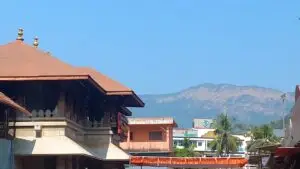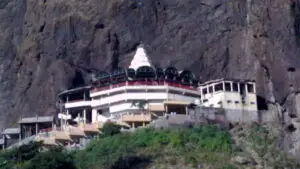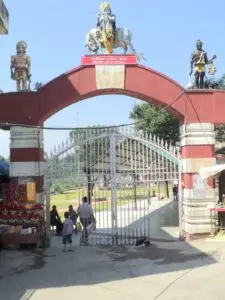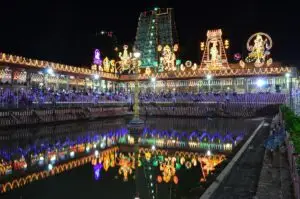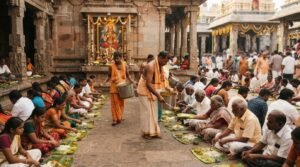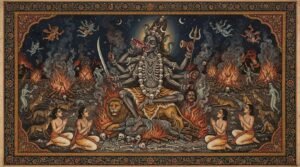
Tarapith Temple in Birbhum, West Bengal, is the great Tantric shrine of Maa Tara, the second of the ten Mahavidyas. It carries two honours. As a Shakti Peetha, it marks the place where the pupil of Sati's eye fell. As a Siddha Peetha, it draws fame from its Mahashmashan cremation ground, the saint Bamakhepa, and the festival of Kaushiki Amavasya.
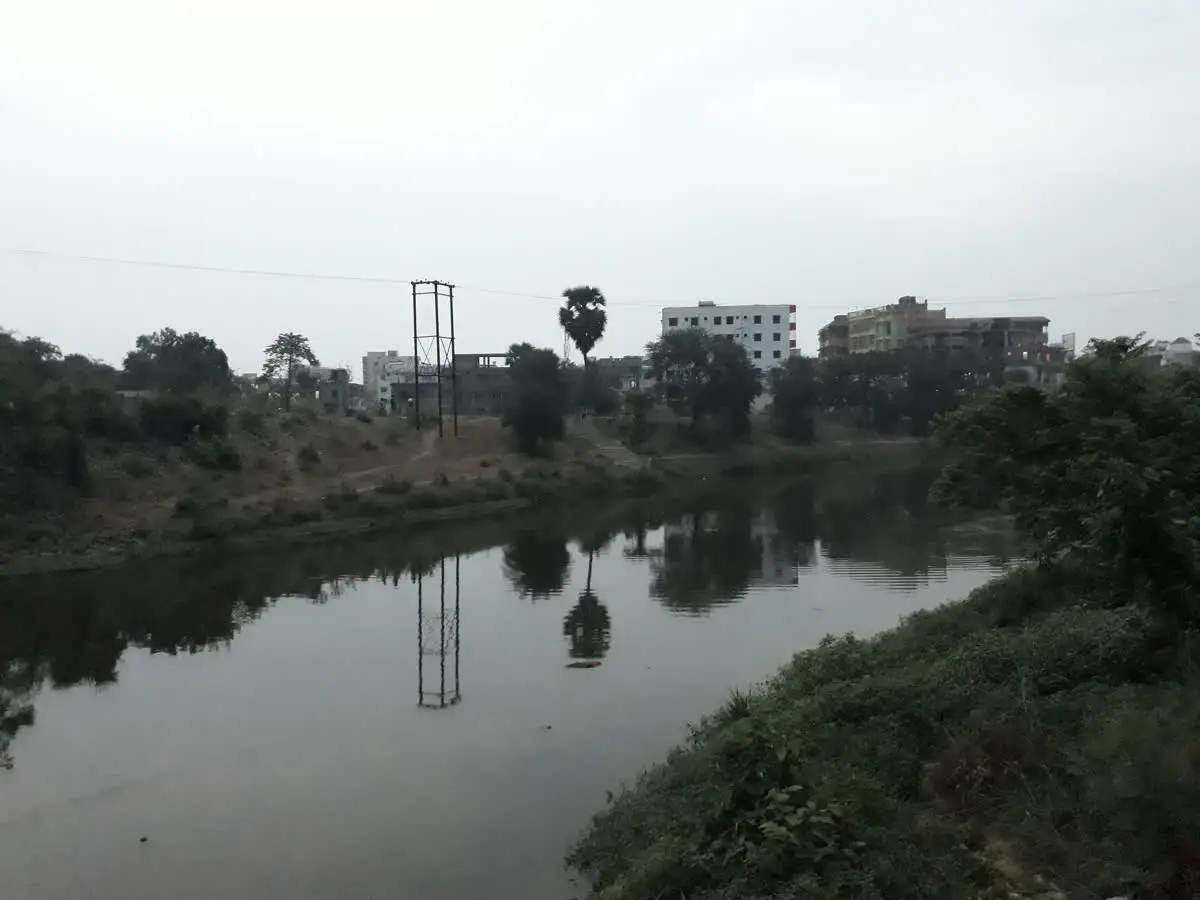
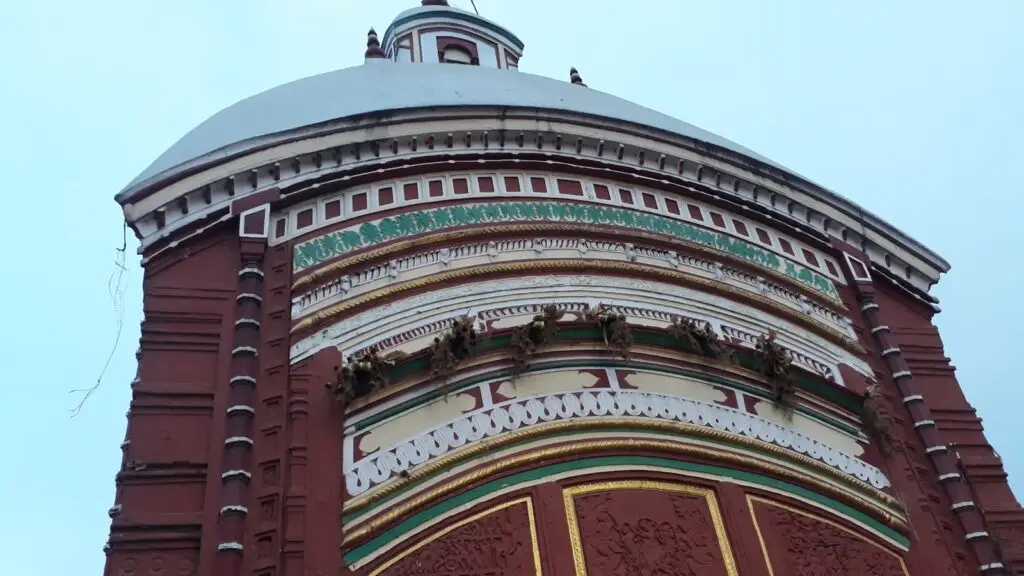
On the banks of the slow, north-flowing Dwarka river stands one of the most charged spiritual sites in all of India. Unlike the grand, towering temples of the north or the gilded shrines of the south, Tarapith is humble in stone yet immense in power. Beneath an eight-roofed Bengali superstructure of weathered brick and laterite, the Mother receives worship in two forms at once. First, a fierce, silver-crowned ritual face meets the eye of the pilgrim. Behind it, then, rests an ancient self-manifested stone image of Tara nursing the infant Shiva. Few shrines in the subcontinent hold devotion and dread, tenderness and terror, in so perfect a balance.
Yet what sets Tarapith apart from almost every other temple in India is what lies beside it. A short walk from the sanctum, on the same riverbank, spreads the Mahashmashan, the "great cremation ground", where the fires that consume the dead never fully go cold. However, to the ordinary visitor it is a place of grief. To the Tantric sadhaka it is the most sacred ground of all, the very seat of Maa Tara's power. Here the illusions of the world burn away. Here the seeker meets the Goddess face to face. Here, among the ashes and the skulls, the great mad saint Bamakhepa lived, ate, slept and realised the Mother in the nineteenth century. Tarapith has been inseparable from his memory ever since.
What This Guide Covers
So this guide walks the devotee and the curious traveller through everything that gives Tarapith its aura. We begin with the legend of Sati's falling eye, then turn to the temple's history and architecture. From there we take up the mystery of the stone image of Tara feeding Shiva, and the deep meaning of the Mahashmashan in Tantra. Then we follow the extraordinary life of Bamakhepa. Finally we cover the worship, the offerings, and festivals such as Kaushiki Amavasya. We close with the Tara mantra, the fruits of devotion, and a practical plan to reach Rampurhat and the temple itself. Throughout, we walk gently and with reverence, for this is sacred and serious ground.
Key Takeaways
- Tarapith carries two honours. As a Shakti Peetha, it marks where the pupil (tara) of Sati's eye fell. Second, as a Siddha Peetha, it promises swift spiritual attainment.
- The sanctum holds two layers: an ancient self-manifested stone image of Tara nursing the infant Shiva, fronted by a fierce, silver-crowned ritual face.
- Indeed, Tantra regards the Mahashmashan cremation ground beside the temple as the holiest part of the site. Indeed, it is the true seat of Maa Tara's power.
- The saint Bamakhepa (c. 1837 to 1911) attained direct communion with Maa Tara through sadhana in the cremation ground and receives veneration as part of the shrine itself.
- Kaushiki Amavasya, the new-moon night of Bhadra (August to September), is Tarapith's greatest festival, when the temple typically stays open all night.
Who Is Maa Tara, the Goddess of Tarapith?
Maa Tara is the second of the Das Mahavidyas, the ten great wisdom goddesses of the Shakta and Tantric traditions, standing immediately after Kali herself. She is the Star Goddess who ferries her devotees across the ocean of worldly existence, fierce like Kali in her cremation-ground aspect, yet maternal and rescuing in temperament.
Indeed, Tarapith means "the seat (pith) of Tara". Moreover, it is a small temple town in the Rampurhat subdivision of Birbhum district, West Bengal. It sits on the banks of the Dwarka river, a tributary that winds through the red soil of this part of Bengal. Consequently, the whole town has grown up around this single presiding deity.
The Meaning of Tara's Name
Maa Tara's name shares its root with the Sanskrit word for a star and for "that which carries across." Just as a star guides a lost traveller through the dark. And just as a boat carries a passenger across deep water. In the same way, devotees invoke Tara as the one who ferries them across the bhavasagara, the perilous ocean of worldly existence. She is deeply akin to Maa Kali in her dark, fierce, cremation-ground aspect, yet her temperament leans towards the maternal and the rescuing: where Kali destroys, Tara saves and guides. She is also revered as Neela Saraswati, the Blue Saraswati, bestower of wisdom and speech. You can explore her full story, iconography and worship in our complete guide to Maa Tara, and her place among the ten goddesses in the Das Mahavidya origin story.
Furthermore, Tarapith holds a double distinction that very few shrines can claim. It carries two honours. As a Shakti Peetha, it marks one of the holy sites where a part of Sati fell to earth. As a Siddha Peetha, a "seat of accomplishment", it promises the dedicated sadhaka swift perfection in spiritual practice. For centuries it has stood among the foremost centres of Tantra and Shakti worship in eastern India. Today it draws householder pilgrims and ascetic Tantriks alike to the Mother's feet.
Why Is Tarapith Called a Shakti Peetha?
Tarapith is a Shakti Peetha because tradition holds that a part of Sati fell here. For example, some say it was her third eye. Nevertheless, the most cherished local telling names the pupil (tara) of her eye. This is why the place is called Tarapith and lovingly named Nayan Tara, "the star of the eye."
The origin of Tarapith is woven into the great cosmic story of Sati and Shiva that gives India its network of Shakti Peethas. Sati, the first consort of Shiva and daughter of the king Daksha, immolated herself in grief and protest when her father insulted her husband at a great sacrifice. Maddened by sorrow, Shiva took up her lifeless body and roamed the worlds in a wild dance of mourning that threatened to shatter creation. To release him and to save the universe, Vishnu loosed his Sudarshana Chakra and cut Sati's body into many pieces. So wherever a fragment fell, that ground became a Shakti Peetha. Thus each one holds the Mother's living presence forever. The full story is told in our guide to the Sati and Daksha Yagna legend, and every sacred site is mapped in the 51 Shakti Peethas complete guide.
What the Scriptures Say
Texts such as the Devi Bhagavata, the Kalika Purana and the Shakti Peetha stotras preserve the tradition. At Tarapith, they say, the third eye of Sati, or the pupil of her eye, fell to earth. The Sanskrit word for the pupil or the centre of the eye is tara, and from this the place takes its name and its identity.
It should be noted, as honest tradition always does, that the legends here come in several layers and variations. Although some accounts speak of the third eye. Others name the pupil (tara) of the eye instead. In fact, the precise body part and the source text differ between Puranas and regional retellings. Still, pilgrims need not be troubled by this. Such variation marks a living oral and scriptural tradition many centuries old. The heart of the matter never changes. The falling of the Mother's sacred eye sanctified this ground.
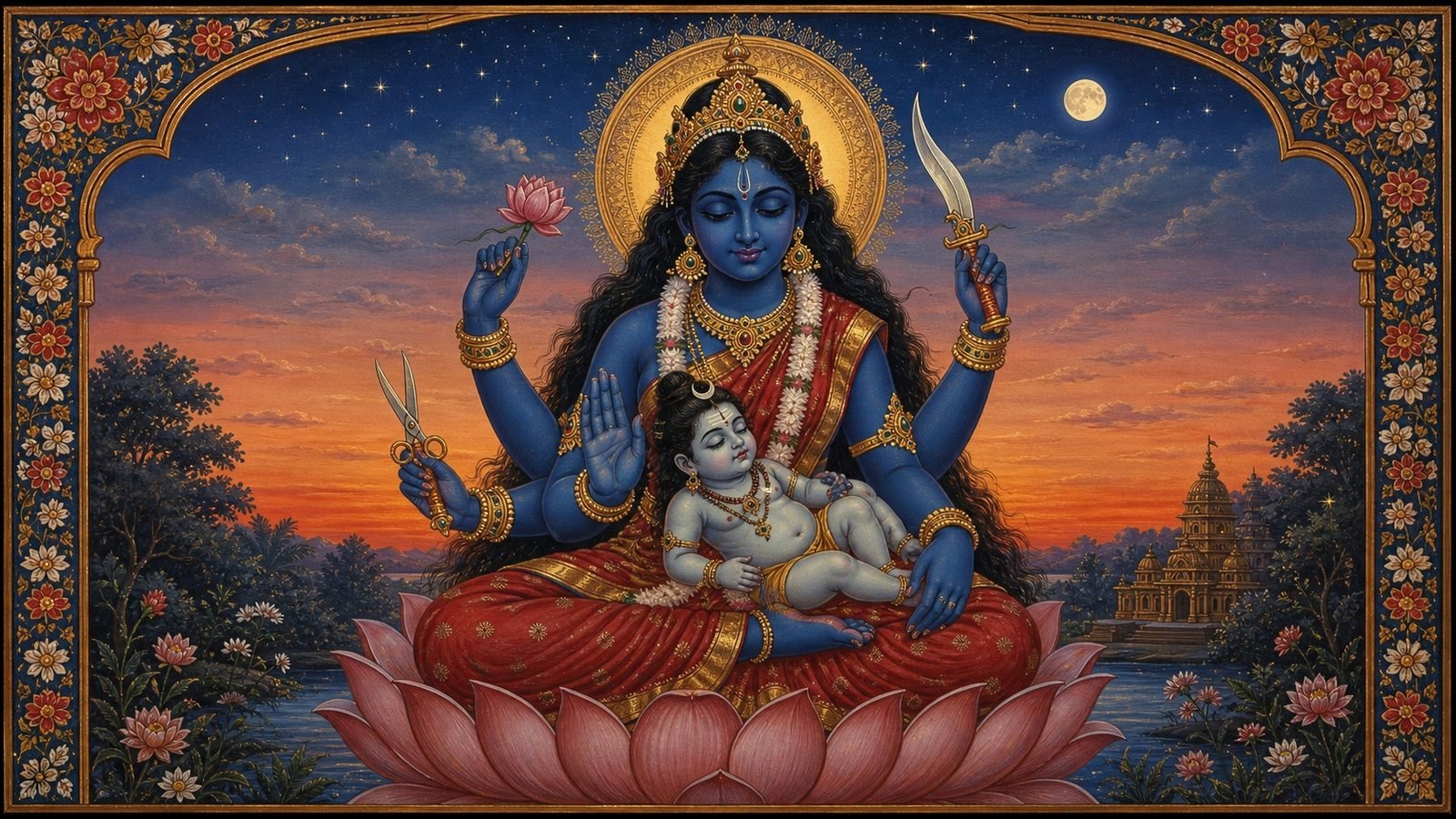
A second strand of legend, distinct from the Shakti Peetha story, explains the unusual image worshipped here. When the gods churned the cosmic ocean, the world-destroying poison Halahala arose, and Shiva drank it to save creation, his throat burning blue. To soothe and revive him, the Goddess took the form of Tara and offered him her breast, nursing Shiva as a mother nurses her child. The sacred stone of Tarapith depicts this tender scene: the Mother feeding the infant Shiva. That is the deepest reason Tara receives worship here as the supreme nurturing power, even amid the cremation fires.
What Is the History and Architecture of Tarapith Temple?
Worship at Tarapith is ancient. Local tradition holds that the sage Vasishtha first realised Tara here. It also holds the original image svayambhu, self-manifested and recovered from beneath the earth. The present brick-and-laterite temple, in the Bengali atchala (eight-roofed) style, is traditionally credited to Jagannath Ray of Mallarpur in the thirteenth century.
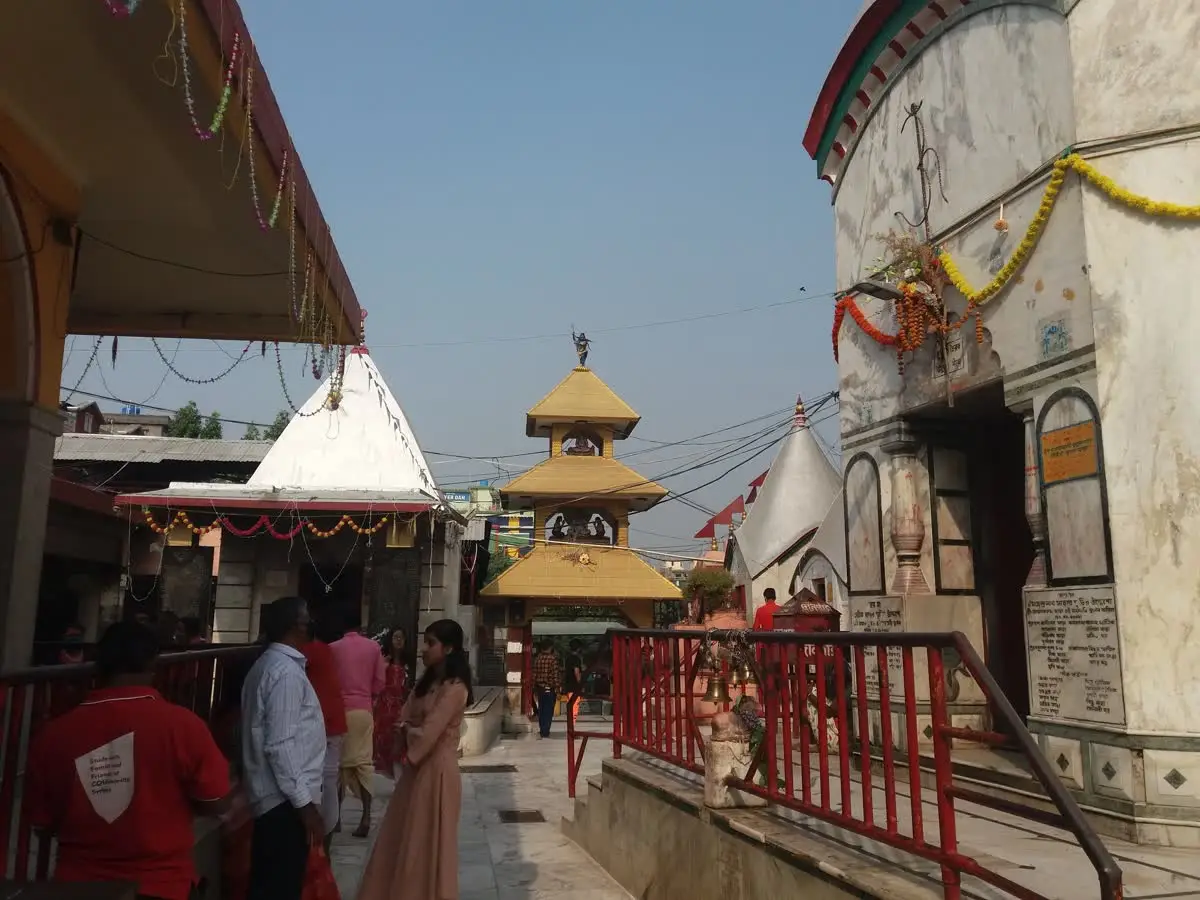
Around this primordial focus the worship of Tarapith slowly grew across the centuries into the great Tantric centre it is today. The temple pilgrims see today is characteristically Bengali. It is built of brick and laterite, with a curved cornice and a compact spire. It feels more intimate in scale than the soaring stone temples of other regions. Later patrons rebuilt and renewed it over the generations. As with much of Tarapith's history, different accounts remember the exact dates and patrons differently.
Inside the sanctum the Mother is present in two layers, and understanding this is the key to a meaningful darshan. The primordial stone image, the svayambhu form of Tara nursing Shiva, dark and ancient, is the inner, original deity. In front of it the priests have placed a second, more visible ritual face of the Goddess. She is a fierce, large-eyed form of metal and stone, crowned with silver. They garland her, drape her in a sari and red cloth, and smear her with vermilion. It is this awe-inspiring, brightly adorned face that most devotees behold, while the gentle nursing image remains behind it, the secret heart of the shrine.
What Does the Image of Tara Nursing Shiva Mean?
The image embodies the legend in which Shiva drank the world-poison Halahala and Tara revived him by nursing him at her breast. It shows that the same Goddess who rules the cremation ground is, at heart, a loving mother, uniting the fierce and the tender in a single gesture.
Of all the wonders of Tarapith, none is more beloved than this. In her other forms this fierce Tara wears garlands of skulls and stands upon corpses. Yet here, in the cremation ground, she receives worship first of all as a mother feeding her child.
This single image holds the whole paradox of Tantra in a tender gesture. The same Mother who presides over death, decay and dissolution in the Mahashmashan is, in her innermost being, pure nourishing love. The terror and the tenderness are not two different goddesses but one: the fierce face that the world sees and the nursing heart that the devotee comes to know. Pilgrims who grasp this leave Tarapith with one understanding. Maa Tara's fierceness is never cruelty. It is the ferocity of a mother who protects her children and carries them across every danger, even death itself.
In daily worship the priests bathe, dress and adorn the visible ritual face of Tara with great care. They mark her with a third eye of vermilion and crown her with silver. So the Goddess appears before her children resplendent and alive. Today devotees offer her red hibiscus and other flowers, sweets, coconut and red cloth. The shrine keeps its ancient Shakta-Tantric character. Traditional rituals here have long included blood offerings, such as the sacrifice of goats at a designated altar. Visitors who would rather not witness such rites can simply time their darshan accordingly and offer flowers and devotion instead.
What Is the Tarapith Mahashmashan and Why Does It Matter?
The Mahashmashan is the great cremation ground beside the temple on the Dwarka river. In Tantra it stands as the holiest part of Tarapith and the true seat of Maa Tara's power, because it strips away ego, illusion and the fear of death. It has long drawn serious Tantric practitioners, ascetics and Aghoris.
In most of India the cremation ground is a place of fear and pollution, shunned by the living once the rites are done. At Tarapith the opposite holds true. Here, instead, the smasan stands as the holiest part of the whole site. Tradition holds the Mother eternally present among the ashes.
Why Tantra Honours the Cremation Ground
In the Tantric worldview, the cremation ground is the supreme place of sadhana precisely because it strips away every illusion. Here, above all, death is undeniable. Here social rank, beauty, wealth and ego come to the same handful of ash. The sadhaka who sits calmly amid the funeral pyres conquers revulsion and fear. Tradition says such a one has crossed the greatest inner barrier. Only then is the seeker ready to meet the Mother as she truly is: the power that governs both life and death. For this reason the Mahashmashan has drawn serious Tantric practitioners, ascetics and Aghoris for generations. Likewise they keep huts and hermitages among the burning grounds. There they pursue disciplines that the ordinary devotee only glimpses from afar.
Two features of the Mahashmashan are especially revered. The first is the cluster of ancient trees within it. Bamakhepa and other saints reportedly meditated beneath them. Even now pilgrims still circle them with folded hands. The second is the constant presence of the cremation fires. Tantric tradition treats them not as a horror to avoid but as a sacred reminder. They are visible proof that all that is born must return to the Mother.
This guide speaks of these matters with deliberate reverence and restraint. The practices of the cremation ground are profound, demanding and not to be imitated casually. For the pilgrim, it is enough to walk the smasan quietly, with respect for the dead, for the sadhakas and for the Goddess who reigns there.
Who Was Bamakhepa, the Mad Saint of Tarapith?
Bamakhepa (c. 1837 to 1911), born Bamacharan Chattopadhyay in Atla village near Rampurhat, was the great Tantric saint of Tarapith. Practising intense sadhana in the Mahashmashan, he attained direct, living communion with Maa Tara and is today venerated almost as a part of the shrine itself.
No figure is more bound up with Tarapith than this saint, also spelt Bamakhyapa and reverently called Bamdev. He was born into a poor and pious Brahmin family. From his earliest years he showed no interest in worldly life, money or convention. Only the Mother and spiritual practice drew him. The villagers, baffled by his behaviour, called him khepa, "mad", and the name stuck. "Bama-khepa" carries a double meaning: the mad one, and the mad follower of the vama or "left-hand" path, the demanding Tantric way of worship.
His Sadhana in the Cremation Ground
Bamakhepa took up the life of a Tantric sadhaka in the cremation ground of Tarapith. His gurus, among them Kailaspati Baba, guided him. There he pursued an intense, unconventional sadhana amid the funeral fires. He made the Mahashmashan his home, eating and sleeping among the pyres, utterly absorbed in his devotion to Maa Tara. Through years of fierce practice he reportedly attained direct communion with the Goddess. Even so, he knew her not as a distant idol but as a living mother. Indeed, with her he spoke, quarrelled, wept and shared his food. His contemporary, the Bengali saint Sri Ramakrishna, knew Kali at Dakshineswar in much the same way.
The traditions surrounding Bamakhepa overflow with accounts of his miraculous powers (siddhis), his fearless defiance of empty ritualism, his childlike innocence and his fierce compassion for the suffering. Even today devotees remember him for healing the sick and for insisting that the Mother be fed before anyone else. One famous episode still draws smiles. He ate from the offerings meant for the deity, declaring that the living Mother surely wished to feed her hungry child. Furthermore, he lived at Tarapith until his death in 1911. To this day his memory and his ashram remain central to the pilgrimage. Consequently, many devotees count a visit incomplete without paying their respects to Bamdev.
How Is Maa Tara Worshipped at Tarapith?
Daily worship follows the rhythm of a living Bengali Shakta shrine. First, priests bathe, dress and adorn the Goddess before the morning Mangal Aarti. Then pilgrims take darshan through the day. The evening Sandhya Aarti then closes the day with lamps, bells, conches and incense. Offerings range from red hibiscus and sweets to the traditional sacrificial rites of the old Shakta path.
Offerings and the Festival Bhog
The offerings brought to Maa Tara reflect both her tender and her fierce natures. Devotees bring red hibiscus and other flowers, garlands, sweets such as sandesh, coconut, fruit, incense and red cloth or a sari for the Goddess. Tarapith is an ancient Tantric shrine, and traditional worship here has long included blood sacrifice. Those who make such vows offer goats at the temple's sacrificial altar. This belongs to the old Shakta ritual fabric of the place. It is not a requirement for the ordinary visitor.
On the great festival days the priests cook an elaborate bhog, a sacred meal. They offer it to the Mother and then share it with the devotees. This festive bhog draws fame for its abundance. It usually carries rice and fried rice or pulao, moong dal, and several kinds of fried vegetables and curries. Fish such as shol maach appears too, along with a variety of sweets and payesh, the Bengali rice pudding. In keeping with the temple's character, sacrificial mutton joins the offering. To share in this prasad is considered a great blessing and a tangible taste of the Mother's grace.
Worshippers should remember that, as in all Shakta practice, the deepest offering is never the grandest one. Maa Tara values sincere devotion, a surrendered ego and a heart opened in trust far above the costliest gift. Ritual is only a doorway. Turning the heart towards the Goddess is the true worship of Tarapith.
What Is the Maa Tara Mantra?
Her principal beej mantra runs Om Hreem Streem Hum Phat (ॐ ह्रीं स्त्रीं हुं फट्). The Tantric tradition knows it as a "rescue mantra". Devotees turn to it in danger and desperation. Its seed syllable Streem carries Tara's power of protection, guidance and salvation.
Chanting the name and seed sounds of Maa Tara is one of the simplest ways to reach the Goddess of Tarapith. Moreover, it works whether or not you can travel to the temple.
| Aspect | Maa Tara Beej Mantra |
|---|---|
| Sanskrit | ॐ ह्रीं स्त्रीं हुं फट् |
| Hindi | ओम् ह्रीं स्त्रीं हुं फट् |
| Transliteration | Om Hreem Streem Hum Phat |
| Meaning | Om. I invoke divine grace (Hreem), the saving and protective power of Tara (Streem), her fierce energy (Hum), and the force that cuts through every obstacle and danger (Phat). |
The Meaning of the Seed Syllables
In the seed syllables of this mantra the whole nature of Tara is condensed. Hreem is the bija of the Great Goddess, of cosmic grace and Maya. Streem is Tara's own seed, the sound of her rescuing, star-like compassion. Hum is the fierce protective bija. Phat is an astra or "weapon" syllable, and it shatters obstacles, fear and negative forces. Together they make a mantra equally suited to deep, sustained sadhana and to a single urgent cry for help in a moment of crisis.
For practice, sit in a clean, quiet place, ideally in the early-morning Brahma Muhurta or at night, the times most sacred to Tara. Tara's colour is blue. Devotees therefore favour a blue or white cloth and a crystal or white mala. Then light a lamp and incense. Then chant the mantra with attention and, above all, with feeling. Tradition says the Mother answers heartfelt chanting far more readily than mechanical repetition. Traditionally, one full mala of 108 repetitions is the measure. Tuesdays, Saturdays and the nights of the new and full moon carry special auspiciousness.
Out of respect for the tradition, this guide gives only the well-known public beej mantra. The more elaborate Tantric mantras and the formal practices of Tara pass directly from a qualified guru through initiation (diksha). Therefore no seeker should improvise them.
What Are the Spiritual Benefits of Worshipping Maa Tara?
Devotees invoke Maa Tara above all for safe passage: through danger, illness, grief, fear and the storms of life. Her name means "she who carries across." Tradition holds her grace especially swift for those in genuine desperation. She opens a way when no way seems to remain.
Traditionally attributed benefits of sincere worship and mantra practice of Maa Tara include the following:
- Protection and rescue in danger, crisis and emergency situations.
- Safe passage and protection during travel and through difficult transitions in life.
- Release from deep-seated fear, anxiety and the dread of death and the unknown.
- Clarity of mind, eloquence and success in study, for she is also Neela Saraswati, goddess of wisdom and speech.
- Healing of grief, emotional wounds and a sense of being lost or abandoned.
- Awakening of inner shakti and steady progress for the serious sadhaka.
- Spiritual guidance and, ultimately, the grace that ferries the soul towards liberation (moksha).
As always on the Shakta path, these blessings are not won by ritual alone but by the turning of the heart. Maa Tara asks of her children courage, sincerity and trust: the willingness to place even one's fear of death in the Mother's hands and let her carry it across.
What Is Kaushiki Amavasya, and Which Festivals Does Tarapith Celebrate?
Kaushiki Amavasya falls on the new-moon night in the Bengali month of Bhadra, usually August to September. Thus it is the supreme festival of Tarapith and the most powerful night of the year for Tara sadhana. Tradition holds that the gateway between worlds stands open, and the temple commonly remains open around the clock.
On this night countless sadhakas, ascetics and pilgrims converge on the temple and the Mahashmashan, where Tantric practice continues until dawn. Beyond this great night, the temple keeps a full annual round of celebration:
- Kaushiki Amavasya (Bhadra, Aug to Sep): The supreme festival of Tarapith, the most auspicious new moon for Tara sadhana, drawing vast crowds and intense Tantric practice through the night.
- Kali Puja and Diwali (Kartik, Oct to Nov): The new-moon night sacred to the dark Goddess is observed with night-long worship, lamps and great festivity across Tarapith.
- Navaratri (Sharad, Sep to Oct): The nine nights of the Goddess are marked with special worship of Tara in her many aspects.
- Phalaharini and other Amavasyas: Several new-moon nights through the year are held sacred for Tara sadhana and draw practitioners to the cremation ground.
- Annual fairs and Bamakhepa's observances: Seasonal melas and days dedicated to the memory of the saint Bamakhepa bring fairs, kirtan and large gatherings of devotees to the town.
Whatever the season, Tarapith never truly sleeps. On any given day pilgrims arrive to lay their burdens before Maa Tara. Beyond the temple wall, in the smasan, the older and fiercer worship of the Mother continues. It has gone on for centuries beneath the trees and the rising smoke.
How Do You Reach Tarapith Temple?
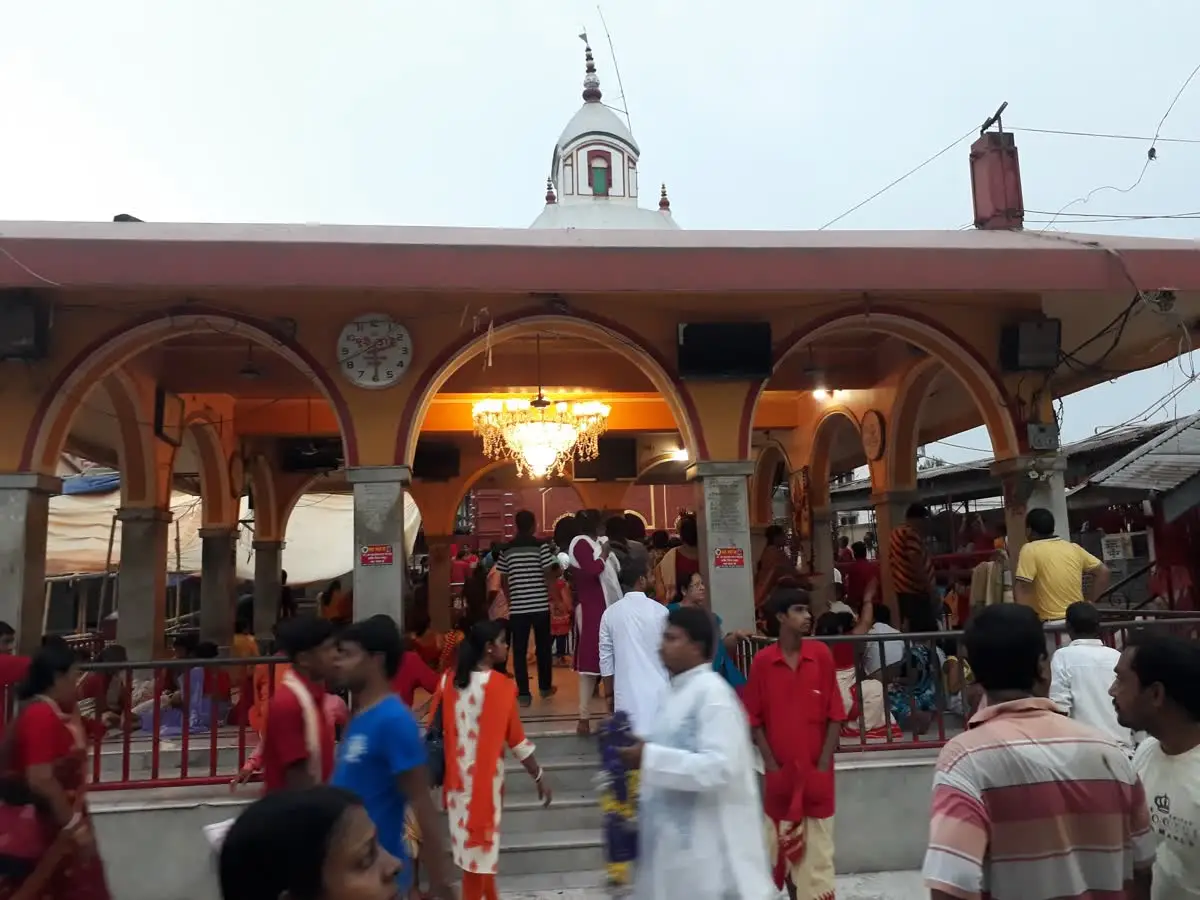
Tarapith lies in Birbhum district, roughly 220 to 265 km north of Kolkata. For almost every pilgrim, then, Rampurhat Junction is the gateway, only 6 to 9 km from the temple. Most visitors take a train from Howrah or Sealdah to Rampurhat, then a short auto or taxi ride.
| Detail | Information |
|---|---|
| Location | Tarapith, Rampurhat subdivision, Birbhum district, West Bengal, on the bank of the Dwarka river; roughly 220 to 265 km north of Kolkata |
| Nearest airport | Kazi Nazrul Islam Airport at Andal (Durgapur), roughly 80 to 90 km; Netaji Subhas Chandra Bose International Airport, Kolkata (around 250 to 265 km) for wider connectivity |
| Rail | Rampurhat Junction, about 6 to 9 km away; frequent trains from Howrah and Sealdah (Howrah-Rampurhat Express, Sealdah-Rampurhat Intercity) take roughly 4 to 6 hours; shared autos and taxis cover the last 15 to 20 minutes |
| Road | About 5 to 6 hours from Kolkata via NH-12 (the old NH-114 / NH-60 corridor) through Bardhaman and Rampurhat; regular buses from Kolkata, Durgapur, Asansol, Suri and Shantiniketan |
| Timings | Opens around 5:00 to 5:30 AM after the ritual bathing and morning aarti; short midday closure for bhog; darshan resumes in the afternoon until the evening aarti, often around 7:30 to 8:30 PM; open all night on Kaushiki Amavasya (confirm locally) |
| Entry fee | Free |
Darshan Tips for Pilgrims
- Arrive early in the morning for a calmer darshan and shorter queues; weekends, Amavasya nights and festival days are extremely crowded.
- Dress modestly and be ready to remove footwear before entering the sanctum.
- Carry offerings if you wish; red flowers, sweets, coconut and red cloth are traditional, and stalls near the temple sell puja items and prasad.
- Approach the Mahashmashan quietly and respectfully; it is an active cremation ground and a place of serious sadhana, not a sightseeing spot. Avoid photography of the dead and of practitioners without consent.
- Traditional rituals here include animal sacrifice; those who prefer not to witness it should time their visit accordingly and offer flowers instead.
- Many pilgrims also visit Bamakhepa's ashram and samadhi and bathe in or pay respects at the Dwarka river as part of the pilgrimage.
- Simple lodging, dharamshalas and hotels are plentiful in Tarapith and Rampurhat; book ahead around major festivals.
Listen: Subscribe to Musinara Sounds for 432 Hz mantra chants, including devotional music for Maa Tara
🕉️ Hear these sacred mantras come alive. Subscribe to Musinara Sounds on YouTube for 432 Hz Devi mantra chants, sung slowly enough to follow and repeat.
Plan Your Visit to Tarapith: Timings, Tickets and Travel
The details below were checked on 3 October 2026 against the sources listed under each table. Timings and fees change on festival days, eclipses and special occasions, so confirm with the temple before you travel.
Darshan and Aarti Timings
| Information | Details |
|---|---|
| Temple opens | 5:30 am |
| Midday closure | From about 12:00 to 12:30 pm until 1:30 pm, while bhog is offered |
| Evening aarti break | Entry stops around 6:00 pm for the aarti and reopens between 7:00 and 7:30 pm. Timings have varied, so check locally. |
| Temple closes | 10:00 pm |
| Kaushiki Amavasya (10 to 11 September 2026) | The temple stayed open through the night. |
Sources: Bengalinfo: New rules, change in timings at Tarapith Kali Temple, The Wall (thewall.in): Tarapith temple new rules from Shravan, YatraDham: Tara Pith Temple, ETV Bharat Bangla: Crowds at Tarapith on Kaushiki Amavasya 2026.
Tickets, Darshan Options and Sevas
| Option | Price | Notes |
|---|---|---|
| VIP or special darshan coupon | Rs 500 | Digital coupon via the committee app since 6 September 2026, on trial. Paper coupons are being phased out. |
| Local residents with valid ID | Free | Free pass with no queue wait, as reported in July 2026. |
A free general queue runs alongside the paid lines. Since Shravan 2026 the queues rotate: 30 minutes general (free), 20 minutes Rs 500 VIP pass, and 10 minutes protocol line. Digital VIP coupons are booked through the temple committee's mobile app, which was on trial from 6 September 2026. The temple committee and the Birbhum district administration jointly set the visiting rules.
Sources: Zee 24 Ghanta / Zee News Bangla: Tarapith digital VIP coupon, paper coupons d..., Aajkaal: Smart Tarapith: VIP coupons via app at Rs 500, The Wall (thewall.in): Tarapith temple new rules from Shravan.
Temple Rules and Dress Code
- Deposit mobile phones at the entrance or with security. The ban covers the whole complex.
- Give puja items to the priests at the sanctum. Sindoor cannot be applied directly. Do not break coconuts in the inner sanctum or on the temple walls.
- Since Shravan 2026, general devotees cannot touch the idol directly, and the rear entrance is sealed.
- Rosewater and alta (lac dye) are not allowed into the sanctum. The priests offer them.
- Only the temple authority may distribute prasad inside the compound. Wear appropriate, traditional clothes.
Sources: Bengalinfo: New rules, change in timings at Tarapith Kali Temple, ETV Bharat: Bengal's Tarapith Temple Committee Bans Mobiles Inside Complex, The Wall (thewall.in): Tarapith temple new rules from Shravan.
How to Reach Tarapith
Open Tarapith in Google Maps for live directions.
| Mode | Nearest point | Distance to the temple |
|---|---|---|
| Air | Netaji Subhas Chandra Bose International Airport, Kolkata. Kazi Nazrul Islam Airport, Andal-Durgapur, is closer. | Kolkata is about 220 to 265 km by road depending on route. Durgapur airport is about 87 km from Rampurhat. |
| Rail | Rampurhat Junction is the main gateway. Tarapith Road is also a nearby station. | about 9 to 10 km |
| Bus | Tarapith bus stand. State buses link Esplanade (Dharamtala), Kolkata, with Tarapith. |
Sources: Wikipedia: Rampurhat, distancebetween2.com: Kolkata to Tarapith distance, tarapithonline.com: Travel to Tarapith, Wikipedia: Tarapith, Wikipedia: Rampurhat Junction railway station, distancebetween2.com: Rampurhat to Tarapith distance.
Approximate distances and journey times from the cities most pilgrims start from. Road times assume normal traffic; festival weekends take longer.
| From | By road | Road time | Train or flight |
|---|---|---|---|
| Kolkata | about 220 to 265 km, depending on route | about 4.5 to 5 hours | The Maa Tara Express (13187) runs daily from Sealdah at 7:20 am to Rampurhat at 11:55 am. Rampurhat is about 207 km from Howrah, and other trains also stop there. Check IRCTC for the current schedule.; Kolkata (CCU) is the main airport. |
| Rampurhat | about 9 to 10 km | 10 to 20 minutes | Rampurhat Junction is the gateway station. |
| Durgapur | about 110 to 116 km | about 2 to 2.5 hours | Kazi Nazrul Islam Airport, Andal, is about 87 km from Rampurhat. |
| Bolpur / Santiniketan | about 62 to 80 km, depending on route | from about 1 hour 15 minutes |
Sources: Wikipedia: Rampurhat, Wikipedia: Maa Tara Express, Wikipedia: Rampurhat Junction railway station, distancebetween2.com: Kolkata to Tarapith distance, tarapithonline.com: Travel to Tarapith, distancebetween2.com: Rampurhat to Tarapith distance, distancebetween2.com: Durgapur to Tarapith distance, Birbhum district website: Tourist places, Birbhum (Rampurhat entry), distancebetween2.com: Bolpur to Tarapith distance.
Taxis are available at Rampurhat station for the drive to the temple. The Dwarka river and the mahashmashan (cremation ground) adjoin the temple.
When to Go and How Long to Allow
October to March is the comfortable season. Crowds are largest on Kaushiki Amavasya (Bhadra new moon), on Phalaharini and Kali Puja amavasyas, and on Tuesdays and Saturdays in Shravan. Choose other days for shorter queues. Arrive early in the morning to finish the puja before the midday closure.
Sources: Wikipedia: Tarapith temple, Wikipedia: Tarapith.
Prasadam, Annadanam and Where to Stay
The bhog offered at Tarapith includes non-vegetarian items such as fish and goat meat, alongside rice, vegetables and sweets. Only the temple authority may distribute prasad inside the compound. Guest houses and hotels are available near the temple. For state tourism properties in Birbhum, book only through the official WBTDCL website (wbtdcl.wbtourismgov.in), not third-party sites.
Sources: Bengalinfo: New rules, change in timings at Tarapith Kali Temple, Wikipedia: Tarapith temple, WBTDCL (West Bengal Tourism Development Corporation): Tourism properties in B....
Temples and Places Near Tarapith
- Bakreshwar Shakti Peeth (Mahishmardini), near Siuri: Traditionally linked with the portion between Sati's eyebrows. Known for its hot springs.
- Nalhateshwari (Nalhati Shakti Peeth): Reached via Rampurhat. Traditionally linked with Sati's throat (nala); some lists name the stomach instead.
- Kankalitala Shakti Peeth (Devgarbha): On the Kopai river near Bolpur. Traditionally linked with Sati's waist (kankal).
- Fullara Shakti Peeth (Attahas), Labhpur: Traditionally linked with Sati's lip. A ten day fair is held here at Magh Purnima.
- Nandikeshwari Shakti Peeth (Nandipur), Sainthia: Traditionally linked with Sati's necklace, though some accounts name the collarbone.
- Maluti temples (Jharkhand): A complex of more than 58 temples, across the state border in Jharkhand.
Sources: Wikipedia: Shakti Peetha, Wikipedia: Bakreshwar, Wikipedia: Nalhati, Wikipedia: Kankalitala, Wikipedia: Fullara, Wikipedia: Nandikeshwari temple, tarapithonline.com: Travel to Tarapith.
Frequently Asked Questions
Where is Tarapith Temple located?
Tarapith is in the Birbhum district of West Bengal, on the bank of the Dwarka river, in the Rampurhat subdivision. It lies roughly 220 to 265 km north of Kolkata, and the nearest railway station is Rampurhat Junction, about 6 to 9 km from the temple.
Who is the deity of Tarapith Temple?
The presiding deity is Maa Tara, the second of the ten Mahavidyas, the fierce yet compassionate Star Goddess who carries devotees across the ocean of existence. At Tarapith she receives worship through an ancient self-manifested stone image of Tara nursing the infant Shiva, fronted by a fiercely adorned, silver-crowned ritual face.
Why is Tarapith called a Shakti Peetha?
The Puranas and Shakti Peetha texts preserve the tradition. A part of Sati fell to earth at this spot: her third eye, or, in the most cherished telling, the pupil (tara) of her eye. This is why the place bears the names Tarapith and Nayan Tara. It is also why it carries the honour of both a Shakti Peetha and a Siddha Peetha. Accounts of the exact body part vary, as is natural in a centuries-old tradition.
What is the significance of the image of Tara nursing Shiva?
It embodies the legend in which Shiva drank the world-poison Halahala to save creation, and Tara revived him by nursing him at her breast. In short, the image shows that the Goddess who rules the cremation ground is, at heart, a loving mother. A single gesture unites the fierce and the tender in her.
What is the Tarapith Mahashmashan and why is it important?
The Mahashmashan is the great cremation ground beside the temple on the Dwarka river. In Tantra it stands as the holiest part of Tarapith and the true seat of Maa Tara's power, because it strips away ego and the fear of death. It has long been a centre for serious Tantric practitioners, ascetics and Aghoris. Pilgrims should treat it with great reverence.
Who was Bamakhepa?
Bamakhepa (also Bamakhyapa or Bamdev, c. 1837 to 1911), born Bamacharan Chattopadhyay in Atla village near Rampurhat, was the great Tantric saint of Tarapith. There he practised intense sadhana and, in time, attained direct communion with Maa Tara. Devotees remember him for his miraculous powers, childlike devotion and fierce compassion. He receives veneration almost as a part of the shrine itself.
What is the Maa Tara mantra?
The widely chanted beej (seed) mantra of Maa Tara is Om Hreem Streem Hum Phat (ॐ ह्रीं स्त्रीं हुं फट्). It is famed as a rescue mantra and is chanted with a crystal mala, ideally 108 times, with heartfelt devotion. Elaborate Tantric mantras are traditionally received from a qualified guru through initiation (diksha).
What is Kaushiki Amavasya at Tarapith?
Kaushiki Amavasya is the new-moon night in the Bengali month of Bhadra (usually August to September) and the most important festival at Tarapith. Tradition counts it the most powerful night of the year for Tara sadhana. Then huge crowds of pilgrims and Tantriks gather. Meanwhile practice continues through the night in the Mahashmashan. The temple usually stays open around the clock.
What are the Tarapith darshan timings?
Generally the temple opens early, around 5:00 to 5:30 AM. A short midday break follows for the Goddess's rest and bhog. Darshan then continues through the afternoon until the evening aarti, often closing around 7:30 to 8:30 PM. Timings vary on festival days, and on Kaushiki Amavasya the temple usually stays open all night, so confirm locally before visiting.
How do I reach Tarapith from Kolkata?
The easiest way is a train from Howrah or Sealdah to Rampurhat Junction, about 4 to 6 hours. From there a shared auto, taxi or cab covers the short 6 to 9 km ride to the temple. By road it is a drive of roughly 5 to 6 hours via NH-12; regular buses also run from Kolkata, Durgapur and Shantiniketan.
A vow, a grief, a longing for the Mother, or simple wonder: whatever draws you to Birbhum, Tarapith receives every seeker the same way. You come as a child home to Tara. Finally, she is the Star Goddess who waits beside the river and the fire to carry her devotees across.
Official and Reference Sources
- Tarapith Rampurhat Development Authority - the statutory authority for the temple area, District Birbhum
Planning a pilgrimage? All twenty Devi temple guides on this site are arranged by region, with practical circuits, in Devi Temples of India. For where each site sits in the disputed lists of 51, 52 and 108, see the Shakti Peeth list.