Introduction to Maa Bhairavi
Maa Bhairavi is the fifth Mahavidya, embodying the fierce fire of tapas (spiritual austerity) and divine wrath against evil. Her name connects her to Bhairava, the fierce form of Shiva, and she is his consort in the Tantric tradition. Bhairavi represents the heat of spiritual practice - the burning away of impurities, attachments, and ignorance through disciplined sadhana.
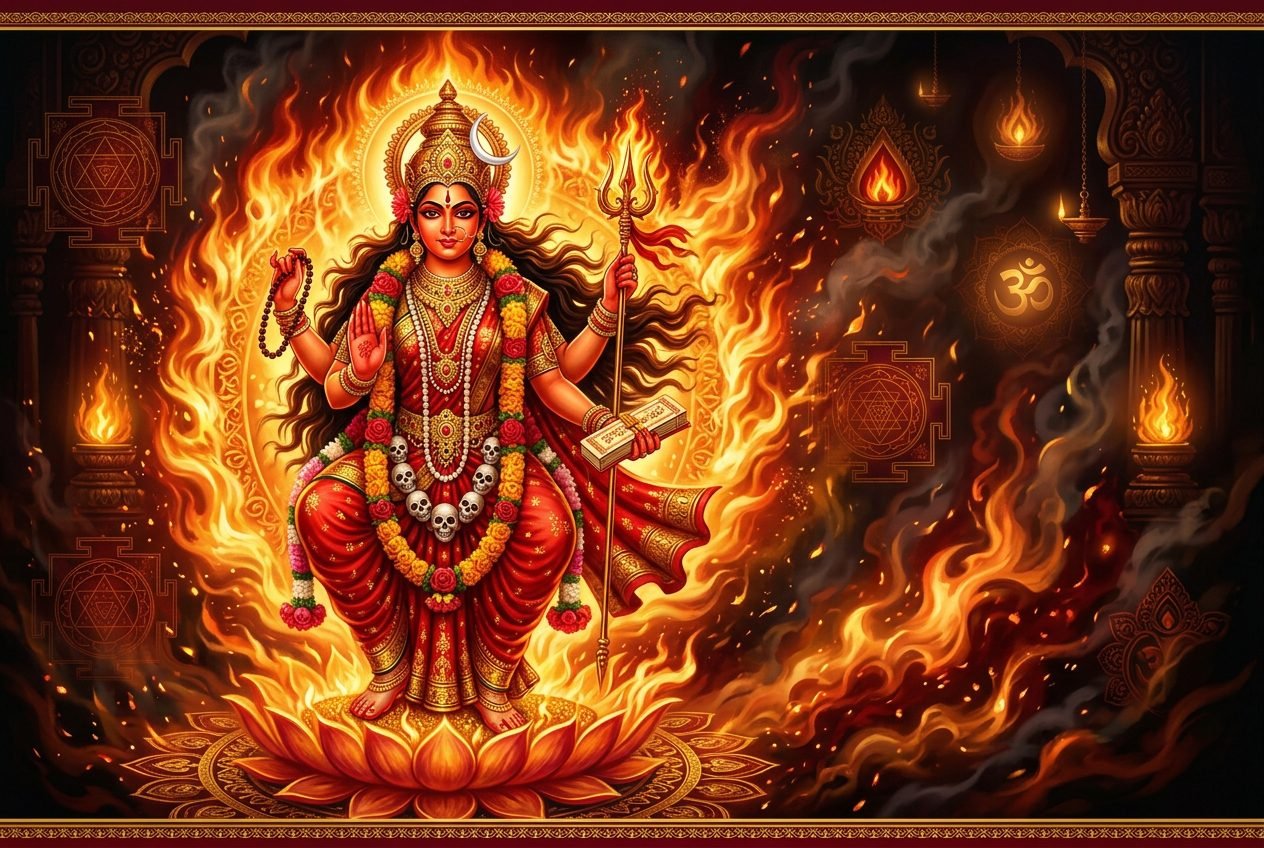
Also known as Tripura Bhairavi, she is depicted with a radiant red complexion, symbolizing the fire of transformation. She wears a garland of severed heads and holds a rosary and a book, indicating that fierce energy must be guided by knowledge. Her worship is particularly beneficial for those undertaking intense spiritual practices, as she provides the inner fire necessary for transformation.
Unlike the externally fierce Kali, Bhairavi's fieriness is primarily internal - she is the tapas shakti (power of austerity) within every spiritual practitioner. When a yogi sits for hours in meditation, it is Bhairavi's energy that sustains the effort.
Formation and Incarnation
The Bhairavi Tantra describes how she emerged from the cosmic fire altar (agni kunda) at the beginning of creation when the primordial Shakti divided herself into three fires: the fire of creation (represented by Tripura Sundari), the fire of preservation (Bhuvaneshwari), and the fire of transformation/dissolution (Bhairavi).
In another tradition, Bhairavi manifested when Shiva took his fierce Bhairava form to destroy the demon Andhakasura. Parvati transformed into Bhairavi to match Shiva's ferocity, and together they vanquished the demon. Their fierce dance of destruction is the basis for the Bhairava-Bhairavi Tantric practices still performed in cremation grounds.
Importance and Benefits
Bhairavi worship is essential for serious spiritual practitioners seeking: the inner fire needed for sustained meditation and sadhana; purification of accumulated karmas through the fire of tapas; transformation of anger and rage into spiritual energy; courage to face and overcome inner demons; protection through divine wrath against genuine evil; development of Kundalini heat (tapas); and rapid spiritual progress through disciplined practice.
She is especially worshipped by renunciants, yogis, and those undertaking intensive sadhana periods. Her energy transforms the raw material of worldly desires into the refined gold of spiritual realization.
Beej Mantra of Maa Bhairavi
| Sanskrit | ॐ ह्रीं भैरवी क्लौं ह्रीं स्वाहा |
|---|---|
| Hindi | ओम् ह्रीं भैरवी क्लौं ह्रीं स्वाहा |
| Transliteration | Om Hreem Bhairavi Klaum Hreem Swaha |
| Meaning | I invoke Bhairavi's grace (Hreem) and her power of desire transformation (Klaum), offering this prayer into the sacred fire (Swaha). |
Bhairavi's mantra combines Hreem (divine grace) with Klaum - a bija associated with Kamadeva (desire) that channels desire toward spiritual goals. 'Swaha' is the fire offering mantra, emphasizing Bhairavi's connection to sacred fire. This mantra is particularly effective for transforming worldly desires into spiritual aspiration.
Chant facing south at dusk or midnight, using a rudraksha mala. Red flowers and ghee lamps are the preferred offerings. Tuesdays and Saturdays are most auspicious for Bhairavi worship.
Mool Mantra of Maa Bhairavi
| Sanskrit | ॐ ह्रीं भैरवीयै नमः |
|---|---|
| Hindi | ओम् ह्रीं भैरवीयै नमः |
| Transliteration | Om Hreem Bhairaviyai Namah |
| Meaning | I bow to Goddess Bhairavi, invoking her through the sound of divine grace (Hreem). |
This simpler form of Bhairavi's mantra is suitable for daily practice and general worship. It invokes Bhairavi's protective and transformative energy without the intensity of the full Beej Mantra. Ideal for practitioners who want to connect with Bhairavi's fire of purification in a gentler way.
Core Sanskrit Root Words
Bhairavi's Sanskrit terminology reveals her essence as the transformative fire that burns away impurity.
- भैरव (Bhairava) - The fierce/terrifying one - Shiva's wrathful form
- भैरवी (Bhairavi) - Feminine of Bhairava - the fierce feminine divine fire
- तपस् (Tapas) - Heat, austerity, spiritual fire generated through practice
- अग्नि (Agni) - Fire - both physical and spiritual transformative fire
- क्लौं (Klaum) - Desire-transformation bija - channels desire spiritually
- रुद्र (Rudra) - The howling one - fierce Shiva, Bhairavi's counterpart
- श्मशान (Shmashana) - Cremation ground - where Bhairavi's fiercest practices occur
Major Temples
Bhairavi Temple (Kamakhya Complex) (Guwahati, Assam)
Within the Kamakhya temple complex, a dedicated Bhairavi shrine maintains intense Tantric worship traditions. This temple is particularly active during Navaratri when all-night vigils are held.
- By Air: Lokpriya Gopinath Bordoloi International Airport (20 km).
- By Train: Guwahati Junction (8 km).
- By Road: Nilachal Hill, accessible by taxi and shared sumos.
Bhairavi Devi Temple (Varanasi, Uttar Pradesh)
An ancient temple in the sacred cremation city, where Bhairavi's fierce form receives worship alongside Bhairava. Located near the burning ghats, it embodies the transformative power of Bhairavi in the most literal sense.
- By Air: Lal Bahadur Shastri Airport (25 km).
- By Train: Varanasi Junction - major railway hub.
- By Road: Located in the old city near Manikarnika Ghat.
Tripura Bhairavi Temple (Jaipur, Rajasthan)
A significant Bhairavi temple in the pink city, known for its Tantric traditions and elaborate fire ceremonies. The temple hosts special havans during Navaratri and on Tuesdays.
- By Air: Jaipur International Airport (15 km).
- By Train: Jaipur Junction - well connected nationwide.
- By Road: Located in the old city area. Auto-rickshaws and taxis available.
Festivals and Celebrations
Bhairavi is prominently worshipped during the first three nights of Navaratri, dedicated to the fierce forms of the goddess. Special fire ceremonies (havans) are performed where offerings are made into the sacred fire with Bhairavi mantras.
Bhairava Ashtami (celebrated in the month of Margashirsha) includes joint worship of Bhairava and Bhairavi. This is an important occasion for Tantric practitioners. Tuesdays throughout the year honour Bhairavi worship, particularly in temple traditions.
Listen to the Mantra
Watch the mantra video on YouTube
🔱 Explore All Ten Mahavidyas
The Das Mahavidya are the ten aspects of the Divine Mother. Continue your journey through each Wisdom Goddess:
- Maa Kali - The First Mahavidya
- Maa Tara - The Second Mahavidya
- Maa Tripura Sundari - The Third Mahavidya
- Maa Bhuvaneshwari - The Fourth Mahavidya
- Maa Chinnamasta - The Sixth Mahavidya
- Maa Dhumavati - The Seventh Mahavidya
- Maa Bagalamukhi - The Eighth Mahavidya
- Maa Matangi - The Ninth Mahavidya
- Maa Kamala - The Tenth Mahavidya
Frequently Asked Questions
Who is Maa Bhairavi?
The fifth Mahavidya, the fierce goddess of spiritual fire (tapas). She represents the transformative heat of spiritual practice and is the consort of Bhairava (fierce Shiva). She burns away impurities and ego.
What is Bhairavi's Beej Mantra?
'Om Hreem Bhairavi Klaum Hreem Swaha' (ॐ ह्रीं भैरवी क्लौं ह्रीं स्वाहा). It combines divine grace with the power to transform desires into spiritual energy.
What are the benefits of Bhairavi worship?
Inner fire for sustained meditation, karma purification, transformation of anger into spiritual power, courage, protection, Kundalini activation, and rapid spiritual progress.
Is Bhairavi worship only for advanced practitioners?
The simple mantra 'Om Hreem Bhairaviyai Namah' is suitable for all levels. The full Beej Mantra is more intense and is traditionally practiced by those already on a serious spiritual path.
What is the connection between Bhairavi and Bhairava?
Bhairavi is the feminine counterpart of Bhairava (fierce Shiva). Together, they represent the complete fierce aspect of divine consciousness. Their union is central to many Tantric practices.
What is tapas in the context of Bhairavi?
Tapas literally means 'heat' - the inner fire generated through spiritual practice, austerity, and discipline. Bhairavi IS this fire. She is the power that sustains the yogi's meditation and burns away obstacles.
Which day is best for Bhairavi worship?
Tuesdays (Mangalvar) are most auspicious. Saturday evenings are also powerful. Dusk and midnight are the best times. The first three nights of Navaratri are especially sacred.
What offerings does Bhairavi accept?
Red flowers (especially red hibiscus), ghee lamps, fire offerings (havan), red cloth, camphor, and incense. The symbolic 'offering' of one's ego and attachments into her transformative fire is most valued.
Can Bhairavi help with anger management?
Yes, paradoxically. Bhairavi worship does not suppress anger but transforms it into spiritual energy. Her mantra channels the raw power of emotions into fuel for spiritual progress.
How to start Bhairavi practice?
Begin with 'Om Hreem Bhairaviyai Namah' 108 times daily. Light a ghee lamp. Face south at dusk. Practice with sincerity and intensity. Listen to Musinara Sounds Bhairavi recording for guidance.
Part of the Das Mahavidya series. All ten wisdom goddesses, the origin story, their beej mantras and temple guides are collected in one place: Das Mahavidya: The Ten Wisdom Goddesses.