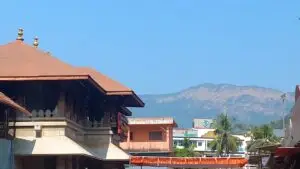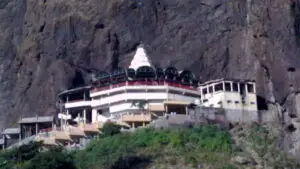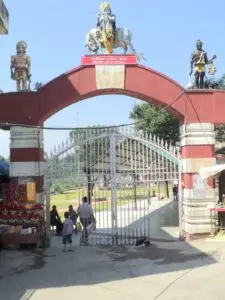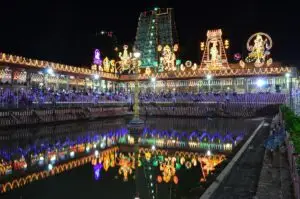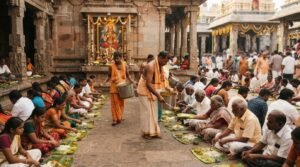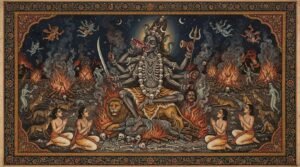
Mata Vaishno Devi receives worship inside a holy cave in the Trikuta Hills near Katra, Jammu and Kashmir, as three natural rock pindis representing Maha Kali, Maha Lakshmi and Maha Saraswati. Pilgrims register for a free RFID yatra card at Katra, then climb roughly 12 to 14 km to the Bhawan on foot, by pony, battery car or helicopter.
High in the Trikuta Hills of Jammu and Kashmir, more than 5,000 feet above the plains, sits one of the most beloved pilgrimage destinations in all of India. Mata Vaishno Devi is not worshipped here as a carved idol but as three natural rock formations, the holy pindis, self-manifest deep inside a cave on the mountainside above the town of Katra. Every year millions of pilgrims climb the steep trail to her Bhawan, chanting "Jai Mata Di", and during Navratri that number can swell toward a crore. For countless devotees, this yatra is the journey of a lifetime.
This complete pilgrimage guide walks you through everything a first-time or returning yatri needs to know: who Mata Vaishno Devi is, the meaning of the three pindis, the cherished legend of the Devi and Bhairon Nath, and the full yatra route from Katra through Banganga, Charan Paduka, Ardhkuwari and Sanji Chhat to the Holy Cave. It also covers the practical essentials: how to reach Katra, the mandatory RFID registration, helicopter and battery-car options, timings, the best season to travel, and answers to the questions pilgrims ask most.
Where traditions differ, this guide notes the variation honestly rather than presenting one version as the only truth. The aim is a reverent, accurate companion for your pilgrimage to the Holy Cave Shrine of the Trikuta Hills.
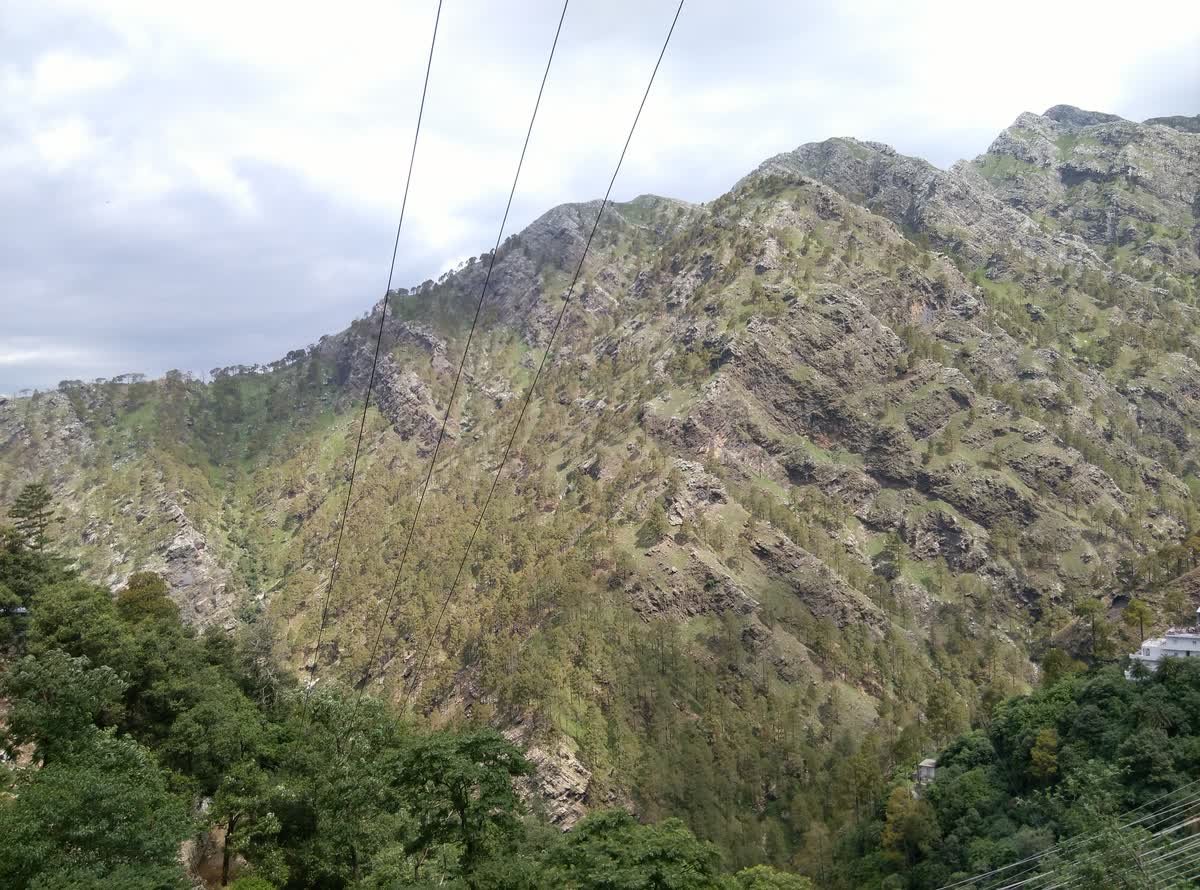
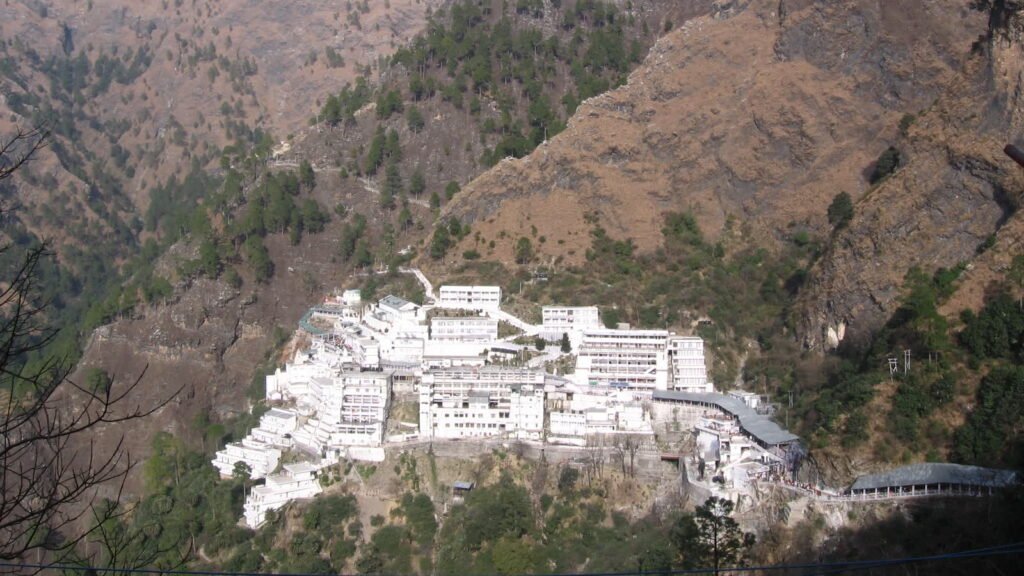
Key Takeaways
- Vaishno Devi receives worship as three self-manifest rock pindis representing Maha Kali, Maha Lakshmi and Maha Saraswati, not as a carved idol.
- The trek from Katra to the Bhawan is roughly 12 to 14 km and takes most pilgrims five to eight hours on foot.
- A free RFID yatra card from the Shri Mata Vaishno Devi Shrine Board is mandatory before starting the climb.
- A helicopter service connects Katra to Sanji Chhat, leaving about 2.5 km to the Bhawan by foot, pony or battery car.
- By the Devi's own boon to Bhairon Nath, the yatra is considered complete only after visiting the Bhairavnath temple above the Bhawan.
Who Is Mata Vaishno Devi?
Mata Vaishno Devi is a manifestation of the Divine Mother revered as the combined power of Maha Kali, Maha Lakshmi and Maha Saraswati, the Tridevi. Worshipped in a cave high in the Trikuta Hills, she is affectionately called Mata Rani, Sherawali, Trikuta and Vaishnavi, and a single darshan is felt to carry the grace of all three goddesses.
Scriptural traditions about her identity vary. Some texts and devotees emphasise her as a form of Mahalakshmi who embodies the tattva, or essence, of Mahasaraswati and Mahakali; others highlight her as Vaishnavi, the Shakti associated with Vishnu. Several Puranic and later sources are cited in popular accounts, and the precise framing differs from text to text. What unites them is the understanding that Vaishno Devi is the unmarried, eternally meditating form of the Goddess, awaiting, in some tellings, the Kalki avatar at the close of the present age.
Is Vaishno Devi a Shakti Peetha?
Strictly speaking, no. Some lists treat Vaishno Devi as a Shakti shrine, and her cave certainly sits at the heart of Goddess worship in the region. But the cave is not counted among the classical 51 Shakti Peethas, the sites linked to the falling of Sati's body parts after the Daksha Yagna. Devotionally this distinction matters little to the pilgrim: Vaishno Devi remains among the most visited and most loved Devi pilgrimages in India, drawing more footfall than almost any other goddess shrine in the country.
What Do the Three Holy Pindis Represent?
The three pindis of the Holy Cave represent the three primordial Shaktis: Maha Kali, the power of dissolution and fearless protection; Maha Lakshmi, the power of preservation and abundance, often identified with Vaishno Devi herself; and Maha Saraswati, the power of creation, wisdom and knowledge. There is no statue in the sanctum, only these self-manifest rocks.
In the sanctum sanctorum, the Devi receives veneration as three natural rock formations set atop a rock base traditionally described as about five and a half feet in height. The three pindis differ subtly in colour and texture, and each is understood to embody one of the primordial Shaktis.
| Pindi | Represents |
|---|---|
| Maha Kali | The power of dissolution and the courage that destroys fear and ego; associated with the tamas quality and fierce protection. Read more about this aspect in our complete guide to Maa Kali. |
| Maha Lakshmi | The power of preservation, abundance and grace; the central pindi is often identified with Mata Vaishno Devi herself, reflecting her origin as a form of Mahalakshmi. |
| Maha Saraswati | The power of creation, wisdom and pure knowledge; associated with the sattva quality and the arts. |
Because the deity is self-manifest (swayambhu) rather than installed by human hands, devotees regard the darshan of the pindis as exceptionally sacred. A sacred stream called the Charan Ganga is said to flow near the feet of the Devi within the cave. Worship is offered with simple, traditional items such as a red chunni (scarf), coconut, betel nut, flowers and sweets, never meat or wine, reflecting the vegetarian, Vaishnava character of the shrine that lies at the centre of its central legend.
What Is the Legend of Mata Vaishnavi and Bhairon Nath?
The legend tells how the divine girl Vaishnavi, born from the combined power of the Tridevi, was pursued up the Trikuta mountain by the tantric Bhairon Nath, paused at Banganga, Charan Paduka and Ardhkuwari, and finally beheaded him at the Holy Cave before granting him liberation and a boon that pilgrims would visit his shrine to complete the yatra.
As with all sacred legend, several versions circulate; the outline below follows the account most commonly told along the yatra route and recorded in popular and scholarly sources alike.
The Birth and Penance of the Divine Girl
In one widely repeated telling, the three great Shaktis, Maha Kali, Maha Lakshmi and Maha Saraswati, combined their energies to bring forth a single divine girl for the preservation of dharma. She took birth in the home of a devotee in Southern India and was given the name Trikuta, also known as Vaishnavi. From childhood she displayed extraordinary spiritual power and devoted herself to intense penance, fixing her heart on the Divine and resolving to remain an eternal celibate awaiting the Lord at the end of the age. Guided in a vision, she travelled north to a cave in the Trikuta Parvat to continue her meditation.
Shridhar's Bhandara and the Test
About 700 years ago, the legend continues, a devout Brahmin named Shridhar lived near Katra and longed for the Goddess's grace. The Devi appeared to him as a young girl and inspired him to host a great feast, a bhandara, for his village and for the wandering ascetic Guru Gorakhnath and his many disciples, among them the tantric Bhairon Nath (also written Bhaironath or Bhairav Nath).
When the divine girl served food that satisfied every guest's wish, Bhairon Nath, driven by impure desire and a wish to test her, demanded meat and wine. The girl insisted that only vegetarian food would be served at a Vaishnava bhandara, and when he tried to seize her, she vanished.
The Pursuit Across the Mountain
Bhairon Nath gave chase up the Trikuta mountain, and the places where the Devi paused are now the very landmarks of the pilgrimage. She is said to have released a stream of water at Banganga, left her footprints at Charan Paduka, and meditated for nine months inside the narrow cave at Ardhkuwari, also called Garbh Joon, the womb cave. When Bhairon Nath drew near, she struck the back wall of the cave with her trishul, opening a new passage, and continued toward the main Holy Cave.
The Final Confrontation and the Boon
At the entrance to the Holy Cave, the Devi assumed her fierce form, often described as Mahakali or Chandi, and beheaded Bhairon Nath. The force flung his head to a distant peak, where it landed at the place now known as Bhairon Ghati. In his last moments Bhairon Nath repented, calling on the Mother, and the Goddess, moved by his cry, granted him moksha and a boon: that no devotee's pilgrimage would be considered complete until they also paid their respects at his shrine after taking the Devi's darshan. This is why pilgrims traditionally climb on to the Bhairavnath temple after visiting the Holy Cave.
What Is the Vaishno Devi Yatra Route from Katra to the Bhawan?
The traditional foot route begins at Katra and climbs roughly 12 to 14 km to the Bhawan, passing Darshani Darwaza, Banganga, Charan Paduka, Ardhkuwari, and Sanji Chhat. On foot the climb typically takes five to eight hours; gentler alternatives include the Himkoti path, battery cars, ponies and the helicopter to Sanji Chhat.
Sources describe the distance slightly differently depending on whether they measure from Katra or from Banganga, and on which trail variant is used, so treat the figures below as close approximations rather than exact surveyed distances.
Key Stops Along the Way
| Stage | What pilgrims experience |
|---|---|
| Katra (base town) | The starting point and main base camp. Yatra registration and the RFID card are obtained here before the climb. |
| Darshani Darwaza | Considered the first gateway to Trikuta Parvat, roughly 1 km from Katra, from where the peaks first come into clear view. |
| Banganga | A sacred stream said to have sprung from the Devi's arrow; pilgrims bathe or sprinkle the holy water. A common starting point for the trek measurement. |
| Charan Paduka | The rock bearing the Devi's footprints, where she is said to have paused to look back; a short climb beyond Banganga. |
| Ardhkuwari / Garbh Joon | Roughly the midway point, home to the narrow womb cave where the Devi meditated for nine months. Devotees crawl through the cramped passage, symbolising spiritual rebirth (subject to crowd-control timings). |
| Himkoti (alternate path) | A newer, gentler route option with viewpoints and gardens, offering an alternative to the steepest stretches. |
| Sanji Chhat | A high resting point and the helicopter landing area, about 2.5 km from the Bhawan. |
| Bhawan (Holy Cave) | The shrine complex where pilgrims take darshan of the three holy pindis in the sanctum of the Holy Cave. |
| Bhairavnath Temple | About 2 to 2.5 km uphill from the Bhawan, the shrine where, by the Devi's boon, the yatra is completed. |
Route Variants
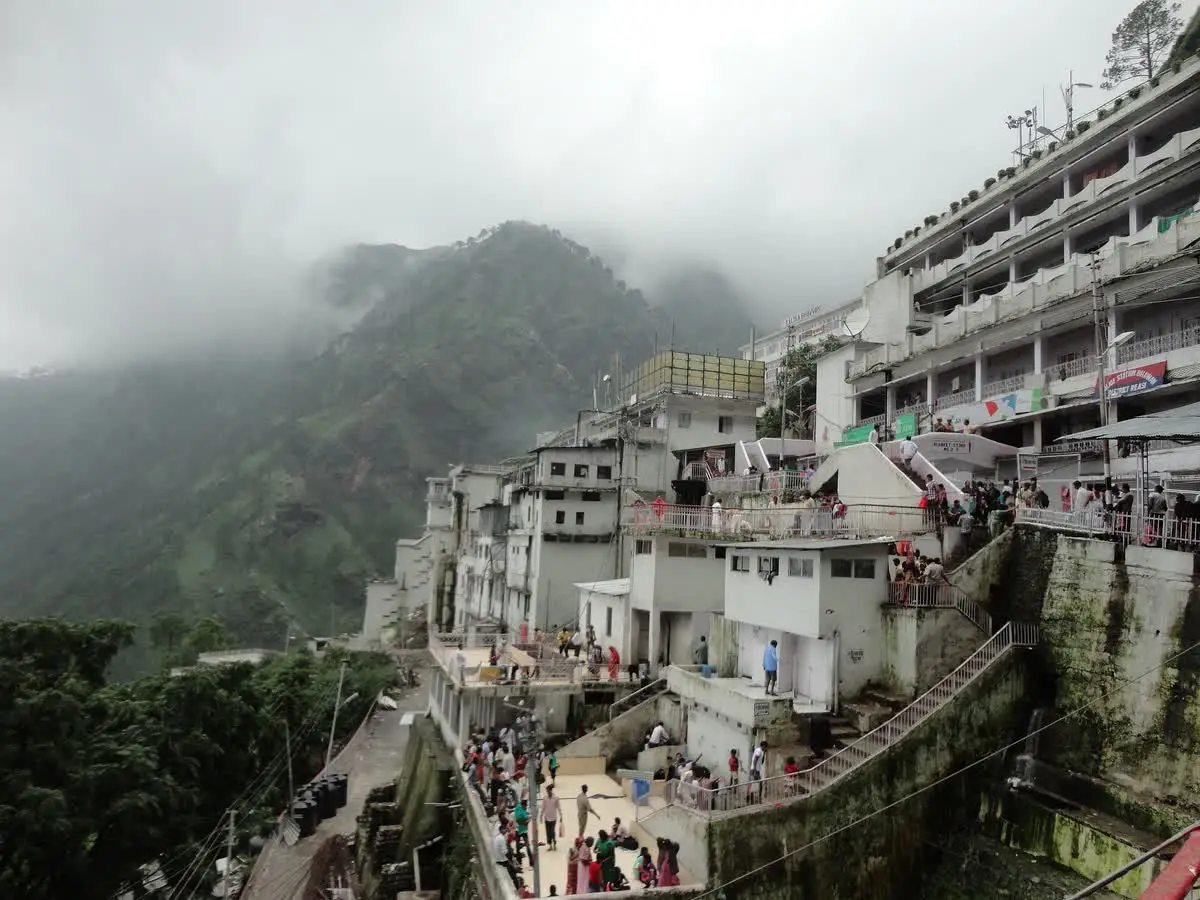
Pilgrims today can choose between the older, steeper traditional track and newer, gentler alignments such as the Himkoti path and improved alternate routes designed to ease the climb and separate pedestrian and pony traffic. Battery-operated cars run on certain stretches between Ardhkuwari and the Bhawan, and a short ropeway connects the Bhawan area with the Bhairavnath temple for those who cannot manage the final uphill climb on foot. Always check the current arrangements with the Shrine Board before you travel, as routes and services are periodically updated.
Why Must Pilgrims Visit the Bhairavnath Temple?
Because of the boon the Devi granted Bhairon Nath in his final moments, tradition holds that a yatra is fulfilled only when the pilgrim, having taken darshan in the Holy Cave, also visits his shrine. The Bhairavnath temple sits about 2 to 2.5 km above the Bhawan, where his head is said to have fallen.
The climb to the temple is short but steep, rewarded by sweeping panoramic views over the Trikuta range and the valley below. Pilgrims who cannot make the ascent on foot can use the ropeway that connects the Bhawan area with the Bhairavnath temple.
Which Chants and Mantras Do Pilgrims Use at Vaishno Devi?
Pilgrims approach the Devi with simple, heartfelt invocations rather than complex liturgy. The most universal is "Jai Mata Di", the call that echoes along the entire route as yatris encourage one another up the climb. Many devotees also chant the Navarna mantra of Durga and the beloved aarti "Ambe Tu Hai Jagdambe".
Below are a few of the short, widely used devotional phrases associated with the Goddess. These are common popular invocations; this guide deliberately does not reproduce any lengthy scripture or initiatory mantra, and pronunciations and spellings vary by region.
| Sanskrit | Hindi | Transliteration | Meaning |
|---|---|---|---|
| जय माता दी | जय माता दी | Jai Mata Di | Victory to the Divine Mother; the universal greeting and cheer of Vaishno Devi pilgrims. |
| ओम् ऐं ह्रीं क्लीं चामुण्डायै विच्चे | ओम् ऐं ह्रीं क्लीं चामुण्डायै विच्चे | Om Aim Hreem Kleem Chamundayai Vichche | The well-known Navarna (Chandi) mantra of the Goddess Durga; chanted by many devotees of the Mother during Navratri. |
| अम्बे तू है जगदम्बे | अम्बे तू है जगदम्बे | Ambe Tu Hai Jagdambe | O Mother Ambe, you are the Mother of the universe; the opening line of the beloved aarti sung in her honour. |
Note: The Navarna mantra is a traditional Durga mantra widely associated with Goddess worship, including at Vaishno Devi; serious or initiatory practice of such mantras is customarily learned from a qualified teacher. The aarti line above is the familiar first verse of the popular "Ambe Tu Hai Jagdambe" aarti and is offered here only as a reference, not as a complete scriptural text.
How Many Pilgrims Visit Vaishno Devi Each Year?
These are the Shri Mata Vaishno Devi Shrine Board’s own yatra figures:
| Year | Pilgrims | Note |
|---|---|---|
| 2018 | 85.87 lakh | |
| 2019 | 79.40 lakh | |
| 2020 | 17.20 lakh | Pandemic year |
| 2021 | 55.88 lakh | |
| 2022 | 91.25 lakh | |
| 2023 | 95.22 lakh | Highest of these eight years |
| 2024 | 94.84 lakh | |
| 2025 | 69.79 lakh | Yatra suspended for 22 days after the August landslide |
The 2025 fall had a single, tragic cause. On 26 August a landslide struck the track near Indraprastha Bhojanalya and around 35 pilgrims were killed. The Shrine Board suspended the yatra for 22 days, restoring it on 17 September, and the year closed about a quarter down on 2024. The pilgrimage has since recovered: by 24 June 2026 it had already passed 50.92 lakh. (ETV Bharat, 24 June 2026.)
How Do You Reach Vaishno Devi?
Open the Bhawan in Google Maps · Open Katra in Google Maps for live directions from where you are.
All pilgrimages begin at Katra, the base town in the Reasi district of Jammu and Kashmir. Fly to Jammu Airport (about 45 to 50 km away), take a direct train to Shri Mata Vaishno Devi Katra station, or drive in by road. From Katra you register, then climb, ride or fly the mountain leg.
| Detail | Information |
|---|---|
| Location | Trikuta Hills above Katra, Reasi district, Jammu and Kashmir; the cave sits more than 5,000 feet above sea level |
| Nearest airport | Jammu Airport (Satwari / Jammu Civil Enclave), roughly 45 to 50 km from Katra; prepaid taxis and buses take about 1.5 to 2 hours |
| Rail | Shri Mata Vaishno Devi Katra station (code SVDK) in Katra itself, with direct trains from Delhi, Mumbai and other major cities; Jammu Tawi is an alternative railhead about 45 to 50 km away |
| Road | Well connected to Jammu (about 45 to 50 km) via the national highway network; state and private buses, shared taxis and cabs run regularly; ample parking at Katra |
| Timings | The Holy Cave is open for darshan through most of the day and night, with brief pauses for the morning and evening aarti inside the cave |
| Entry fee | Free; yatra registration (RFID card) is also free and mandatory |
How Does Yatra Registration and the RFID Card Work?
Registration is mandatory and free, and it is the first thing every pilgrim must do at Katra. The Shri Mata Vaishno Devi Shrine Board issues an RFID-based yatra access card (yatra parchi) that is used to track and manage the flow of pilgrims on the mountain.
- The RFID card is compulsory; without it pilgrims are not permitted to begin the yatra.
- Registration can be done online in advance through the official Shrine Board website or at the registration counters in Katra; carry valid original photo ID for every member of your group.
- Pilgrims are generally expected to begin the climb within a set window after receiving the card and to complete the yatra within the validity period; current rules ask yatris to start within about 12 hours and return to base within about 24 hours, so verify the latest timing before you set out.
- Book only through the official Shrine Board channels; the Board has stated it does not authorise third-party agents to sell registration, rooms, helicopter or battery-car services.
Can You Take a Helicopter, Battery Car or Pony?
- Helicopter: A service flies between Katra and Sanji Chhat, cutting the long climb to a short hop; from Sanji Chhat it is still about a 2.5 km walk (or pony or battery-car ride) to the Bhawan. Seats are limited and in high demand, especially during Navratri, and the official booking system typically opens online on the 1st of each month for travel about two months ahead.
- Battery cars: Electric vehicles operate on parts of the upper route (around the Ardhkuwari-to-Bhawan stretch), helping the elderly and those short on time.
- Ponies, palkis and porters: Available for hire along the track for those who cannot walk the full distance or who are travelling with small children or elderly relatives.
- Ropeway: A short ropeway connects the Bhawan area with the Bhairavnath temple for the final leg.
Timings and Darshan
The Holy Cave is open for darshan through most of the day and night, with brief pauses morning and evening when the aarti is performed inside the cave. During peak periods the Shrine Board manages darshan through the RFID and queue system, and waiting times can be long; arriving outside the busiest hours helps. Cloakroom, langar (free community kitchen), medical aid, drinking water and rest shelters are available along the route and at the Bhawan.
When Is the Best Time to Visit Vaishno Devi?
The shrine is open year-round. But March to October generally offers the most comfortable weather for the climb, and autumn brings cool air and clear mountain views. The two Navratri festivals are the most spiritually charged and the most crowded times of the year.
Winters are cold and the upper reaches can see snow, while the monsoon months can bring slippery trails and occasional landslides, so extra care is needed. Chaitra Navratri in spring and Sharad Navratri in autumn see the shrine beautifully decorated and devotion at its peak; if you travel then, plan, register and book accommodation well in advance.
Practical Tips for Pilgrims
- Carry valid original photo ID for every pilgrim; it is required for registration and helicopter tickets.
- Wear comfortable, broken-in walking shoes and dress in layers; the temperature drops sharply as you climb.
- Stay hydrated and pace yourself; use the rest shelters and the langar along the way.
- Travel light and use the cloakrooms; certain items are not permitted inside the Holy Cave.
- Book registration, helicopter and rooms only through official Shrine Board channels to avoid touts and fraud.
- Respect crowd-control instructions, queue systems and the validity window on your RFID card.
What Is the Spiritual Significance of the Vaishno Devi Yatra?
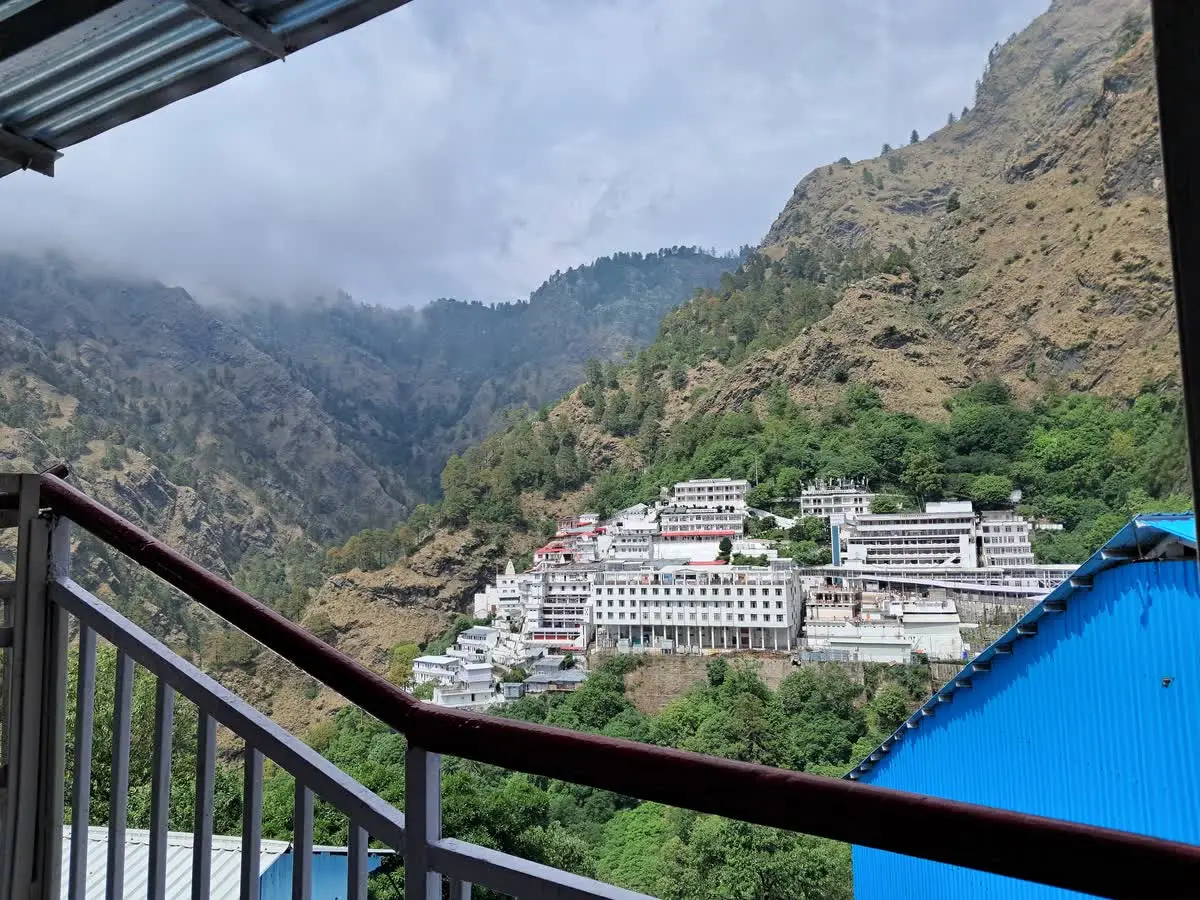
Beyond its logistics, the Vaishno Devi yatra is treasured as a journey of faith in which the climb itself becomes devotion. Pilgrims speak of being called by the Mother (the bulwa, or summons) when the time is right, and of each step on the trail offered as prayer.
The crawl through the narrow Garbh Joon cave at Ardhkuwari is felt as a symbolic rebirth, leaving behind old burdens, and the final darshan of the three pindis in the Holy Cave is, for many, the emotional summit of a lifetime.
Devotees come seeking the Mother's grace for many reasons: healing, family wellbeing, gratitude, the fulfilment of a vow, or simply the longing to be near her. The shared cry of "Jai Mata Di", the langars that feed strangers without charge, and the mutual encouragement on the trail give the yatra a warmth that pilgrims remember long after they descend. Whatever draws you up the Trikuta Hills, the tradition holds that those who climb with a sincere heart return carrying the Mother's blessing.
Listen: Subscribe to Musinara Sounds for 432 Hz mantra chants
🕉️ Hear these sacred mantras come alive. Subscribe to Musinara Sounds on YouTube for 432 Hz Devi mantra chants, sung slowly enough to follow and repeat.
Plan Your Visit to Vaishno Devi: Timings, Tickets and Travel
The details below were checked on 3 October 2026 against the SMVDSB and the other sources listed under each table. Timings and fees change on festival days, eclipses and special occasions, so confirm with the temple before you travel.
For what happens here during Navratri 2026 (11 to 19 October), see Navratri 2026 at major Devi temples.
Darshan and Aarti Timings
| Information | Details |
|---|---|
| Atka aarti, morning | 6:20 am to 8:00 am |
| Atka aarti, evening (summer) | 7:20 pm to 8:30 pm |
| Atka aarti, evening (winter) | 6:20 pm to 8:00 pm |
| Aarti at the Holy Cave | Twice daily, morning and evening |
Sources: SMVDSB: Live Atka Aarti / Darshan, SMVDSB: Shri Mata Vaishno Devi Shrine Board home page.
Tickets, Darshan Options and Sevas
| Option | Price | Notes |
|---|---|---|
| Helicopter, Katra to Sanjichhat, one way | Rs 2,320 until 31 Oct 2026; Rs 2,700 from 1 Nov 2026 | Return: Rs 4,640, rising to Rs 5,400. Reported by NewsX on 4 September 2026. The current fare is shown when you book on the Shrine Board portal. |
| Yatra Parchi / RFID Yatra Access Card | Free | Registration gives you an RFID Yatra Access Card at no charge. |
Darshan at the Holy Cave needs a registered RFID Yatra Access Card, which is free. According to The News Now, during Navratri 2026 there are free battery car, pony and palki rides from Katra to Bhawan for elderly and disabled pilgrims with a valid disability certificate, and a special darshan arrangement through Gate No. 2. Bookings are handled on online.maavaishnodevi.org. The Shrine Board portal handles yatra registration, helicopter tickets, battery car, accommodation (Jammu, Katra, Bhawan, Adhkuwari, Sanjichhat) and aarti booking. Fares for the helicopter, battery car and ropeway are shown on the portal. Toll-free: 1800 180 7212 and 99060 19494. Musinara is not connected with the temple and does not take bookings.
Sources: NewsX: Mata Vaishno Devi Helicopter Fare Hiked From November 1, SMVDSB: Shri Mata Vaishno Devi Shrine Board home page, SMVDSB: General Information, The News Now: Navratri: Free pony, palki rides for elderly, disabled pilgrims....
Temple Rules and Dress Code
- Register and get the RFID Yatra Access Card before starting the yatra.
- Video cameras and other electronic equipment are not allowed on the track.
- Liquor, intoxicants and non-vegetarian food are strictly prohibited.
- There is no formal dress code, but avoid short or revealing clothes.
- Only cash and selected offerings are allowed inside the Holy Cave. Leave other belongings at the free cloak rooms.
- Vehicles on the Jammu to Katra road are usually stopped for security checks.
Sources: SMVDSB: Shri Mata Vaishno Devi Shrine Board home page, SMVDSB: General Information, SMVDSB: How to Reach Katra.
How to Reach Vaishno Devi
| Mode | Nearest point | Distance to the temple |
|---|---|---|
| Air | Jammu Airport (Satwari) | about 50 km to Katra by road |
| Rail | Shri Mata Vaishno Devi Katra (SVDK) | in Katra town, at the base of the trek |
| Bus | Katra bus stand | in Katra town |
Sources: SMVDSB: How to Reach Katra, Wikipedia: Katra, Jammu and Kashmir, SMVDSB: General Information.
Approximate distances and journey times from the cities most pilgrims start from. Road times assume normal traffic; festival weekends take longer.
| From | By road | Road time | Train or flight |
|---|---|---|---|
| Jammu | about 50 km | Taxi about 70 to 80 minutes; bus about 2 hours | Jammu to Katra rail line via Udhampur; Katra station is at the base of the trek; Jammu Airport is the nearest |
| Delhi | about 650 to 685 km | about 12 hours | Vande Bharat Express 22439/22440: about 655 km, about 8 hours 20 minutes, six days a week. Check IRCTC for current days and timings.; Fly to Jammu, then travel by road |
| Chandigarh | about 300 to 390 km depending on route |
Sources: SMVDSB: How to Reach Katra, Wikipedia: Katra, Jammu and Kashmir, Wikipedia: New Delhi-Shri Mata Vaishno Devi Katra Vande Bharat Express, Yatra.com: Distance between Chandigarh and Katra, distancebetween2.com: Distance between Chandigarh and Katra.
Distances from Katra along the track: Banganga 1 km, Charan Paduka 2.5 km, Adhkuwari 6 km, Himkoti 8.5 km, Sanjichhat 9.5 km, Bhawan 13 km, Bhairon 14.5 km. The Shrine Board also runs a helicopter service from Katra to the Sanjichhat side, battery cars and the Bhawan to Bhairon ropeway. Fares are shown on the Shrine Board's online portal. Ropeway hours are 9:00 am to 5:00 pm.
When to Go and How Long to Allow
At Bhawan, temperatures are around -2 to 13 °C in winter and 15 to 30 °C in summer.
Source: SMVDSB: Distance/Altitude/Temperature.
Prasadam, Annadanam and Where to Stay
According to The News Now, round-the-clock langar will run at four major points along the route during Navratri 2026, with special vrat meals through the nine days. The Shrine Board has rooms and dormitories at Jammu, Katra, Bhawan, Adhkuwari and Sanjichhat, booked on its online portal.
Sources: The News Now: Navratri: Free pony, palki rides for elderly, disabled pilgrims..., SMVDSB: Shri Mata Vaishno Devi Shrine Board home page, SMVDSB: General Information.
Temples and Places Near Vaishno Devi
- Bhairon Mandir (about 1.5 km beyond Bhawan (14.5 km from Katra)): Reached on foot or by the Bhawan to Bhairon ropeway
- Ardhkuwari (Garbhjoon cave) (6 km from Katra): Cave shrine on the track to Bhawan
Sources: SMVDSB: Bhawan-Bhairo ropeway, SMVDSB: Distance/Altitude/Temperature.
Frequently Asked Questions
Where is the Mata Vaishno Devi shrine located?
The shrine is set inside a cave high in the Trikuta Hills, more than 5,000 feet above sea level, near the town of Katra in the Reasi district of Jammu and Kashmir, North India.
Why are there three pindis instead of an idol at Vaishno Devi?
Inside the Holy Cave the Devi is self-manifest (swayambhu) as three natural rock formations rather than a carved statue. The three pindis represent Maha Kali, Maha Lakshmi and Maha Saraswati, the combined power of the Tridevi, which is why a single darshan is felt to carry the grace of all three goddesses.
How long is the trek from Katra to the Bhawan?
The climb is roughly 12 to 14 kilometres depending on the route and where the distance is measured from; on foot it usually takes about five to eight hours, varying with fitness, weather and crowds.
Is registration compulsory for the Vaishno Devi yatra?
Yes. Registration is free and mandatory, and every pilgrim must obtain an RFID-based yatra access card before starting the climb. It can be done online through the official Shrine Board website or at the counters in Katra, with valid original photo ID for each person.
Can I take a helicopter to Vaishno Devi?
A helicopter service runs between Katra and Sanji Chhat, after which it is about a 2.5 km walk, pony ride or battery-car ride to the Bhawan. Seats are limited and bookings, made only through official channels, typically open on the 1st of each month for travel about two months later.
What transport options are available on the Vaishno Devi route?
Besides walking, pilgrims can use ponies, palkis (palanquins) and porters, battery-operated cars on parts of the upper route, and a short ropeway connecting the Bhawan area with the Bhairavnath temple.
Why must pilgrims visit the Bhairavnath temple?
According to legend, the Devi granted Bhairon Nath salvation and a boon that no pilgrimage would be complete until devotees also visit his shrine after taking her darshan. The Bhairavnath temple sits about 2 to 2.5 km above the Bhawan, where his head is said to have fallen.
When is the best time to visit Vaishno Devi?
The shrine is open year-round. March to October generally offers the most pleasant climbing weather, and autumn brings clear views. The two Navratri festivals are the most spiritually significant but also the most crowded, so plan and book well ahead if you travel then.
What can I offer to Mata Vaishno Devi?
Traditional offerings include a red chunni (scarf), coconut, flowers, sweets and dry fruits. In keeping with the vegetarian, Vaishnava character of the shrine, meat and alcohol are never offered.
Is Vaishno Devi one of the 51 Shakti Peethas?
Although some lists treat it as a Shakti shrine and it is a major centre of Goddess worship, the Vaishno Devi cave is not traditionally counted among the classical 51 Shakti Peethas. Devotionally, it remains one of India's most visited and most beloved Devi pilgrimages.
Jai Mata Di. May the Mother of the Trikuta Hills bless every pilgrim who climbs to her Holy Cave.
Official and Reference Sources
- Shri Mata Vaishno Devi Shrine Board - the statutory board constituted under the J&K SMVD Shrine Act, 1988
Planning a pilgrimage? All twenty Devi temple guides on this site are arranged by region, with practical circuits, in Devi Temples of India. For where each site sits in the disputed lists of 51, 52 and 108, see the Shakti Peeth list.