What Are the Shakti Peethas?
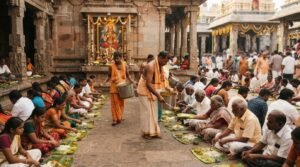
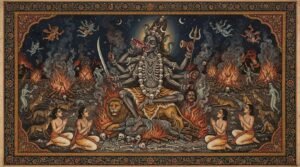
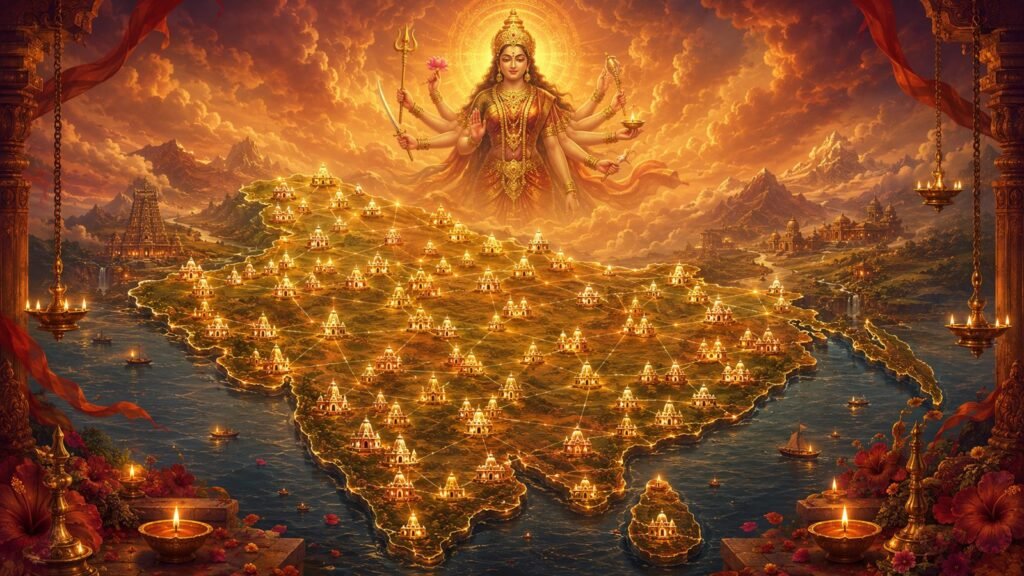
The Shakti Peethas (also written Shakta Pithas or Sati Pithas) are the most sacred shrines in Shaktism, the strand of Hinduism that worships the Supreme Reality as the Divine Mother, Adi Shakti. They are not ordinary temples built to honour the Goddess; they are places where the Goddess is believed to have physically manifested, where her bodily energy fused permanently with the earth.Every Shakti Peetha is defined by three things. First, a body part or relic of Sati that fell there - ranging from her eyes, tongue and heart to her toes, anklets and crown jewel. Second, a presiding form of the Goddess, the Shakti or Devi of that place, who carries a unique name such as Kamakhya, Kalika, Jwala or Vishalakshi. Third, a guardian form of Shiva known as the Bhairava, the fierce protector who watches over the shrine and its Goddess. This pairing of Shakti and Bhairava is the signature that distinguishes a true Shakti Peetha from other Devi temples.Most of these historic sites lie in India. But the network reaches across the subcontinent - into Nepal, Bangladesh, Pakistan, Sri Lanka, Tibet and Bhutan - a testament to the ancient spiritual unity of this sacred land. The greatest density of Peethas is found in the Bengal region, the heartland of Goddess worship.The Origin Legend: Sati and the Falling Body Parts
How Many Shakti Peethas Are There? (51 vs 52 vs 108)
One of the first things a seeker discovers is that the scriptures do not agree on a single number. This is not a contradiction so much as a reflection of how the tradition grew across centuries and regions, with different Puranas and Tantras recording different lists.- 51 Peethas - The most widely accepted count today, given in the Tantra Chudamani and the Pithanirnaya. The number echoes the 51 letters of the Sanskrit alphabet (matrika), the sound-body of the Goddess.
- 52 Peethas - Recorded in the Mahapithapurana (c. 1690-1720 CE), which adds one more seat to the list of 51.
- 64 Peethas - Named in the Brahmanda Purana, covering a Greater India that includes Bhutan, Bangladesh, Nepal, Sri Lanka, parts of Tibet and Pakistan.
- 108 Peethas - The most expansive count, found in the Devi Bhagavata Purana, where 108 is the sacred number of completeness and the Goddess pervades all.
The 4 Adi Shakti Peethas
The Devi Bhagavata Purana and the Kalika Purana single out four Peethas as Adi - the first or primordial seats - where the most intense divine energy is said to reside. These four arose directly from the lifeless body of Devi Sati and stand as the supreme power-centres of the Mother.| Adi Shakti Peetha | Location | Body Part / Significance | Devi |
|---|---|---|---|
| Kamakhya | Nilachal Hill, Guwahati, Assam | Yoni (genitals) - Creation | Kamakhya |
| Kalighat | Kolkata, West Bengal | Toes of the right foot | Kalika |
| Vimala | Jagannath Temple, Puri, Odisha | Feet / lower limbs | Vimala |
| Tara Tarini | Ganjam, Odisha | Breasts (Stana Khanda) | Tara Tarini |
The 18 Ashtadasha Maha Shakti Peethas
In the 8th-9th century, the great philosopher-saint Adi Shankaracharya composed the Ashtadasha Shakti Peetha Stotram - a hymn naming eighteen supreme Peethas spread from the far south to the far north of the subcontinent. These eighteen “great” (Maha) Peethas became a fixed devotional pilgrimage trail recited and traversed by devotees to this day.| # | Peetha | Location | Presiding Devi |
|---|---|---|---|
| 1 | Shankari | Trincomalee, Sri Lanka | Shankari |
| 2 | Kamakshi | Kanchipuram, Tamil Nadu | Kamakshi |
| 3 | Shrinkhala | Pradyumna (Pandua), West Bengal | Shrinkhala |
| 4 | Chamundeshwari | Mysuru, Karnataka | Chamundeshwari |
| 5 | Jogulamba | Alampur, Telangana | Jogulamba |
| 6 | Bhramaramba | Srisailam, Andhra Pradesh | Bhramarambika |
| 7 | Mahalakshmi | Kolhapur, Maharashtra | Mahalakshmi (Ambabai) |
| 8 | Ekaveerika (Renuka) | Mahur, Maharashtra | Renuka |
| 9 | Mahakali | Ujjain, Madhya Pradesh | Mahakali |
| 10 | Puruhutika | Pithapuram, Andhra Pradesh | Puruhutika |
| 11 | Biraja (Girija) | Jajpur, Odisha | Biraja |
| 12 | Manikyamba | Draksharamam, Andhra Pradesh | Manikyamba |
| 13 | Kamarupa | Guwahati, Assam | Kamakhya |
| 14 | Madhaveshwari | Prayagraj, Uttar Pradesh | Madhaveshwari (Lalita) |
| 15 | Jwalamukhi | Kangra, Himachal Pradesh | Jwala (Vaishnavi) |
| 16 | Gaya (Mangala Gauri) | Gaya, Bihar | Sarvamangala |
| 17 | Vishalakshi | Varanasi, Uttar Pradesh | Vishalakshi |
| 18 | Sharada | Sharda, Kashmir | Sharada (Saraswati) |
The Complete List of 51 Shakti Peethas
The table below presents a well-sourced canonical list of the 51 Shakti Peethas, cross-checked across the Tantra Chudamani / Pithanirnaya tradition, the Devi Bhagavata Purana and Adi Shankara's stotram. For each Peetha it gives the temple or place, the location (state and country), the body part or relic that fell there, the presiding Shakti (Devi), and the guardian Bhairava. Where sources disagree on names or body parts, the most widely accepted attribution is given.| # | Peetha (Temple / Place) | Location (State / Country) | Body Part / Relic | Presiding Shakti (Devi) | Bhairava |
|---|---|---|---|---|---|
| 1 | Amarnath / Mahamaya | Jammu & Kashmir, India | Throat | Mahamaya | Trisandhyeshwar |
| 2 | Attahas | Birbhum, West Bengal, India | Lips | Phullara | Vishweshwar |
| 3 | Bahula | Purba Bardhaman, West Bengal, India | Left arm | Bahula | Bhiruk / Bhirukeshwar |
| 4 | Bakreshwar | Birbhum, West Bengal, India | Portion between the eyebrows | Mahishamardini | Vakranatheshwar |
| 5 | Avanti (Ujjain) | Madhya Pradesh, India | Elbow | Avanti | Lambkarneshwar |
| 6 | Bhabanipur | Rajshahi, Bangladesh | Left anklet (ornament) | Aparna | Vamaneshwar |
| 7 | Biraja | Jajpur, Odisha, India | Navel | Biraja (Girija) | Varaheshwar |
| 8 | Mithila (near Janakpur) | Janakpur, Nepal | Left shoulder | Uma (Mahadevi) | Mahodareshwar |
| 9 | Mahamaya (Kathmandu) | Kathmandu, Nepal | Both knees | Mahamaya / Mahashira | Kapali |
| 10 | Guhyeshwari | Kathmandu, Nepal | Both knees / hips | Mahashira (Guhyakali) | Kapali |
| 11 | Gandaki / Muktinath | Mustang, Nepal | Forehead (right cheek) | Gandaki Chandi | Chakrapani |
| 12 | Saptashrungi | Nashik, Maharashtra, India | Chin (two parts) | Bhramari / Saptashrungi | Vikritaksha |
| 13 | Hinglaj Mata | Balochistan, Pakistan | Brahmarandhra (top of head) | Kottari / Hinglaj | Bhimalochan |
| 14 | Kalighat (Kalipeeth) | Kolkata, West Bengal, India | Right toes | Kalika | Nakuleshwar |
| 15 | Kamakhya | Guwahati, Assam, India | Yoni (genitals) | Kamakhya | Umananda |
| 16 | Kankalitala | Birbhum, West Bengal, India | Waist (pelvic bones) | Devagarbha | Ruru |
| 17 | Kanya Kumari | Kanyakumari, Tamil Nadu, India | Back | Sarvani / Kanyakumari | Nimisha |
| 18 | Bajreshwari (Kangra) | Kangra, Himachal Pradesh, India | Left breast | Vajreshwari (Jayadurga) | Abhiru |
| 19 | Kiriteswari | Murshidabad, West Bengal, India | Crown (kirita) | Vimala (Kiriteshwari) | Sanvarta |
| 20 | Manas (Mansarovar) | Mount Kailash, Tibet, China | Right hand | Dakshayani | Amar / Kailashnath |
| 21 | Manibandh (Gayatri) | Pushkar, Ajmer, Rajasthan, India | Wrists (mani-bandha) | Gayatri | Sarvananda |
| 22 | Nainativu (Indrakshi) | Nainativu, Sri Lanka | Anklets (silambu) | Indrakshi | Rakshaseshwar |
| 23 | Jayanti (Nartiang) | Jaintia Hills, Meghalaya, India | Left thigh | Jayanti / Jaintieswari | Kramadishwar |
| 24 | Jeshoreshwari | Satkhira, Bangladesh | Palms & soles | Jeshoreshwari | Chanda |
| 25 | Jwala Ji (Jwalamukhi) | Kangra, Himachal Pradesh, India | Tongue | Siddhida / Ambika | Unmatta |
| 26 | Panchsagar | Champawat, Uttarakhand, India | Lower teeth | Varahi | Maharudra |
| 27 | Prabhas (Chandrabhaga) | Veraval, Gir Somnath, Gujarat, India | Stomach | Chandrabhaga | Vakratunda |
| 28 | Alopi / Lalita (Prayag) | Prayagraj, Uttar Pradesh, India | Fingers | Lalita (Madhaveshwari) | Bhava |
| 29 | Sthanu (Bhadrakali) | Kurukshetra / Thanesar, Haryana, India | Ankle bone | Savitri / Bhadrakali | Sthanu |
| 30 | Sharada / Maihar | Maihar, Madhya Pradesh, India | Necklace (relic) | Sharada (Shivani) | Chanda |
| 31 | Nandikeshwari | Sainthia, Birbhum, West Bengal, India | Necklace | Nandini | Nandikeshwar |
| 32 | Manikyamba (Draksharama) | Draksharamam, Andhra Pradesh, India | Left cheek / navel | Manikyamba | Bheemeshwar |
| 33 | Naina Devi | Bilaspur, Himachal Pradesh, India | Eyes (right eye) | Mahishamardini | Krodhish |
| 34 | Narmada / Shondesh | Amarkantak, Madhya Pradesh, India | Right buttock | Narmada / Kalmadhava | Asitanga |
| 35 | Bhramaramba (Srisailam) | Srisailam, Andhra Pradesh, India | Neck | Bhramaramba (Mahalakshmi) | Mallikarjuna |
| 36 | Narayani (Suchindram) | Suchindram, Tamil Nadu, India | Upper teeth | Narayani | Samhara / Sihareshwar |
| 37 | Sugandha | Shikarpur, Barisal, Bangladesh | Nose | Sunanda | Trayambaka |
| 38 | Tripura Sundari | Udaipur, Tripura, India | Right foot | Tripura Sundari | Tripuresh |
| 39 | Ujani (Mangal Chandika) | Purba Bardhaman, West Bengal, India | Right wrist | Mangal Chandika | Kapilambar |
| 40 | Vishalakshi (Manikarnika) | Varanasi, Uttar Pradesh, India | Earring (manikarnika) | Vishalakshi | Kala Bhairava |
| 41 | Vibhash | Tamluk, Purba Medinipur, West Bengal, India | Left ankle | Kapalini (Bhimarupa) | Sarvananda |
| 42 | Kireet (Kiritkona) | Murshidabad, West Bengal, India | Crown / left-leg fingers | Vimala | Sanvarta |
| 43 | Vrindavan (Katyayani) | Mathura, Uttar Pradesh, India | Ringlets of hair | Uma (Katyayani) | Bhuteshwar |
| 44 | Devi Talab (Tripuramalini) | Jalandhar, Punjab, India | Left breast | Tripuramalini | Bhishan |
| 45 | Baidyanath (Deoghar) | Deoghar, Jharkhand, India | Heart | Jaya Durga | Vaidyanath |
| 46 | Kamakshi / Kanchi | Kanchipuram, Tamil Nadu, India | Skeleton / back | Devagarbha (Kamakshi) | Ruru |
| 47 | Jogadya (Khirgram) | Purba Bardhaman, West Bengal, India | Big toe (right) | Jogadya | Ksheerkantak |
| 48 | Kalmadhav (Shondesh) | Amarkantak region, Madhya Pradesh, India | Left buttock | Kali | Asitanga |
| 49 | Yashoreshwari | Jessore, Bangladesh | Palms and soles | Yashoreshwari | Chanda |
| 50 | Chattal (Sitakunda) | Chittagong, Bangladesh | Right arm | Bhawani (Chattaleshwari) | Chandrashekhar |
| 51 | Tara Tarini | Ganjam, Odisha, India | Breasts | Tara Tarini | Tumbeshwar |
Most Powerful and Most Visited Shakti Peethas
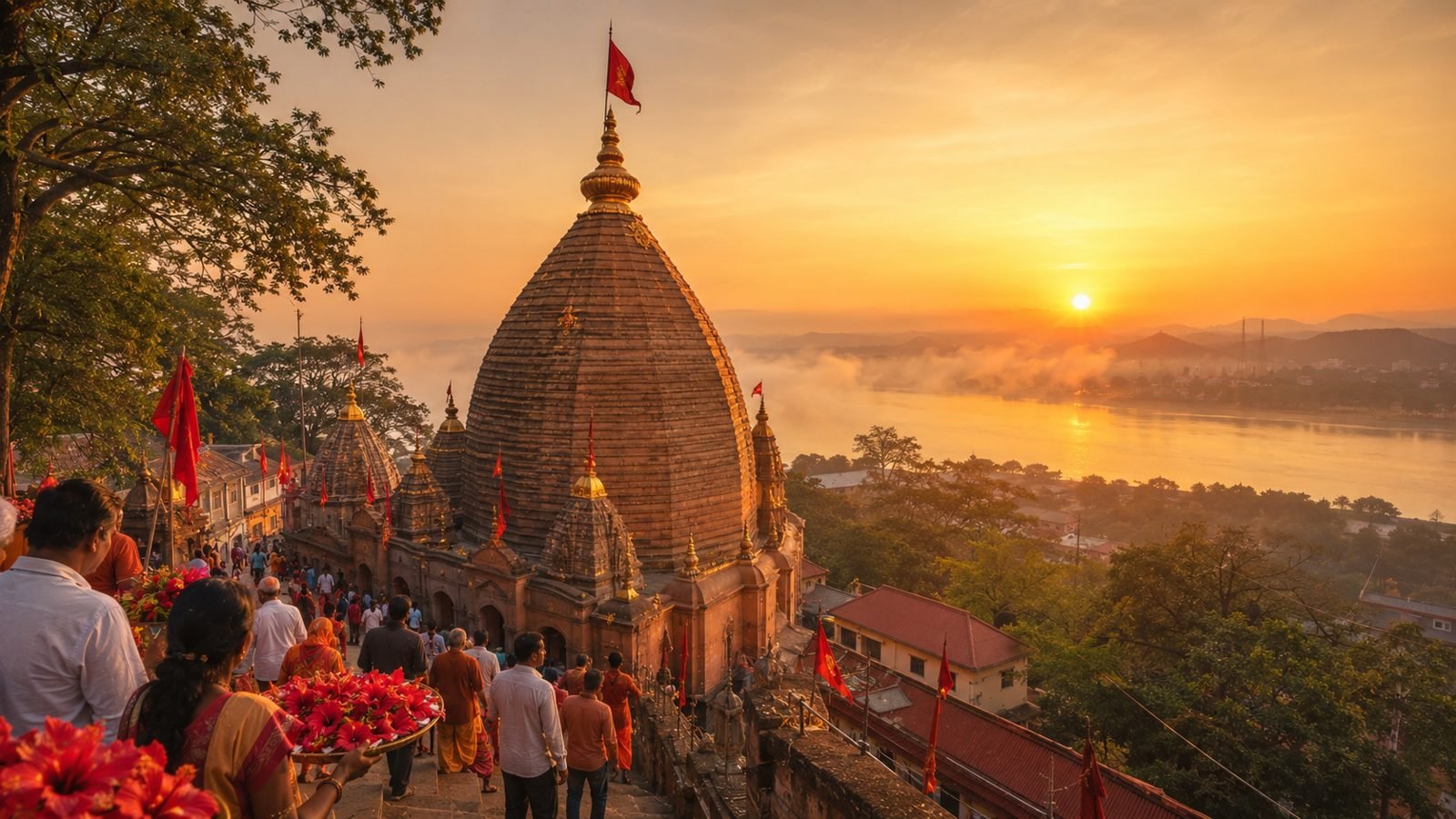
Kamakhya - Guwahati, Assam
Crowning Nilachal Hill above the Brahmaputra, Kamakhya is the foremost Shakti Peetha, marking where the Yoni of the Goddess fell. There is no conventional idol; the Mother receives worship as a natural cleft in the rock kept moist by an underground spring. As the supreme seat of Tantra, it draws hundreds of thousands during the annual Ambubachi Mela, which celebrates the Goddess's menstruation and creative power.Kalighat - Kolkata, West Bengal
One of the four Adi Shakti Peethas, Kalighat marks the spot where the toes of Sati's right foot fell. The temple gave its name to the Kalighat neighbourhood and, ultimately, to the city of Kolkata itself. The fierce yet compassionate Kali receives worship here, drawing unending streams of devotees.Vaishno Devi - Katra, Jammu & Kashmir
Set within a cave high in the Trikuta hills, Vaishno Devi is among the most visited pilgrimage sites in all of India, receiving millions every year. The Mother receives worship as three natural rock forms (pindis) representing Maha Kali, Maha Lakshmi and Maha Saraswati. The trek from Katra is itself an act of devotion.Jwala Ji - Kangra, Himachal Pradesh
Jwalamukhi marks where the tongue of Sati fell, and the Goddess receives worship not as an image but as eternal natural flames that rise from the rock without any fuel - a phenomenon revered as the living presence of the Devi. It is one of the eighteen Maha Shakti Peethas.Tarapith - Birbhum, West Bengal
Famed as a great centre of Tantric Kali worship and associated with the saint Bamakhyapa, Tarapith enshrines the Goddess Tara. Its adjoining cremation ground (mahasmashana) is one of the most intense sites of Tantric sadhana in India.Dakshineswar - Kolkata, West Bengal
While not counted among the classical 51, Dakshineswar deserves mention among the most visited Devi shrines: here Sri Ramakrishna Paramahamsa worshipped the Goddess Bhavatarini and attained his luminous realisation, making it one of the most spiritually charged temples of modern Bengal.Pilgrimage Circuits: Planning Your Yatra
Visiting all 51 Peethas across six countries is a lifelong aspiration. Most devotees instead complete regional circuits, each of which can be covered over one or two focused journeys. Below are practical groupings with travel notes.East India & Bengal Circuit (the densest cluster)
- Includes Kalighat, Tarapith, Bakreshwar, Attahas, Kankalitala, Nandikeshwari, Bahula, Ujani and Jogadya in West Bengal, plus Kamakhya (Assam), Biraja and Tara Tarini (Odisha).
- Base yourself in Kolkata for the Bengal temples; Guwahati airport serves Kamakhya; Bhubaneswar serves the Odisha Peethas.
- Travel notes: well connected by rail and road; this is the easiest region to cover many Peethas in a single trip. Allow 7-10 days for a fuller Bengal-Assam-Odisha loop.
North India & Himalayan Devi Circuit
- Includes Vaishno Devi (Katra), Jwala Ji, Bajreshwari (Kangra) and Naina Devi in the Himachal hills, plus Vishalakshi (Varanasi), Lalita/Alopi (Prayagraj), Vrindavan and Pushkar (Rajasthan).
- Use Jammu, Pathankot and Chandigarh as gateways for the hill shrines; Varanasi and Prayagraj for the Ganga-plains cluster.
- Travel notes: hill temples involve treks and seasonal weather; check road conditions in winter. The Himachal Devi Darshan loop (Jwala Ji-Kangra-Naina Devi) is a popular short circuit.
South India & Ashtadasha Circuit
- Includes Kamakshi (Kanchipuram), Kanya Kumari and Narayani (Suchindram) in Tamil Nadu; Bhramaramba (Srisailam), Manikyamba (Draksharamam) and Puruhutika (Pithapuram) in Andhra Pradesh; Jogulamba (Alampur) in Telangana; Mahalakshmi (Kolhapur) and Renuka (Mahur) in Maharashtra; Chamundeshwari (Mysuru) in Karnataka.
- This trail overlaps heavily with Adi Shankara's eighteen Maha Peethas, making it the classic Ashtadasha pilgrimage.
- Travel notes: well served by airports at Chennai, Hyderabad, Bengaluru and Pune; combine with temple-town stays. Allow 10-14 days for the full southern arc.
Peethas Abroad (Nepal, Bangladesh, Pakistan, Sri Lanka, Tibet)
- Nepal: Gandaki/Muktinath, Guhyeshwari and Mithila near Janakpur - combine with a Kathmandu and Mustang itinerary.
- Bangladesh: Sugandha (Barisal), Jeshoreshwari/Yashoreshwari, Bhabanipur and Chattal (Chittagong) - require a visa and local guidance.
- Pakistan: Hinglaj Mata in Balochistan, reached via an organised yatra; Sri Lanka: Shankari (Trincomalee) and Indrakshi (Nainativu); Tibet: Manas near Mount Kailash, part of the Kailash-Mansarovar yatra.
- Travel notes: international Peethas need visas, permits and advance planning; many are best visited with established pilgrimage tour operators.
Best Time to Visit the Shakti Peethas
- Navaratri (the supreme season) - Chaitra Navaratri (March-April) and Sharad Navaratri (September-October) are the holiest times to visit any Devi shrine, when nine nights of worship fill the temples with festivity. Expect large crowds and book early.
- October to March (best weather) - The cool, dry season is ideal for travelling across most Peethas, especially the hill and southern temples.
- Ambubachi Mela at Kamakhya (June) - A unique, once-a-year Tantric festival celebrating the Goddess's creative power; the temple closes for a few days and reopens to immense crowds.
- Avoid peak monsoon (July-August) - for Himalayan and northeastern Peethas, where heavy rain can disrupt treks and roads.
- Auspicious days - Tuesdays, Fridays, Ashtami, Purnima and Amavasya are considered especially powerful for Devi darshan at any Peetha.
Spiritual Significance of the Shakti Peethas
🕉️ Hear these sacred mantras come alive. Subscribe to Musinara Sounds on YouTube for 432 Hz Devi mantra chants, meditation music, and new devotional videos every week.
Frequently Asked Questions
What are the Shakti Peethas?
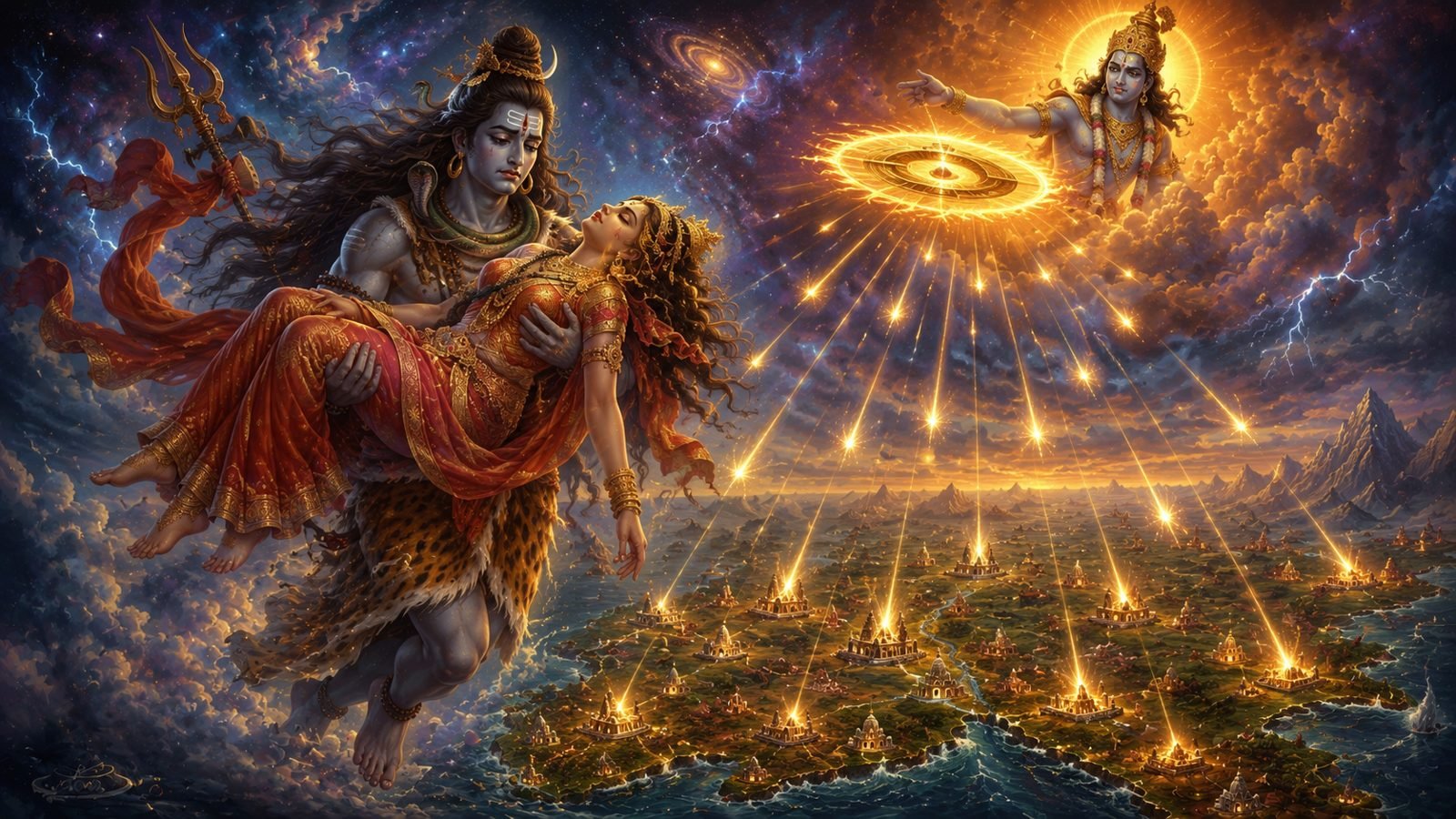
The Shakti Peethas are sacred shrines of the Divine Mother that mark the spots where parts of Goddess Sati's body, ornaments and relics fell to earth after Lord Vishnu severed her corpse with the Sudarshana Chakra. Each Peetha enshrines a form of the Goddess (Shakti) and a guardian form of Shiva (Bhairava).How many Shakti Peethas are there - 51, 52, or 108?
It depends on the scripture. The Tantra Chudamani and Pithanirnaya list 51, the Mahapithapurana names 52, the Brahmanda Purana counts 64, and the Devi Bhagavata Purana speaks of 108. The figure of 51 - linked to the 51 letters of the Sanskrit alphabet - is the most widely accepted today.Why is the number 51 considered special?
The number 51 corresponds to the 51 aksharas (letters) of the Sanskrit alphabet, which Tantra regards as the matrika - the sound-body of the Goddess. Each Peetha is therefore seen as a living syllable of the cosmic Mother.What are the 4 Adi Shakti Peethas?
The four primordial seats are Kamakhya (Assam), Kalighat (Kolkata), Vimala at Puri (Odisha) and Tara Tarini (Odisha). The Devi Bhagavata and Kalika Purana describe them as the spots holding the most concentrated divine energy.What are the 18 Ashtadasha Maha Shakti Peethas?
They are eighteen great Peethas glorified in Adi Shankaracharya's Ashtadasha Shakti Peetha Stotram, stretching from Shankari in Sri Lanka to Sharada in Kashmir. Kamakhya (creation), Gaya (nourishment) and Ujjain (annihilation) are singled out as supreme.Which Shakti Peetha is the most powerful?
Kamakhya in Assam is widely regarded as the most powerful, as it enshrines the Yoni (creative source) of the Goddess and is the great centre of Tantric worship. Kalighat, Vaishno Devi and Jwala Ji are also among the most revered.Are all the Shakti Peethas in India?
No. While most are in India, the Peethas span the subcontinent - with shrines in Nepal, Bangladesh, Pakistan, Sri Lanka, Tibet and Bhutan - reflecting the ancient cultural and spiritual unity of the region.What is a Bhairava and why is one present at each Peetha?
Bhairava is the fierce, protective form of Lord Shiva who guards each Peetha alongside the Goddess. When Vishnu dismembered Sati, Shiva followed each fragment as Bhairava, so every Shakti shrine is paired with its own Bhairava.When is the best time to visit the Shakti Peethas?
Navaratri (March-April and September-October) is the most auspicious time, when the Goddess receives worship for nine nights. October to March offers the most comfortable weather for travel across most Peethas. Kamakhya's Ambubachi Mela (June) is a unique once-a-year experience.Can I complete a Shakti Peetha pilgrimage in one trip?
Visiting all 51 is a lifelong undertaking spread across several countries. Most devotees instead complete regional circuits - the Bengal cluster, the South Indian Ashtadasha trail, or the North Indian Himalayan Devi yatra - over multiple journeys.May the Divine Mother bless your journey to her sacred abodes. Jai Mata Di.Which of these have a full guide on this site
The table above is the list. These are the sites we have written up in full, with the legend, the darshan practicalities, timings and how to reach. Each of the eleven below appears in most versions of the 51.
- Kamakhya - Guwahati, Assam. The yoni peetha
- Kalighat and Dakshineswar - Kolkata, West Bengal
- Jwalamukhi (Jwala Ji) - Kangra, Himachal Pradesh. The tongue
- Brajeshwari Devi - Kangra, Himachal Pradesh
- Naina Devi - Bilaspur, Himachal Pradesh. The eyes
- Chintpurni (Chhinnamastika) - Una, Himachal Pradesh. The feet
- Ambaji - Banaskantha, Gujarat. The heart
- Bhramaramba, Srisailam - Kurnool, Andhra Pradesh. The neck
- Mahalakshmi, Kolhapur - Kolhapur, Maharashtra
- Chamundeshwari - Mysuru, Karnataka
- Kumari Amman - Kanyakumari, Tamil Nadu
We also have full guides to Vaishno Devi, Meenakshi Amman, Kollur Mookambika, Sringeri Sharada Peetham, Vindhyavasini Devi, Tarapith, Tulja Bhavani, Kanaka Durga and Mansa Devi and Chandi Devi. Some of these appear in only a few of the peetha lists and some in none at all. That does not make them lesser shrines; it means they belong to other traditions, such as the Siddha Peethas or the Shankaracharya mathas. Where a site's status is contested, its own guide says so.
All twenty are arranged by region, with practical circuits, in Devi Temples of India.