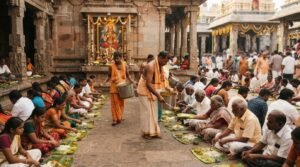
The Navratri vrat is a fast kept through the nine nights, in which grains, pulses, table salt, onion and garlic are set aside and a limited range of foods is eaten instead. In 2026 it runs from Sunday 11 October to Monday 19 October, and is broken on Ashtami, Navami or Dashami according to family custom.
The vrat is not an endurance test. In the traditional understanding it is a lightening: the body is given less to digest so that attention has somewhere else to go. Different households keep it with very different degrees of strictness, and all of them are keeping it properly. What follows is what is generally permitted and set aside, and how the fast is opened and closed.
The Forms the Vrat Takes
| Form | What it means | Commonly kept by |
|---|---|---|
| Phalahar vrat | Fruit, milk and vrat-permitted foods, eaten once or twice a day | The most widely kept form, and the one described throughout this guide |
| Ek-bhukt vrat | One full vrat meal a day, usually in the evening after the aarti | Those who work through the day and prefer one settled meal |
| Nirjala vrat | Without food or water, kept for a single day rather than nine | Kept by a few on Ashtami or Navami only |
| Pratipada and Ashtami only | Fasting on the first and eighth days alone | Very common where a nine-day fast is impractical |
| Saatvik ahar | No fast as such, but onion, garlic and meat set aside for the nine days | Households who mark the season without fasting |
What May Be Eaten
| Category | Permitted |
|---|---|
| Flours | Kuttu (buckwheat), singhara (water chestnut), rajgira (amaranth) |
| Grain substitutes | Samak ke chawal (barnyard millet), sabudana (sago) |
| Vegetables | Potato, sweet potato, arbi, lauki, pumpkin, cucumber, tomato, carrot, spinach |
| Dairy | Milk, curd, paneer, ghee, butter, khoya |
| Fruit | All fresh fruit, and fruit juice without added salt |
| Nuts and seeds | Peanuts, almonds, cashews, walnuts, makhana, coconut |
| Seasoning | Sendha namak, cumin, black pepper, green chilli, ginger, coriander leaf, lemon |
What Is Set Aside
- Grains: wheat, rice, semolina, maida, corn, oats and anything made from them.
- Pulses and lentils of every kind, including besan.
- Table salt. Sendha namak is used instead.
- Onion and garlic.
- Most common spices, including turmeric, asafoetida, mustard seed and garam masala, though households differ here more than anywhere else.
- Meat, fish, eggs and alcohol, which are set aside for the nine days even by many who do not otherwise fast.
Regional practice varies genuinely and not trivially. Some families permit tomato and some do not; some use turmeric freely; in parts of the south the vrat is kept quite differently again. Where your household has a custom, that custom is the right answer.
Opening and Breaking the Fast
- Sankalp. The vow is taken on the morning of Pratipada, 11 October 2026, at the time of Ghatasthapana, stating how many days you intend to keep.
- Through the nine days. A bath before the morning puja, the vrat food once or twice, the evening aarti, and the mantra or Chalisa as your practice allows.
- Paran, the breaking. Most break the fast after Kanya Pujan on Ashtami, Sunday 18 October, or on Navami, Monday 19 October. Some continue to Dashami, Tuesday 20 October, and break it after the Vijayadashami puja.
- Break it gently. The first meal after nine days is best kept light and warm. Prasad first, then a simple meal.
Who Should Not Fast
Tradition itself makes room here, and has always done so. The shastras exempt the ill, the very young, the elderly, pregnant and nursing women, and those travelling. Keeping the vrat at the cost of your health is not the more devout choice; it is simply the less wise one.
- If you are pregnant, nursing, diabetic, managing blood pressure, recovering from illness, or taking medication that must be taken with food, speak to your doctor before fasting, and follow their advice over any custom.
- Children and the elderly are traditionally exempt. Where they wish to take part, a partial fast or simply the saatvik diet is the usual accommodation.
- Anyone with a history of disordered eating should be cautious with this practice, and there is no loss of merit in marking the nine days by worship rather than by fasting.
- Drink water throughout unless you are keeping a nirjala fast for a single day. Dizziness, faintness or a racing heart mean it is time to eat, and no tradition says otherwise.
The Devi is worshipped as the Mother. No mother is served by her child coming to harm.
Chant Through the Nine Days
Frequently Asked Questions
What can I eat during the Navratri fast?
Kuttu, singhara and rajgira flours, samak rice, sabudana, potato and other permitted vegetables, all fruit, milk, curd, paneer, nuts and makhana, seasoned with sendha namak, cumin, pepper, green chilli and ginger.
What is not allowed during Navratri vrat?
Grains and anything made from them, all pulses, table salt, onion, garlic, most common spices, and meat, fish, eggs and alcohol.
Why is sendha namak used instead of ordinary salt?
Rock salt is unprocessed and is classed as saatvik, whereas refined table salt is treated as a processed food and set aside along with grains for the duration of the vrat.
When is the Navratri 2026 fast broken?
Most break it after Kanya Pujan on Ashtami, 18 October, or on Navami, 19 October. Some continue to Dashami, 20 October, and break it after the Vijayadashami puja.
Can I drink water during the Navratri fast?
Yes. The usual phalahar vrat permits water freely, along with milk, buttermilk and fruit juice. Only the nirjala fast, kept for a single day, excludes water.
Is it compulsory to fast for all nine days?
No. Fasting on Pratipada and Ashtami alone is very common and entirely traditional, as is keeping a saatvik diet without fasting at all.
Continue Your Journey
- Navratri 2026: dates and the nine forms of Navadurga
- Navratri bhog for nine days
- Kanya Pujan 2026: date and vidhi
- Navratri colours 2026, day by day
This guide describes a religious observance and is not medical advice. If you have a health condition or any doubt at all, speak to a doctor before fasting.
Stay in Touch
An occasional note when there is a new chant or a mantra worth sharing. No spam, and you can unsubscribe at any time.