Each of the nine nights of Navratri has its own bhog, offered first to that night form of the Navadurga and then shared as prasad. The sequence runs ghee, sugar, kheer, malpua, banana, honey, jaggery, coconut and sesame seeds, from the first night to the ninth.
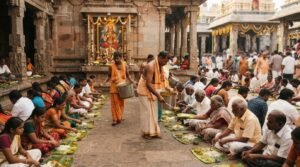
Bhog is naivedya: food offered to the deity before anyone eats. It is not a meal cooked for the family that the Goddess is invited to share, but the reverse. The offering is made first, and what returns from it is prasad, the same food transformed by having been given. Each of the nine offerings below is chosen for the form who receives it, and the reasons are worth knowing.
Navratri Bhog for 9 Days: The Full List
| Day | Date 2026 | Goddess | Bhog | Traditionally sought |
|---|---|---|---|---|
| 1 | Sun 11 Oct | Shailaputri | Pure ghee | Freedom from illness |
| 2 | Mon 12 Oct | Brahmacharini | Sugar | Long life |
| 3 | Tue 13 Oct | Chandraghanta | Kheer or milk | Release from sorrow |
| 4 | Wed 14 Oct | Kushmanda | Malpua | Clarity of decision |
| 5 | Thu 15 Oct | Skandamata | Banana | Good health |
| 6 | Fri 16 Oct | Katyayani | Honey | Radiance and grace |
| 7 | Sat 17 Oct | Kalaratri | Jaggery | Freedom from fear |
| 8 | Sun 18 Oct | Mahagauri | Coconut | Fulfilment of wishes |
| 9 | Mon 19 Oct | Siddhidatri | Sesame seeds | Protection and siddhi |
Why Each Offering, Night by Night
Day 1: Pure ghee for Shailaputri
Ghee is the first offering because it is the purest product of the cow and the fuel of the sacred fire itself. Offered to Shailaputri, the mountain daughter who is the ground of the whole festival, it is said to keep the body free of illness through the year.
Day 2: Sugar for Brahmacharini
Sugar is offered to Brahmacharini, whose years of austerity were sweetened by nothing at all. The offering is a prayer for long life, and it is deliberately the simplest thing in the kitchen.
Day 3: Kheer or milk for Chandraghanta
Kheer, or plain milk, goes to Chandraghanta, who wears the moon on her brow. Milk is the moon substance in the traditional reckoning, cooling and calming, and the offering asks for release from sorrow.
Day 4: Malpua for Kushmanda
Malpua is offered to Kushmanda, from whose smile the cosmos came. It is the richest offering of the nine, and it is asked to bring clarity of intellect and steadiness in decision.
Day 5: Banana for Skandamata
A banana is offered to Skandamata, who holds the infant Skanda on her lap. It is the fruit given to children, and the offering asks for the health of the body and of the family.
Day 6: Honey for Katyayani
Honey goes to Katyayani, the warrior born of the gods gathered anger. Honey is the sweetness that survives, and the offering asks for radiance and grace of form.
Day 7: Jaggery for Kalaratri
Jaggery is offered to Kalaratri on the darkest night of the nine. Unrefined, dark and warming, it is the right food for the hour before dawn, and it is asked to take away fear and grief.
Day 8: Coconut for Mahagauri
A coconut is offered to Mahagauri on Ashtami. It is the offering that stands in for the self: hard shell, sweet interior, broken open before the Goddess. It is asked for the fulfilment of what has long been wished for.
Day 9: Sesame seeds for Siddhidatri
Sesame seeds are offered to Siddhidatri on the last night. Til belongs to the rites of protection and of the ancestors, and the closing offering asks for shelter from misfortune and for the siddhis she grants.
How to Offer the Bhog
- Prepare the food fresh on the day, and do not taste it while cooking. Bhog is offered before it is eaten by anyone.
- Use a clean plate kept for the purpose, ideally of steel, brass or copper rather than one in daily use.
- Place the offering before the image or kalash, with a tulsi leaf where the tradition of your household calls for it, and a small vessel of water beside it.
- Offer it with the mantra of that night, then leave it undisturbed for a few minutes before the aarti.
- After the aarti, distribute it as prasad. Nothing offered should be thrown away; what is left is shared or given.
Vrat-Friendly Preparation
Households keeping a strict fast prepare the bhog with vrat ingredients so that the same food can serve as both offering and the day meal. The substitutions are straightforward:
| Ordinary ingredient | Vrat substitute |
|---|---|
| Table salt | Sendha namak (rock salt) |
| Wheat flour | Kuttu (buckwheat), singhara (water chestnut) or rajgira (amaranth) flour |
| Rice | Samak ke chawal (barnyard millet) |
| Sooji for halwa | Singhara or rajgira flour, roasted in ghee the same way |
| Onion, garlic, common spices | Cumin, black pepper, green chilli, ginger |
The kala chana served at Kanya Pujan is the one common exception: many households who otherwise fast strictly cook it in the ordinary way for the girls, since the pujan bhog is prepared for them rather than for the fasting members of the family.
Chant While You Cook
The kitchen is where most of Navratri actually happens. Keep the mantra playing while the halwa browns and the chana soaks.
Frequently Asked Questions
What is the bhog for each of the 9 days of Navratri?
Ghee on day one, then sugar, kheer, malpua, banana, honey, jaggery, coconut and sesame seeds through to the ninth night, each offered to that night Navadurga form.
What is the difference between bhog and prasad?
Bhog is the food offered to the deity. Prasad is that same food after it has been offered and is returned to the devotees. The distinction is the offering, not the dish.
Can bhog be tasted while cooking?
No. Bhog is prepared without tasting, because the first share belongs to the Goddess. Taste it after the offering has been made, when it has become prasad.
What if I cannot make the specific bhog for a day?
Offer what you can, even fruit or a little sugar. The tradition is unanimous that the offering is measured by sincerity and not by expense.
Is bhog offered in the morning or evening?
Most households offer it at the evening puja before the aarti, though it may be offered at the morning worship as well. What matters is that it is offered before anyone eats.
Continue Your Journey
- Navratri 2026: dates and the nine forms of Navadurga
- Navratri colours 2026, day by day
- Kanya Pujan 2026: date and vidhi
- Jai Ambe Gauri: the Navratri aarti
May what you offer return to you multiplied. Jai Mata Di.
Stay in Touch
An occasional note when there is a new chant or a mantra worth sharing. No spam, and you can unsubscribe at any time.