ॐ ऐं ह्रीं श्रीं क्लीं हसौः जगत्प्रसूत्यै नमः
Om Aim Hreem Shreem Kleem Hasauh Jagatprasutyai Namah
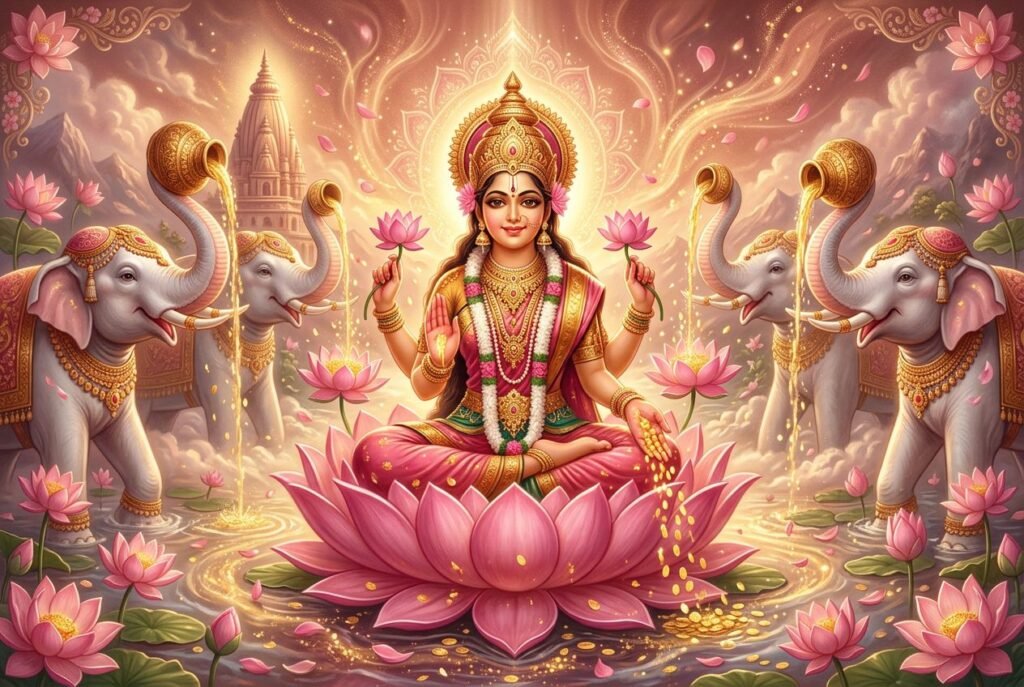
Kamala is the lotus goddess, the Tantric Lakshmi who rises radiant from the mud and pours gold from her open palm. As the tenth and final Mahavidya she completes the cycle that began in Kali darkness.
How to Use This Chant
- Sit facing east or north, with a lamp if you keep one, and let the breath settle before you begin.
- Follow the chant aloud or under the breath. The tempo is deliberately unhurried so that it can be repeated rather than only heard.
- One full playing is one mala, the traditional count of 108. A rudraksha or crystal mala helps the attention stay.
- Brahma Muhurta, the hour before dawn, is the classical time. Dusk is the next best. Consistency matters more than either.
- The recording is tuned to 432 Hz. Headphones deepen it, but they are not required.
Traditionally invoked for: abundance · prosperity · serenity.
About the Seed Sound
A beej or seed mantra is not a sentence to be understood but a sound to be repeated. Shreem carries the whole presence of Maa Kamala in a single syllable, which is why the tradition holds that it works on the one who chants it even before its meaning is grasped. This mantra needs no initiation; the deeper Tantric mantras are given by a guru through diksha.
When to Chant
Kamala is invoked on Fridays and through the days of Diwali, when Lakshmi in all her forms receives worship. The full moon is also traditionally auspicious for her.
The Mantra, Word by Word
ॐ ऐं ह्रीं श्रीं क्लीं हसौः जगत्प्रसूत्यै नमः - five seed syllables in sequence, each invoking one face of the goddess of abundance.
| Word | Meaning |
|---|---|
| Om (ॐ) | The pranava. |
| Aim (ऐं) | The beej of Saraswati - wisdom and true speech, so that abundance is guided rightly. |
| Hreem (ह्रीं) | The beej of Mahamaya, the heart-sound - purification before receiving. |
| Shreem (श्रीं) | The beej of Lakshmi herself - shri: wealth, beauty, auspiciousness. |
| Kleem (क्लीं) | The beej of attraction - that what is sought is also drawn near. |
| Hasauh (हसौः) | The paired Shiva-Shakti seed, consciousness and energy together. |
| Jagatprasutyai (जगत्प्रसूत्यै) | “To her who gives birth to the world.” |
| Namah (नमः) | “I bow.” |
Because five beejas run in sequence, this mantra rewards a slower pace than the others in the series - each seed given its full sound before the next, as the recording demonstrates.
Etiquette and Common Mistakes
A few practical courtesies that tradition attaches to japa: complete the round of 108 rather than stopping mid-mala; keep the same mantra for at least a mandala of 40 days before judging its effect; chant after a wash or at least with rinsed mouth and hands; and let the recording carry the pace rather than racing ahead of it. If the mind wanders, return to the syllables without irritation - the return itself is the practice.
Specific to Kamala’s mantra: Fridays are her day, and the days around Diwali and Varalakshmi Vrata are held especially fruitful. The tradition’s one warning is against chanting for wealth alone - Kamala is approached as the Mother who sustains, not as a transaction.
Frequently Asked Questions
Who is Maa Kamala?
Kamala is the tenth and final Mahavidya, the Tantric form of Lakshmi. She is the lotus goddess who rises radiant from the mud, and she completes the cycle that begins in Kali darkness.
What is the Kamala mantra chanted for?
Abundance, prosperity and serenity. In the Tantric reading her wealth is not only material but the fullness that lets a person give freely.
When should the Kamala mantra be chanted?
Fridays, full moon nights, and through Diwali. Dawn is the classical hour.
Is Kamala the same as Lakshmi?
They are the same goddess approached differently. Kamala is Lakshmi within the Mahavidya framework, worshipped through Tantric rather than purely Vedic forms.
Listen to the Full Series
This chant is part of the Musinara library of sacred sound: the ten Mahavidya beej mantras, the classical stotras of the Devi, and long-form instrumental ragas for meditation and puja. New recordings are released each week on the Musinara YouTube channel.
Read More
Stay in Touch
An occasional note when there is a new chant or a mantra worth sharing. No spam, and you can unsubscribe at any time.
New to chanting? Two short guides cover the practicalities: how to chant a mantra (mala, count, pronunciation and the three traditional modes of japa), and Devi worship at home (a simple altar and a ten minute daily sequence).