ॐ दुं दुर्गायै नमः
Om Dum Durgayai Namah
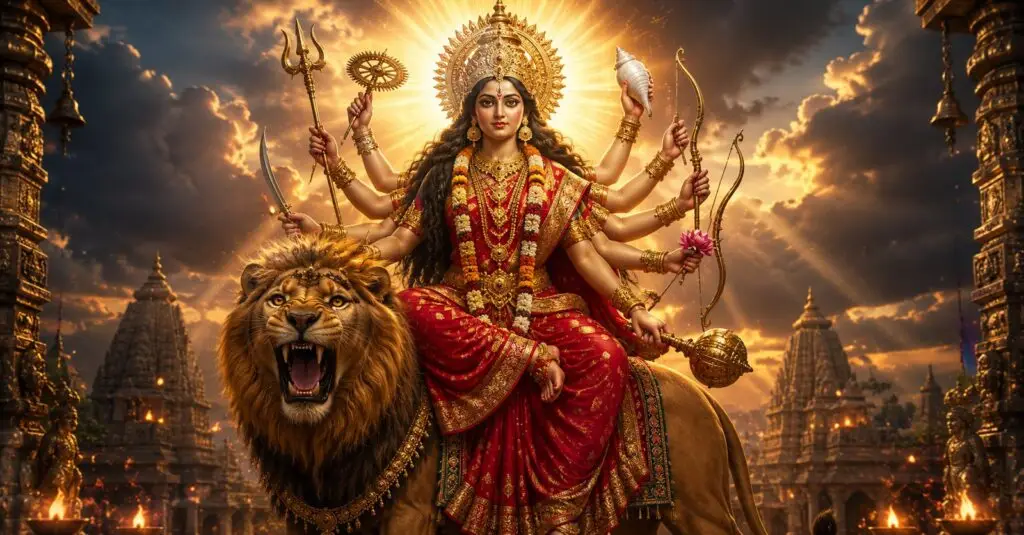
Durga means the fort that cannot be breached. When Mahishasura could be slain by neither god nor man, the combined fire of all the devas took form as a warrior goddess riding a lion. Dum is a shield woven from sound itself.
How to Use This Chant
- Sit facing east or north, with a lamp if you keep one, and let the breath settle before you begin.
- Follow the chant aloud or under the breath. The tempo is deliberately unhurried so that it can be repeated rather than only heard.
- One full playing is one mala, the traditional count of 108. A rudraksha or crystal mala helps the attention stay.
- Brahma Muhurta, the hour before dawn, is the classical time. Dusk is the next best. Consistency matters more than either.
- The recording is tuned to 432 Hz. Headphones deepen it, but they are not required.
Traditionally invoked for: protection · courage · victory over obstacles.
About the Seed Sound
A beej or seed mantra is not a sentence to be understood but a sound to be repeated. Dum carries the whole presence of Maa Durga in a single syllable, which is why the tradition holds that it works on the one who chants it even before its meaning is grasped. This mantra needs no initiation; the deeper Tantric mantras are given by a guru through diksha.
When to Chant
Durga is invoked on Tuesdays and through the nine nights of Navratri, when this mantra is chanted in millions of homes across India. Ashtami and Navami carry particular weight.
The Mantra, Word by Word
ॐ दुं दुर्गायै नमः - the shortest of the Devi mantras on this site, and the one most often given first.
| Word | Meaning |
|---|---|
| Om (ॐ) | The pranava, the opening vibration. |
| Dum (दुं) | Durga’s beej. Da is read as protection from harm, the u sound as the guarding grace, and the nasal bindu as the removal of obstacles - a fortress compressed into one syllable. |
| Durgayai (दुर्गायै) | “To Durga” - her name itself means the fort that cannot be breached, she who is difficult to approach for all that is hostile. |
| Namah (नमः) | “I bow.” |
The beej Dum is chanted short and firm - a closed drumbeat rather than a drawn-out vowel. Listen for how the recording strikes it at the head of each repetition.
Etiquette and Common Mistakes
A few practical courtesies that tradition attaches to japa: complete the round of 108 rather than stopping mid-mala; keep the same mantra for at least a mandala of 40 days before judging its effect; chant after a wash or at least with rinsed mouth and hands; and let the recording carry the pace rather than racing ahead of it. If the mind wanders, return to the syllables without irritation - the return itself is the practice.
Specific to Durga’s mantra: Tuesdays and Fridays are her traditional days, and the nine nights of Navratri are held to multiply the fruit of every round of japa.
Frequently Asked Questions
What does Om Dum Durgayai Namah mean?
It means: I bow to Durga. Dum is her seed syllable, a sound tradition treats as a shield, the fort that cannot be breached which her very name describes.
When should the Durga beej mantra be chanted?
Daily at dawn or dusk, and especially through the nine nights of Navratri. Tuesdays are traditionally hers.
What are the benefits of chanting Om Dum Durgayai Namah?
Tradition holds it gives protection, courage and the removal of obstacles. Practically, a daily mala steadies the breath and settles the mind before the day begins.
Can beginners chant this mantra?
Yes. It needs no initiation, and the recording is paced slowly enough to follow from the first repetition.
Listen to the Full Series
This chant is part of the Musinara library of sacred sound: the ten Mahavidya beej mantras, the classical stotras of the Devi, and long-form instrumental ragas for meditation and puja. New recordings are released each week on the Musinara YouTube channel.
Read More
Stay in Touch
An occasional note when there is a new chant or a mantra worth sharing. No spam, and you can unsubscribe at any time.
New to chanting? Two short guides cover the practicalities: how to chant a mantra (mala, count, pronunciation and the three traditional modes of japa), and Devi worship at home (a simple altar and a ten minute daily sequence).