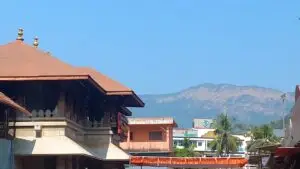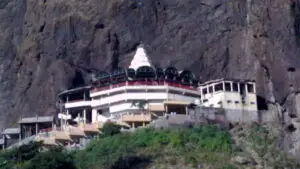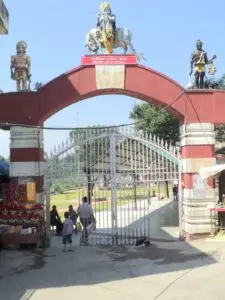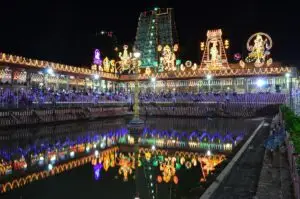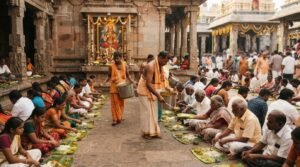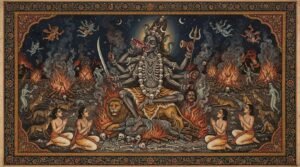
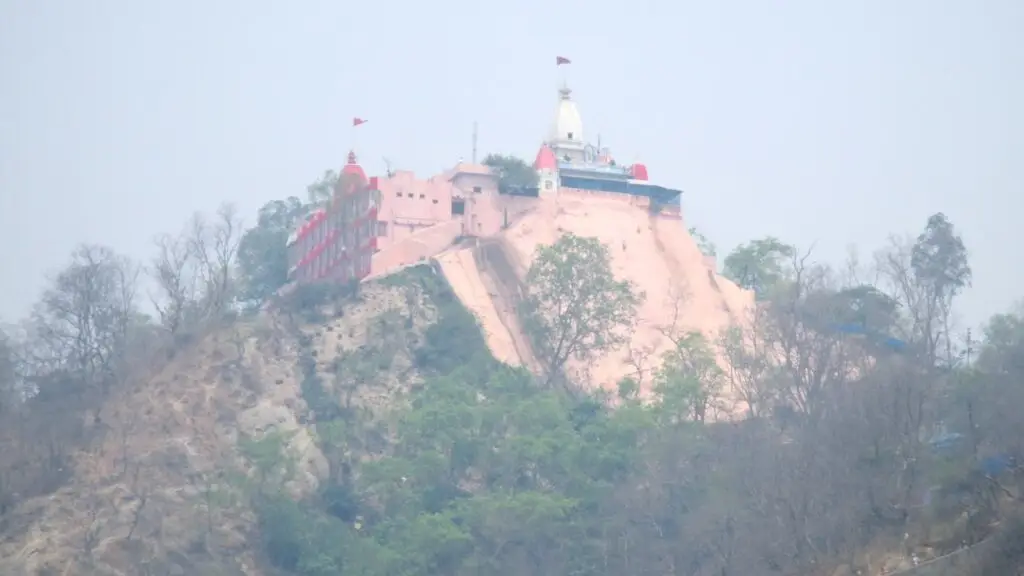
Mansa Devi and Chandi Devi are the two hilltop goddess temples of Haridwar, standing on Bilwa Parvat and Neel Parvat above the Ganga. Together with the ancient Maya Devi temple in the old town, a classical Shakti Peetha, they form the three Siddh Peethas of Haridwar, shrines where sincere prayers are believed to be granted.
Few places in India gather the sacred so densely as Haridwar, the ancient gateway to God where the Ganga leaves the mountains and enters the plains. Long before the modern city took shape, this stretch of riverbank was revered as Mayapuri, Gangadwara and Haradwara, and pilgrims came to bathe at Har Ki Pauri, where a drop of the nectar of immortality is said to have fallen. Rising above the ghats stand two forested hills, each crowned by a temple to the Divine Mother.
This guide walks reverently through all three shrines: Mansa Devi, the wish-fulfilling goddess of Bilwa Parvat, where devotees tie sacred threads to a tree; Chandi Devi on Neel Parvat, the fierce form who slew Chanda-Munda and Shumbha-Nishumbha; and Maya Devi, where the heart and navel of Sati are said to have fallen. We will look at their legends, the udankhatola (ropeway), worship and offerings, the great festivals of Navratri and the Kumbh Mela, and practical details for reaching Haridwar. Where traditions differ, as they often do across Puranas, temple histories and local memory, this guide notes the variation rather than smoothing it over.
Key Takeaways
- Mansa Devi (Bilwa Parvat), Chandi Devi (Neel Parvat) and Maya Devi (old town) are the three Siddh Peethas of Haridwar.
- Maya Devi is also a classical Shakti Peetha, where the heart and navel of Sati are traditionally said to have fallen.
- Devotees tie sacred threads to a revered tree at Mansa Devi while making a wish, and return to untie one when it is fulfilled.
- Tradition credits the consecration of the principal Chandi Devi murti to Adi Shankaracharya in the 8th century, with the present building attributed to Suchat Singh of Kashmir in 1929.
- Both hilltop temples are served by Udankhatola ropeways, with a combined ticket (around Rs. 349 for adults) covering both hills and a connecting bus.
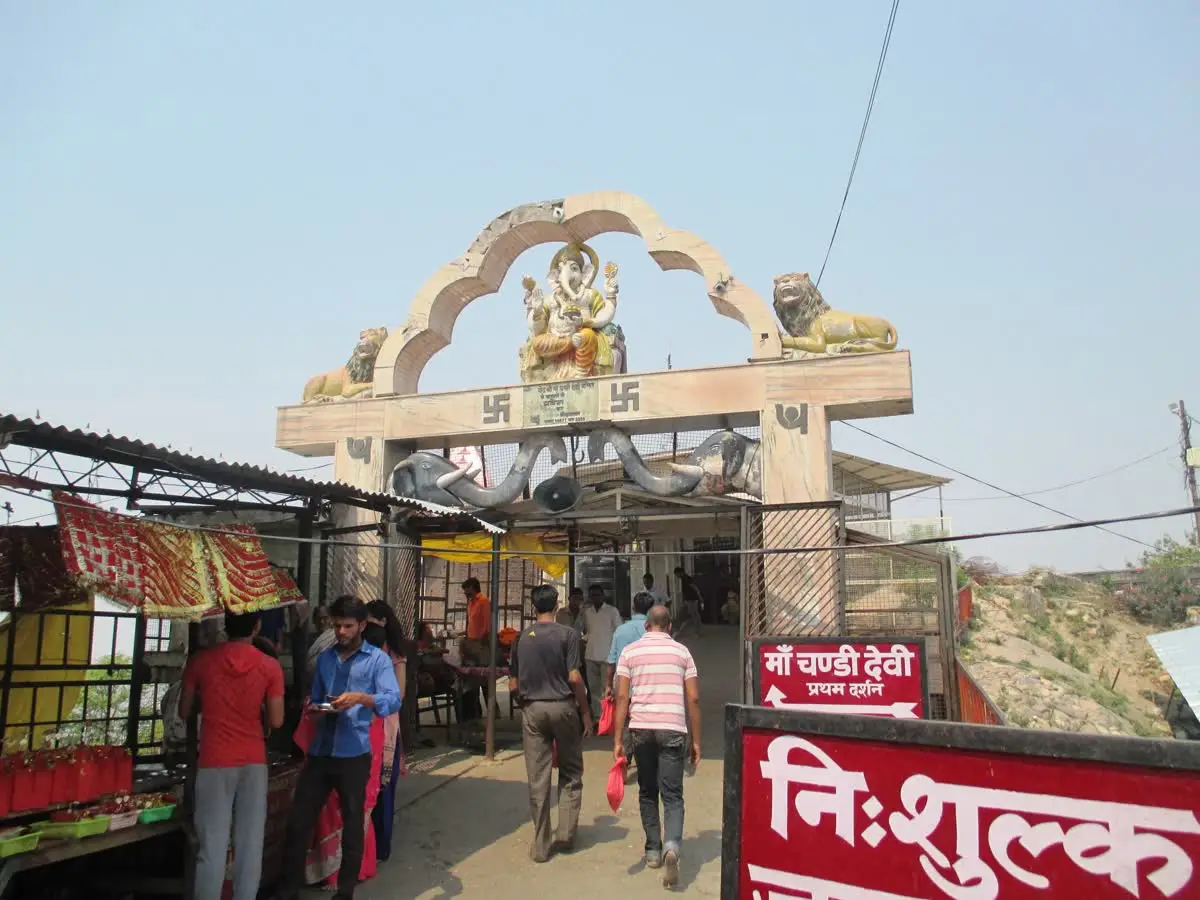
What Makes Haridwar the City of Three Goddesses?
Haridwar is home to a distinct triad of Shakti shrines: Mansa Devi, Chandi Devi and Maya Devi, together honoured as the three Siddh Peethas, or perfected seats, where the Goddess is believed to fulfil the earnest desires of her devotees. Two of them also belong to the city's Puranic circuit of five holy places, the Panch Tirth.
Haridwar sits at the point where the Ganga, after her long descent through the Himalaya, first touches the northern plains. The Puranas count a Panch Tirth, five pilgrimages, within this holy zone: Gangadwara (Har Ki Pauri), Kushavarta Ghat, Kankhal, Bilwa Tirtha (Mansa Devi) and Neel Parvat (Chandi Devi). It is worth keeping the two overlapping frameworks clear: the Panch Tirth is a Puranic circuit of five holy spots, while the three Siddh Peethas are specifically the wish-granting goddess shrines.
Maya Devi carries an additional, higher distinction: she is counted among the classical Shakti Peethas of the subcontinent, the sites marking where the body of Sati fell to earth.
Why Was Haridwar Called Mayapuri?
Haridwar was once known as Mayapuri, in honour of Maya Devi, whose shrine stands at the heart of the old town. That older name is a reminder that the goddess is not an addition to Haridwar but part of its very identity: the city of the Mother, the gateway where devotion meets the descending river.
The Three Temples at a Glance
| Temple | Location | Aspect of the Goddess | Special Distinction |
|---|---|---|---|
| Mansa Devi | Bilwa Parvat (western hill), ropeway base about 1-1.5 km from Haridwar Junction | Wish-fulfilling Mother (manas, the mind's desire) | Siddh Peetha; sacred thread-tying tree; part of the Panch Tirth |
| Chandi Devi | Neel Parvat (eastern hill), across the river | Chandika, the fierce warrior goddess of the Devi Mahatmya | Siddh Peetha; murti traditionally consecrated by Adi Shankaracharya; part of the Panch Tirth |
| Maya Devi | Old town, near Har Ki Pauri | Three-headed, four-armed Shakti, flanked by Kali and Kamakhya | Siddh Peetha and classical Shakti Peetha (heart and navel of Sati); dated to around the 11th century |
Who Is Mansa Devi, the Wish-Fulfilling Goddess of Bilwa Parvat?
Mansa Devi is the goddess of Bilwa Parvat, the western hill above Haridwar, honoured as the one who fulfils the heartfelt desires (mansa kaamna) of her devotees. Her name comes from the Sanskrit manas, meaning mind or wish, and her reputation as a wish-granting Siddh Peetha draws vast crowds up the hill each day.
She is perhaps the most beloved of the three shrines among everyday pilgrims. In the wider tradition, Mansa (also written Manasa) is revered as a form of Shakti and as a goddess closely associated with serpents. A popular account holds that she arose from the mind of Lord Shiva, and she is often described as the sister of Vasuki, the king of the nagas.
In her serpent aspect she is invoked for protection from snakebite and poison and for the blessing of children; at Haridwar, however, she is approached above all as the mother who grants wishes. Identifications of regional goddesses can vary between texts and localities, and the Haridwar shrine emphasises her wish-fulfilling grace.
Why Do Devotees Tie Threads at Mansa Devi?
The most cherished custom at Mansa Devi is the tying of sacred threads. Within the temple courtyard grows a revered tree, and pilgrims tie a thread to its branches while silently making a wish. Each knot is a prayer entrusted to the goddess.
When the wish is granted, the devotee is expected to return, untie a thread, and offer thanks, completing a quiet covenant between the seeker and the Mother. The branches, thick with countless coloured threads, are among the most moving sights of the shrine.
How Old Is the Mansa Devi Temple?
The present temple is generally traced to the earlier centuries of the second millennium, with the site developed and expanded over time by local rulers and the community. As with many living shrines, precise dating is uncertain and sources differ; what is constant is the unbroken flow of pilgrims and the reputation of the hill as a place of answered prayers. The temple enshrines the goddess in two forms: a five-armed, three-faced image and a smaller eight-armed image.
What Offerings Are Made at Mansa Devi?
Pilgrims commonly offer coconuts, fruits, flower garlands, incense and, above all, the sacred thread. Prasad and thread bundles are sold at stalls near the temple. Devotion, humility and a clear intention are considered the true offering. On a typical day the temple is open in the morning and evening with a midday break; timings vary by season and on festival days, so confirm locally before you visit.
Who Is Chandi Devi, the Fierce Goddess of Neel Parvat?
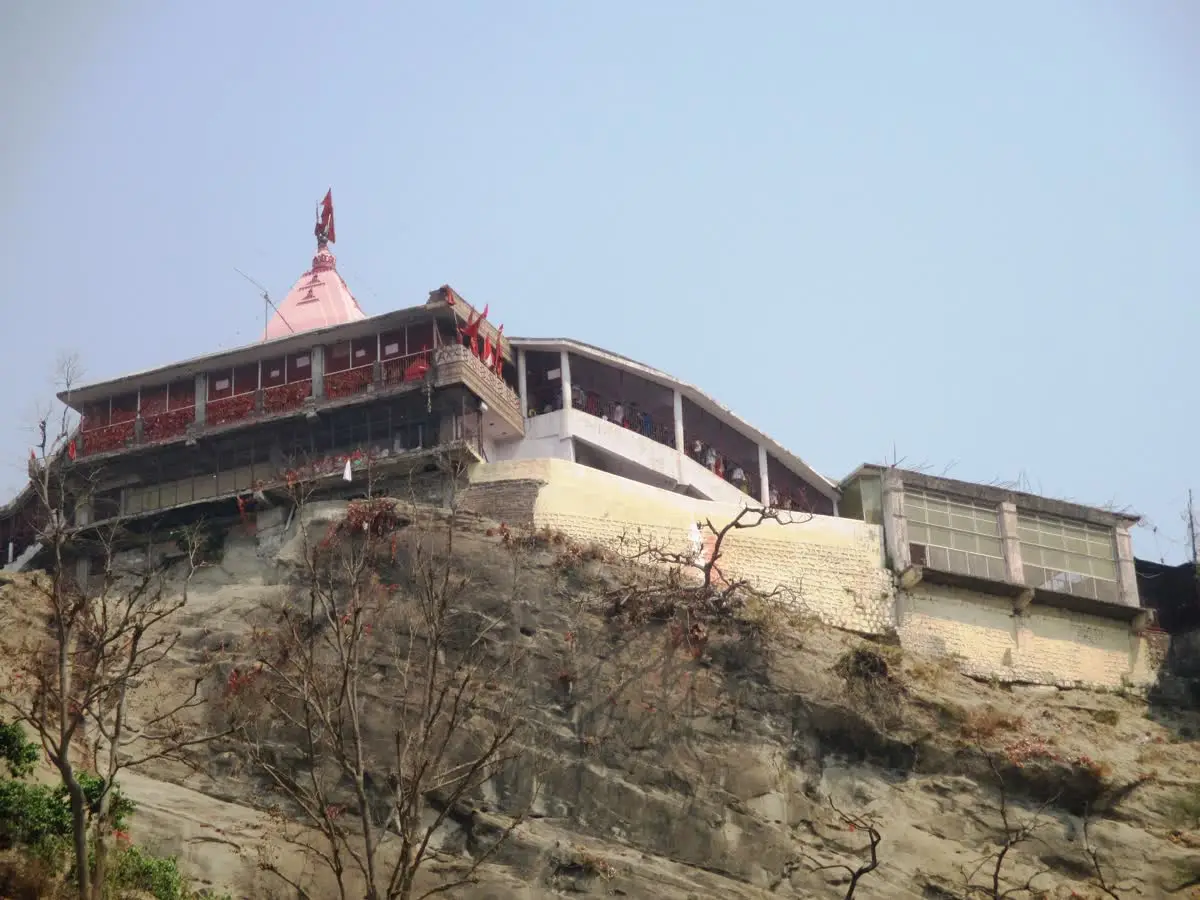
Chandi Devi is Chandika, the fierce, victorious warrior goddess of the Devi Mahatmya, enshrined on Neel Parvat, the eastern hill across the Ganga. Where Mansa Devi is approached as the gentle fulfiller of wishes, Chandi Devi is sought for strength, protection and victory over obstacles, and her shrine too is a Siddh Peetha.
Her temple, also called Neel Parvat Tirtha, offers sweeping views over Haridwar and the Ganga plain, and her story belongs to the great battles of the Goddess.
What Is the Legend of Chandika and the Demons?
The story comes from the Devi Mahatmya. The demon brothers Shumbha and Nishumbha had seized the kingdom of Indra and driven the gods from heaven. In answer to their prayers a radiant goddess emerged from Parvati: Chandika, also linked with Kaushiki. Struck by her beauty, Shumbha desired to wed her, and when refused, he sent his commanders Chanda and Munda to seize her.
From Chandika's wrath sprang the goddess who slew Chanda and Munda, earning the name Chamunda, a fierce form closely associated with Maa Kali. Shumbha and Nishumbha then joined the battle themselves and were destroyed by the goddess. Having triumphed, Chandika is said to have rested on Neel Parvat, and a temple was later raised to mark the place. Two peaks in the range are named for the defeated demons, Shumbha and Nishumbha.
Did Adi Shankaracharya Establish the Chandi Devi Temple?
Tradition holds that the principal murti of Chandi Devi was consecrated in the 8th century by Adi Shankaracharya, the philosopher-saint who did so much to revive temple worship across India. The present temple structure, however, is much later: it is widely attributed to Suchat Singh, a ruler of Kashmir, in 1929.
So the shrine unites an ancient consecrated image with a relatively modern building, a common pattern at long-venerated sites. As always, devotees may encounter slightly differing dates and attributions in local accounts.
How Is Chandi Devi Worshipped?
As at Mansa Devi, pilgrims bring coconuts, flowers, incense and sweets, and many climb or ride to the shrine to seek the goddess's strength and protection. The temple typically opens through the day; ropeway and darshan hours shift with the season and swell dramatically during Navratri and the Kumbh. A short walk from the main shrine leads to smaller temples including one to Anjana, the mother of Hanuman, which many visitors also honour.
Why Is Maya Devi a Shakti Peetha?
Maya Devi is a Shakti Peetha because tradition holds that the heart and navel of Sati fell at Haridwar, at the spot marked by her ancient shrine near Har Ki Pauri. This makes Maya Devi the most ancient of the three goddess temples and the one that gave the city its former name, Mayapuri.
The Shakti Peetha tradition begins with the grief of Shiva. When Sati gave up her body at her father Daksha's sacrifice, Shiva wandered the world carrying her form, lost in sorrow and threatening the balance of creation. To release him, Vishnu is said to have severed Sati's body with his Sudarshana Chakra, and the pieces fell across the subcontinent, each becoming a Shakti Peetha. The full story is told in our guide to the Sati Devi and Daksha Yagna story.
Accounts of exactly which body part fell at which site vary across the different Peetha lists, and this variation is part of the living tradition.
What Will You See Inside the Maya Devi Temple?
The Maya Devi temple is generally dated to around the 11th century, making it one of the oldest surviving shrines in Haridwar. The goddess is depicted as a three-headed and four-armed form of Shakti. Within the sanctum, Maya Devi stands at the centre, flanked by Kali on one side and Kamakhya on the other, a reminder of how the great goddess is worshipped in many forms at a single seat.
Because it is both a Siddh Peetha and a classical Shakti Peetha, the temple carries special weight for pilgrims tracing the Peetha circuit.
Which Mantra Is Chanted for the Haridwar Goddesses?
The mantra most closely associated with Mansa (Manasa) Devi is her seed-syllable invocation, widely recited by devotees, often 108 times at sunrise or sunset. It is offered here as commonly transmitted in the popular tradition; formal initiation (diksha) and correct pronunciation are best learned from a qualified teacher.
| Form | Text |
|---|---|
| Sanskrit (Devanagari) | ओं ह्रीं श्रीं क्लीं ऐं मनसा देव्यै स्वाहा |
| Hindi | ओम् ह्रीं श्रीं क्लीं ऐं मनसा देव्यै स्वाहा |
| Transliteration | Om Hreem Shreem Kleem Aim Manasa Devyai Swaha |
| Meaning | Salutations to the divine Goddess Manasa, invoked here through her seed-syllables, who grants protection, prosperity and the fulfilment of sincere wishes. |
For Chandi Devi and Maya Devi, devotees commonly turn to the verses of the Durga Saptashati (Devi Mahatmya) and to simple invocations of Chandika and the Divine Mother; because scriptural mantras carry precise forms, this guide deliberately does not improvise new ones. Chant with a calm mind, a clean seat, and a clear intention, and let the sound itself become the prayer. Devotees should not treat any single online form as a substitute for a guru's guidance.
How Do You Reach the Haridwar Goddess Temples?
Haridwar is reached by train to Haridwar Junction, by road from Delhi (about 215 km), or by air via Dehradun's Jolly Grant Airport (about 35-45 km away). The three goddess temples all lie within or beside the city, so one trip can cover Mansa Devi, Chandi Devi and Maya Devi together.
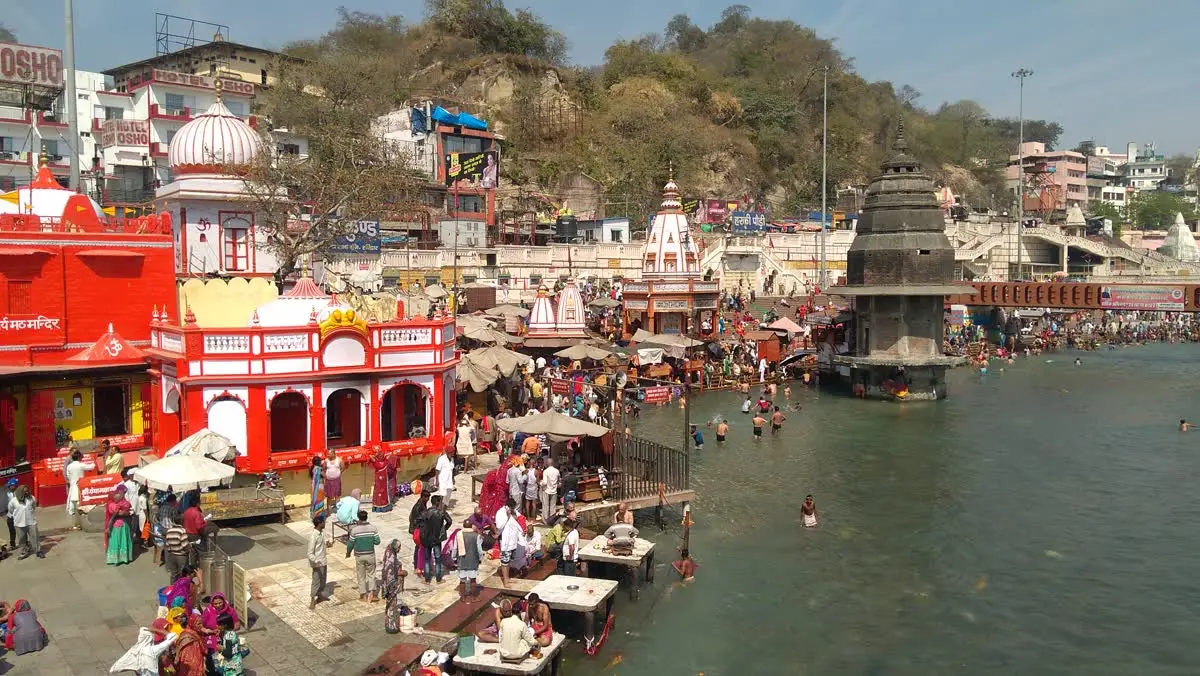
Haridwar is one of the best-connected pilgrimage cities in northern India, and a visit pairs naturally with the evening Ganga Aarti at Har Ki Pauri.
| Mode / Detail | Information |
|---|---|
| Nearest airport | Jolly Grant Airport, Dehradun, roughly 35-45 km (about an hour by road); prepaid taxis and app cabs run to Haridwar; Rishikesh lies about 30 km from Haridwar |
| Wider air connections | Delhi's Indira Gandhi International Airport (about 215 km) offers the widest choice of flights, with onward train or road transfer |
| Main railway station | Haridwar Junction (HW), well served by express and superfast trains from Delhi, Dehradun and cities across India |
| Station to Mansa Devi base | Roughly 1-1.5 km; a short auto or e-rickshaw ride, or a walk via Upper Road |
| By road | Delhi to Haridwar is about 215 km via NH-334 / NH-58; regular buses and volvos from ISBT Kashmere Gate; state and private buses link Dehradun, Rishikesh, Mussoorie and hill towns |
| Local transport | Autos, e-rickshaws, cycle-rickshaws and shared vehicles connect the station, bus stand, Har Ki Pauri and the temple base points |
| Ropeway timings | Mansa Devi: about 5:00 a.m. to 6:00 p.m.; Chandi Devi: about 7:00 a.m. to 6:00 p.m.; both change seasonally |
| Ropeway tickets | Combined adult ticket around Rs. 349 including the connecting bus, with reduced child fares; buy at official base counters or the official Udankhatola website |
What Is the Udankhatola Ropeway?
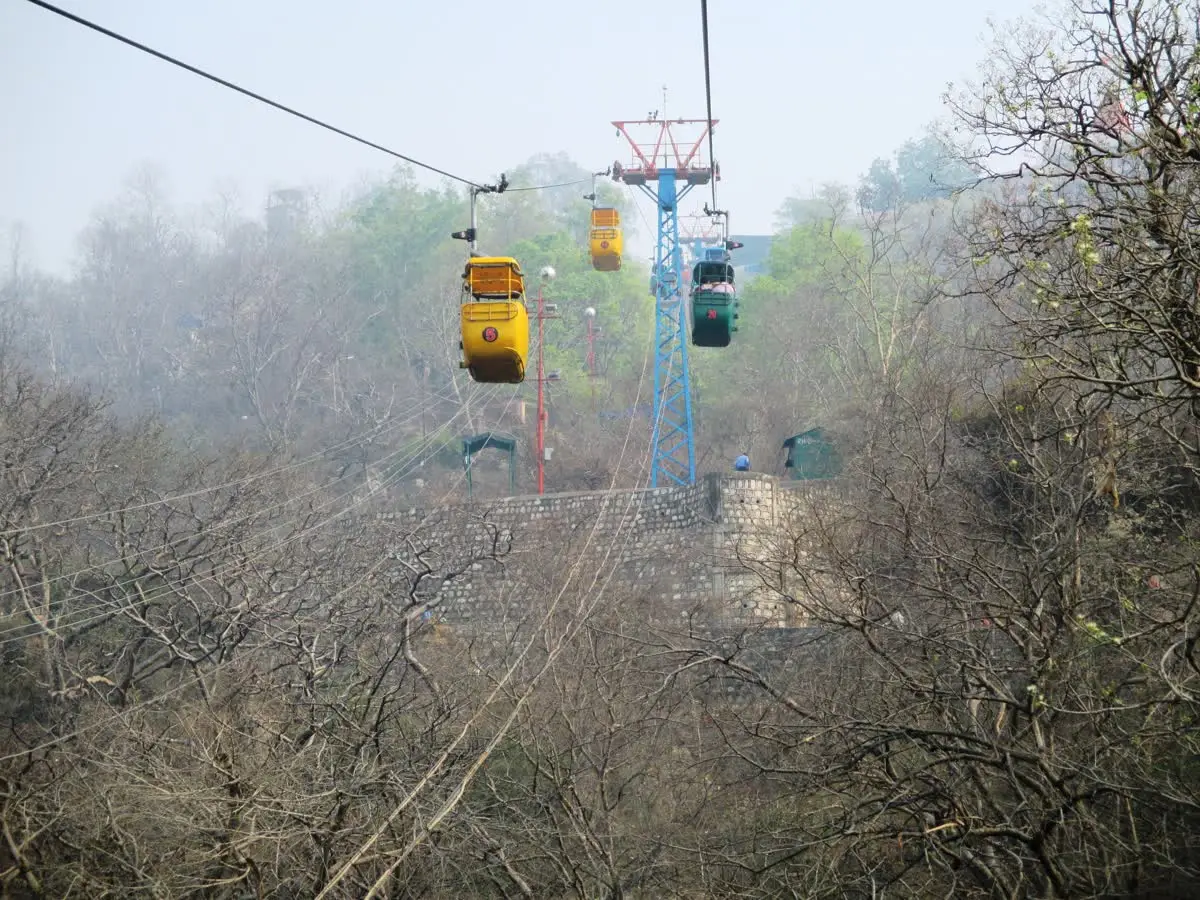
Both hilltop temples are served by ropeways operated under the Udankhatola name, and this is the most popular way to reach the shrines, especially for elders and families. A combined ticket typically covers both the Mansa Devi and Chandi Devi ropeways, with a connecting bus link between the two, so pilgrims can visit both hills in one circuit.
Slots fill quickly during Navratri and the Kumbh, so book early. Fit pilgrims can also climb on foot: the trek up each hill is roughly a couple of kilometres, steep but manageable, and considered especially meritorious by many.
Can You Visit All Three Temples in One Day?
Yes. A comfortable half-day circuit covers all three shrines and ends at the river.
- Begin early with the Mansa Devi ropeway from the base near Haridwar Junction; tie your sacred thread and take darshan.
- Take the connecting bus link to the Chandi Devi ropeway and ascend Neel Parvat for darshan and the hilltop views.
- Return to the town and visit the ancient Maya Devi temple, the Shakti Peetha, near Har Ki Pauri.
- End at Har Ki Pauri in the evening for the Ganga Aarti, a fitting close to a day among the goddesses of Haridwar.
Timings, Etiquette and Practical Tips
- Confirm temple and ropeway timings locally, as they change seasonally and during festivals; midday breaks are common at the shrines.
- Dress modestly and remove footwear before entering the sanctum; carry a small bag for shoes.
- Photography is often restricted inside sanctums; look for signage and follow the priests' guidance.
- Carry water, wear comfortable shoes, and start early to avoid the heaviest crowds and midday heat.
- Beware of touts; buy ropeway tickets only from official counters or the official website, and prasad from established stalls.
When Do the Haridwar Temples Celebrate Their Biggest Festivals?
The peak seasons are Navratri, celebrated in spring (Chaitra) and autumn (Sharad), and the Kumbh and Ardh Kumbh Mela, when Haridwar receives millions of pilgrims. During these periods the hilltop temples see immense crowds, long ropeway queues and expanded civic arrangements around the ghats.
Navratri
During the nine nights of Navratri, the Mansa Devi and Chandi Devi temples see immense crowds. The Devi Mahatmya is recited, special pujas are offered, and long queues wind up the hills and ropeways. For the goddesses of victory and wish-fulfilment, Navratri is the peak of the devotional year.
Kumbh Mela and Ardh Kumbh
Haridwar is one of the four cities that host the Kumbh Mela, drawing millions to bathe in the Ganga at Har Ki Pauri on the most auspicious days. During the Kumbh and Ardh Kumbh, the goddess temples receive an extraordinary volume of pilgrims. Visiting at such times is unforgettable but demands patience and careful planning.
Other Sacred Occasions
Beyond these, the daily Ganga Aarti at Har Ki Pauri, Amavasya and Purnima bathing days, and local festival dates all bring waves of devotees. Any visit to the three goddesses is naturally paired with a bath or aarti at the river that makes Haridwar holy.
A Closing Reflection
To climb Bilwa Parvat to Mansa Devi, cross to Neel Parvat for Chandi Devi, and descend to the ancient sanctum of Maya Devi is to trace the Divine Mother through three of her faces: the fulfiller of wishes, the victorious warrior, and the eternal Shakti whose heart is enshrined at the gateway of the Ganga. Approached with humility and a clear intention, these hills offer not only darshan but a quiet reordering of the mind. May your journey to the goddesses of Haridwar be safe, and may your sincere prayers be received.
Listen: Subscribe to Musinara Sounds for 432 Hz mantra chants
🕉️ Hear these sacred mantras come alive. Subscribe to Musinara Sounds on YouTube for 432 Hz Devi mantra chants, sung slowly enough to follow and repeat.
Plan Your Visit to Mansa Devi and Chandi Devi: Timings, Tickets and Travel
The details below were checked on 3 October 2026 against the Usha Breco Ltd and the other sources listed under each table. Timings and fees change on festival days, eclipses and special occasions, so confirm with the temple before you travel.
Darshan and Aarti Timings
| Information | Details |
|---|---|
| Mansa Devi temple, summer | 5:00 am to 10:00 pm |
| Mansa Devi temple, winter | 4:00 am to 9:00 pm |
| Mansa Devi bhog (prasad distribution) | 11:00 to 11:15 am daily |
| Chandi Devi temple | 6:00 am to 8:00 pm |
Sources: Incredible India (Ministry of Tourism): Mansa Devi Temple, Incredible India (Ministry of Tourism): Chandi Devi Temple.
Tickets, Darshan Options and Sevas
| Option | Price | Notes |
|---|---|---|
| Ropeway ticket, Mansa Devi and Chandi Devi (Udan Khatola) | Shown at booking | Regular, premium and multi-destination tickets. Children under 90 cm travel free. Valid only for the chosen date and non-refundable. |
Darshan at both temples is free. Mansa Devi can be reached on foot or by ropeway. Chandi Devi is a trek of about 3 km from Chandighat, or a ropeway ride. Bookings are handled on udankhatola.com. The ropeway operator is Usha Breco Ltd (Udan Khatola). The Mansa Devi ropeway began in 1969. Customer care is open 9:30 am to 6:00 pm: toll-free 1800-202-4050, customercare@ushabreco.com. If operations stop because of weather, a refund or reschedule is offered. Musinara is not connected with the temple and does not take bookings.
Sources: Usha Breco Ltd: UdanKhatola ropeway booking, Wikipedia: Chandi Devi Temple, Haridwar, Incredible India (Ministry of Tourism): Chandi Devi Temple, Usha Breco Ltd: Usha Breco home (operator of Mansa Devi and Chandi Devi ropew....
Temple Rules and Dress Code
- Chandi Devi: leather items, non-vegetarian food and alcohol are not allowed.
- Dress modestly at Mansa Devi. Amar Ujala reported in August 2021 that a shrine board order barred entry in short clothes or jeans.
- Ropeway: senior citizens should carry photo ID. Tickets are non-refundable.
Sources: Wikipedia: Chandi Devi Temple, Haridwar, Amar Ujala: Mansa Devi Temple news tag, Usha Breco Ltd: UdanKhatola ropeway booking.
How to Reach Mansa Devi and Chandi Devi
Open Mansa Devi and Chandi Devi in Google Maps for live directions.
| Mode | Nearest point | Distance to the temple |
|---|---|---|
| Air | Jolly Grant Airport, Dehradun (DED) | about 35 km from Haridwar |
| Rail | Haridwar Junction (HW) | in the city |
| Bus | Haridwar bus stand | in the city |
Sources: Wikipedia: Haridwar, Incredible India (Ministry of Tourism): Mansa Devi Temple.
Approximate distances and journey times from the cities most pilgrims start from. Road times assume normal traffic; festival weekends take longer.
| From | By road | Road time | Train or flight |
|---|---|---|---|
| Delhi | about 220 km via NH 58 | Direct trains run from Delhi to Haridwar | |
| Jolly Grant Airport, Dehradun | about 35 km to Haridwar | Jolly Grant (DED) | |
| Chandighat (for Chandi Devi) | trek of about 3 km |
Sources: Wikipedia: Haridwar, Wikipedia: Chandi Devi Temple, Haridwar, Incredible India (Ministry of Tourism): Chandi Devi Temple.
Mansa Devi is on Bilwa Parvat near Har ki Pauri. Walk up or take the Udan Khatola ropeway. Chandi Devi is on Neel Parvat, about 4 km from Har ki Pauri. Its ropeway lower station is near Gauri Shankar Temple on Nazibabad Road. The ropeways are sometimes closed for maintenance, so be ready to walk.
When to Go and How Long to Allow
Chandi Devi is best visited from October to March. Navratri in Chaitra and Ashwin are the festival times.
Source: Incredible India (Ministry of Tourism): Chandi Devi Temple.
Prasadam, Annadanam and Where to Stay
Bhog (prasad) is distributed at Mansa Devi from 11:00 to 11:15 am daily. Devotees tie a thread to the wish tree and untie it when the wish is fulfilled.
Sources: Wikipedia: Mansa Devi Temple, Haridwar, Incredible India (Ministry of Tourism): Mansa Devi Temple.
Temples and Places Near Mansa Devi and Chandi Devi
- Har ki Pauri ghat (Mansa Devi is close by; Chandi Devi is about 4 km away): The main bathing ghat of Haridwar
- Maya Devi Temple: The third Siddh Peeth of Haridwar
Sources: Wikipedia: Mansa Devi Temple, Haridwar, Wikipedia: Chandi Devi Temple, Haridwar.
Frequently Asked Questions
Which three temples are the Siddh Peethas of Haridwar?
The three Siddh Peethas of Haridwar are Mansa Devi (on Bilwa Parvat), Chandi Devi (on Neel Parvat) and Maya Devi (in the old town). A Siddh Peetha is a shrine where the goddess is believed to grant sincere wishes. Note that the Panch Tirth, a separate Puranic list of five holy spots in Haridwar, includes Mansa Devi and Chandi Devi among its five.
Is Maya Devi a Shakti Peetha?
Yes. Maya Devi is counted among the classical Shakti Peethas. Tradition holds that the heart and navel of Sati fell at Haridwar, marking the spot as a Peetha. The exact body-part attributions vary across the different Peetha lists, which is common in this tradition.
Why do devotees tie threads at Mansa Devi temple?
At Mansa Devi, pilgrims tie a sacred thread to a revered tree in the temple courtyard while making a wish. When the wish is fulfilled, they return to untie a thread and offer thanks. This wish-fulfilling custom is central to the temple's reputation as a Siddh Peetha.
What is the legend of Chandi Devi?
Chandi Devi is Chandika, the warrior goddess of the Devi Mahatmya who defeated the demons. Her form slew the generals Chanda and Munda (earning the name Chamunda) and later destroyed the demon kings Shumbha and Nishumbha. She is said to have rested on Neel Parvat after the battle, where her temple now stands.
Who installed the Chandi Devi murti?
Tradition credits the consecration of the principal Chandi Devi murti to Adi Shankaracharya in the 8th century. The present temple building is much later and is widely attributed to Suchat Singh of Kashmir in 1929.
How do I reach the hilltop temples, and is there a ropeway?
Yes. Both Mansa Devi and Chandi Devi are served by ropeways (cable cars) operated under the Udankhatola name. A combined ticket usually covers both, with a connecting bus between the hills. You can also trek up each hill on foot, roughly a couple of kilometres.
What are the ropeway timings and ticket prices?
The Mansa Devi ropeway generally runs from about 5:00 a.m. to 6:00 p.m. and Chandi Devi from about 7:00 a.m. to 6:00 p.m. A combined adult ticket has been priced around Rs. 349, including the connecting bus, with lower child fares. Timings and prices change seasonally, so confirm before your visit.
What is the nearest airport and railway station to Haridwar?
The nearest airport is Dehradun's Jolly Grant Airport, about 35-45 km away. The main railway station is Haridwar Junction, which is well connected to Delhi, Dehradun and cities across India, and lies close to the Mansa Devi ropeway base.
When is the best time to visit the goddess temples?
Navratri (spring and autumn) is the most devotionally vibrant time, though also the busiest. The Kumbh and Ardh Kumbh Mela bring the largest crowds. For a calmer visit, choose a non-festival period and start early in the day. The cooler months are generally more comfortable for the climbs.
Can I visit all three temples in one day?
Yes. A common half-day circuit is Mansa Devi first, then Chandi Devi via the connecting ropeway and bus link, then the Maya Devi temple in the town, closing with the evening Ganga Aarti at Har Ki Pauri.
Official and Reference Sources
- Mansa Devi Temple, District Haridwar - National Informatics Centre, Government of India
- Chandi Devi Temple, District Haridwar - National Informatics Centre, Government of India
Planning a pilgrimage? All twenty Devi temple guides on this site are arranged by region, with practical circuits, in Devi Temples of India. For where each site sits in the disputed lists of 51, 52 and 108, see the Shakti Peeth list.