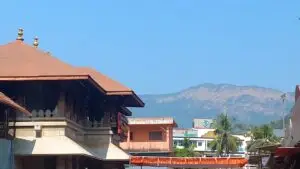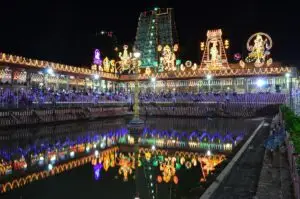
The Meenakshi Amman Temple in Madurai, Tamil Nadu, is one of India's greatest shrines of the Divine Mother. Dedicated to Meenakshi, the "fish-eyed" goddess and a form of Parvati, together with her consort Sundareswarar (Shiva), it is famed for its fourteen towering gopurams, the Golden Lotus Tank, the Thousand Pillar Hall and the annual Chithirai wedding festival.
In the heart of this ancient city, where the Vaigai River has watched over Tamil civilisation for more than two thousand years, the temple is not merely a monument of stone and stucco. It is a living sanctuary where the Divine Mother reigns as queen and goddess. Unusually among the great temples of India, it is she, not her consort Shiva, who occupies the central place of honour, and the entire city arranges itself around her presence like petals around the heart of a lotus.
Meenakshi means "fish-eyed," a tender epithet describing eyes shaped like a fish, ever watchful and never closing, forever guarding her devotees. Revered as a form of Parvati and identified in the Shakta tradition with Tripura Sundari, she is joined by Sundareswarar, a beautiful form of Shiva who, legend says, came to Madurai to wed her and never left. This guide walks reverently through her story and her sacred home: the miraculous legend of her birth, the celestial wedding re-enacted each spring, the magnificent Nayak-era architecture, the mantras through which devotees call upon her, and everything a pilgrim needs to plan a visit. Where traditions differ, we note the variations, so that the telling remains faithful to the many voices that have kept her memory alive.
Key Takeaways
- Meenakshi Amman Temple stands in the old heart of Madurai, Tamil Nadu, spread across roughly 14 acres and holding an estimated 33,000 sculptures.
- Meenakshi, the "fish-eyed" goddess, is a form of Parvati identified with Tripura Sundari, and her shrine takes precedence over that of her consort Sundareswarar.
- Legend says she was born from a sacred fire to the Pandya king Malayadhwaja with three breasts, the third vanishing when she met Shiva at Mount Kailasa.
- The temple as seen today was largely rebuilt by the Madurai Nayak dynasty in the 16th-17th centuries, especially under Tirumalai Nayak.
- The Meenakshi Thirukalyanam, the celestial wedding, is re-enacted every April-May during the Chithirai Festival, one of India's largest temple celebrations.
Who Is Meenakshi, the Divine Mother of Madurai?
Meenakshi is the presiding deity of Madurai, worshipped as the Divine Mother and as a manifestation of Parvati, the Shakti of Shiva. Her name joins the Sanskrit words mina (fish) and akshi (eye), giving "she whose eyes are shaped like a fish," for a fish is said never to close its eyes.
In Tamil tradition she is also called Angayarkanni or Meenakshi Thaayaar, the mother whose gaze never leaves her children. Her ever-open eyes are the living sign of her ceaseless, protecting watchfulness.
A Form of Parvati and Tripura Sundari
Theologically, Meenakshi is understood as a regional and royal form of Parvati. Within the Shakta and Sri Vidya traditions she is closely identified with Tripura Sundari (Lalita), the supreme beautiful goddess, and Madurai is counted among the great seats of Devi worship in the south, alongside Kanchi Kamakshi and Kashi Vishalakshi. This weaving together of Shaivism, Shaktism and even Vaishnavism, for Vishnu appears in her story as her brother, makes the temple a rare confluence of Hindu devotional streams.
The Queen Who Rules Alongside Shiva
What makes Madurai distinctive is that Meenakshi is the sovereign. She was born a princess and crowned a warrior-queen of the Pandya dynasty, and even after her marriage to Shiva she continues to rule. In daily worship her shrine takes precedence, and the temple bears her name first. Sundareswarar, though the great Shiva himself, is honoured here as her royal consort, a striking reversal that has shaped Madurai's devotional culture for centuries.
What Is the Legend of Meenakshi's Birth and Marriage?
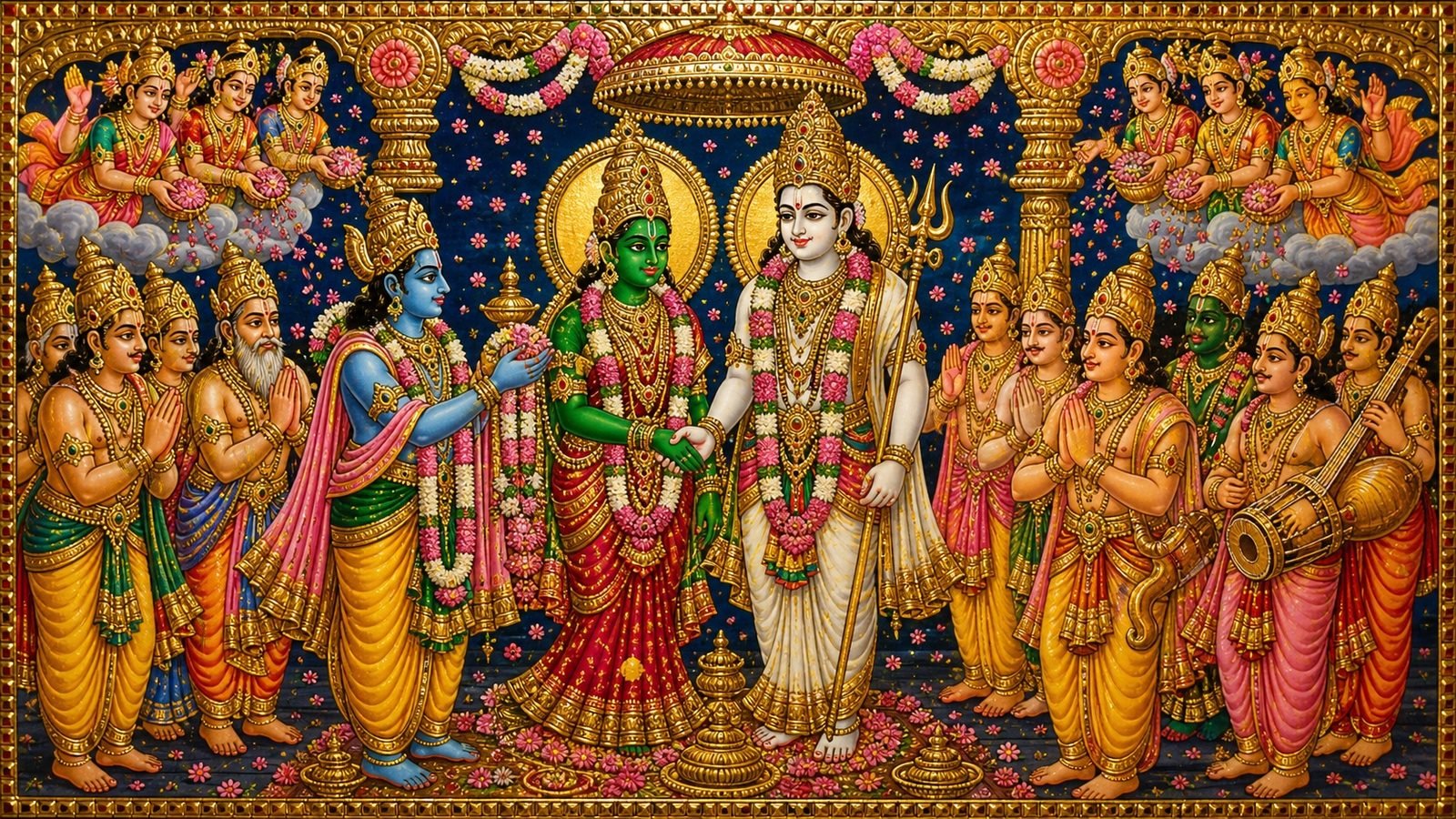
Legend tells that Meenakshi arose from a sacred fire as a three-breasted girl, born to the Pandya king Malayadhwaja and queen Kanchanamala. Raised as a warrior-queen, she lost her third breast the moment she met Shiva at Mount Kailasa, and their celestial wedding at Madurai became the grandest of divine unions.
The story is preserved in the Tamil Sthala Purana of Madurai and retold across generations. Several versions circulate; the outline below follows the most widely told tradition, with variations noted.
Born of a Sacred Fire to the Pandya King
The Pandya king Malayadhwaja and his queen Kanchanamala longed for a child and performed a great yagna, praying for a son and heir. From the sacred fire there arose not a son but a radiant girl, already three years old according to many tellings, born with three breasts. A divine voice reassured the astonished king: he should raise her as he would a son and crown her heir, and her third breast would vanish the moment she met the man destined to be her husband. The king named her Thadatagai (Tadaatakai) and raised her as a warrior and ruler, trained in statecraft, the arts and the martial disciplines.
The Warrior-Queen's Conquest
Growing into an invincible warrior-queen, Meenakshi led triumphant campaigns of conquest in every direction. Her armies swept across the land unchallenged, and at last she advanced toward Mount Kailasa, the abode of Shiva. There, on the slopes of the sacred mountain, she encountered Lord Shiva himself, and in that instant her third breast disappeared, exactly as the prophecy had foretold. Recognising him as her destined husband, the mighty queen grew shy and gentle, and the warrior became the bride.
The Celestial Wedding at Madurai
Shiva promised to come to Madurai in eight days to marry her. He arrived in the form of Sundareswarar, "the beautiful lord," and their wedding was celebrated as the grandest of all divine unions. The gods themselves attended, and Vishnu, revered in the story as Meenakshi's brother, gave the bride away. So great was the gathering that, in a well-loved episode, Vishnu was delayed and the marriage was performed by Shiva in another form. Taking the title Sundara Pandya, Shiva ruled Madurai alongside his queen. The sage Agastya is said to have been present, and the goddess received the name Meenakshi at her coronation. This sacred marriage, the Meenakshi Thirukalyanam, remains the spiritual centre of Madurai's religious life and is re-enacted every year with overwhelming devotion.
What Is the History of the Meenakshi Amman Temple?
The temple's documented history spans well over a thousand years. Celebrated in classical Tamil Sangam literature and flourishing under the early Pandyas, it was largely destroyed during 14th-century Delhi Sultanate invasions, revived by the Vijayanagara Empire, and rebuilt on a monumental scale by the Madurai Nayak dynasty in the 16th and 17th centuries.
Ancient Origins and Early References
Madurai is one of the oldest continuously inhabited cities in India, and its goddess appears in some of the earliest layers of Tamil literature. The temple was a flourishing centre of worship under the early Pandya kings, and the Nayanmar saints of the Tamil Shaiva bhakti movement sang of Madurai's lord, cementing the site's sanctity long before its present form took shape.
Destruction and Vijayanagara Revival
In the early 14th century the temple suffered grievously during the invasions of the Delhi Sultanate, when much of the original structure was destroyed. Its revival came with the Vijayanagara Empire, whose rulers restored worship and rebuilt the shrine, reopening Madurai as a great centre of pilgrimage.
The Nayak Dynasty and Tirumalai Nayak
The temple as we see it today is largely the creation of the Madurai Nayak dynasty, who governed from the 16th and 17th centuries after the decline of Vijayanagara. Under Vishwanatha Nayaka and, above all, the celebrated Tirumalai Nayak, who reigned in the mid-17th century, the complex was rebuilt on a monumental scale. The Nayaks raised the soaring gopurams, laid out the outer enclosures, and endowed the temple with the halls and tanks that give it its grandeur. Ariyanatha Mudaliyar, a Nayak minister and commander, is credited with the great pillared hall. This flowering of art and architecture marks the mature phase of the Dravidian style, and the temple stands as its supreme monument.
What Makes the Temple's Architecture So Remarkable?
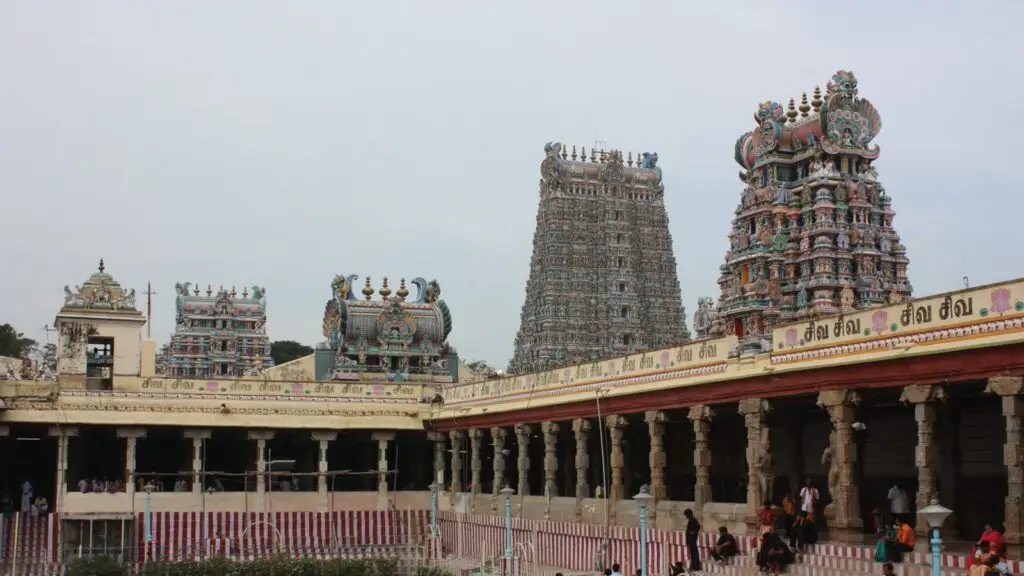
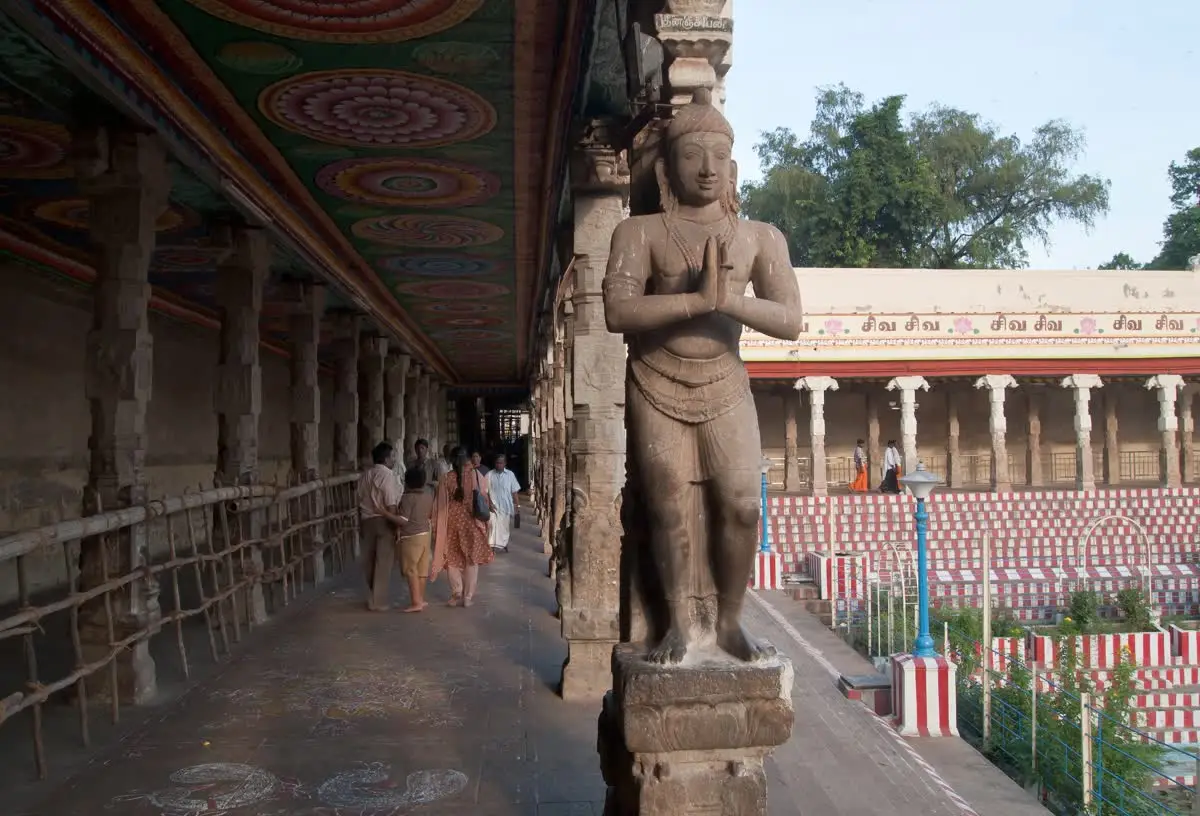
Spread across roughly 14 acres in the old city, the Meenakshi Amman Temple is a walled mandala of concentric enclosures, shrines, corridors and tanks, arranged with the precise symmetry prescribed by the ancient Shilpa Shastras. It is estimated to hold some 33,000 sculptures and fourteen gopurams, the tallest soaring to roughly 52 metres.
The Towering Gopurams
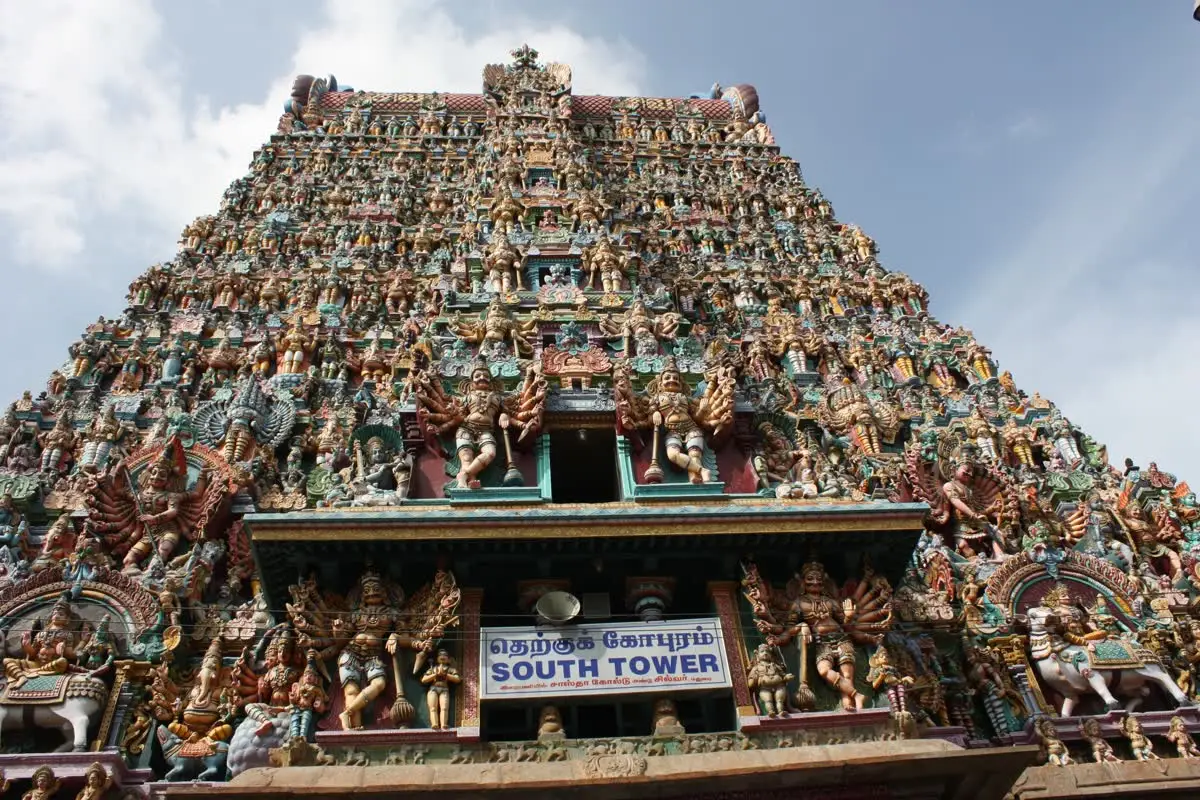
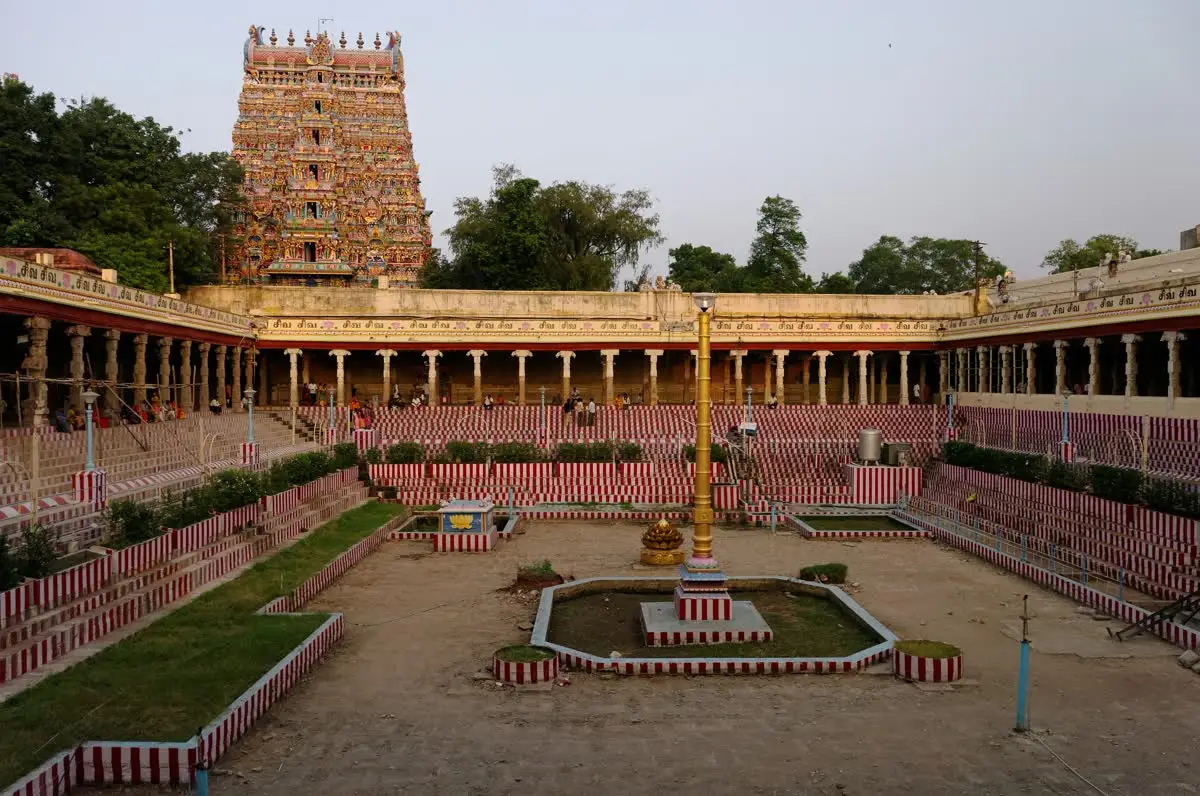
The temple's most iconic feature is its cluster of gopurams, the monumental gateway towers that dominate the Madurai skyline. There are fourteen in all, the four outer ones rising highest. The tallest, the southern gopuram, soars to roughly 52 metres in nine diminishing tiers, encrusted with well over a thousand brightly painted stucco figures: gods, goddesses, guardians and celestial beings in vivid array. In the mature Dravidian style seen here, the towering gopuram over the gateway, rather than the vimana over the sanctum, became the dominant visual statement of the temple.
The Thousand Pillar Hall (Ayirakkal Mandapam)
The Ayirakkal Mandapam, or Hall of a Thousand Pillars, is one of the temple's marvels. Despite its name it contains around 985 intricately carved pillars, each a sculptural study in itself, built in the 16th century under the Nayak minister Ariyanatha Mudaliyar. The hall today houses a temple art museum. Nearby stand the celebrated musical pillars: slender stone columns that ring with distinct musical notes when gently tapped, a testament to the acoustic mastery of the temple's builders.
The Golden Lotus Tank (Porthamarai Kulam)
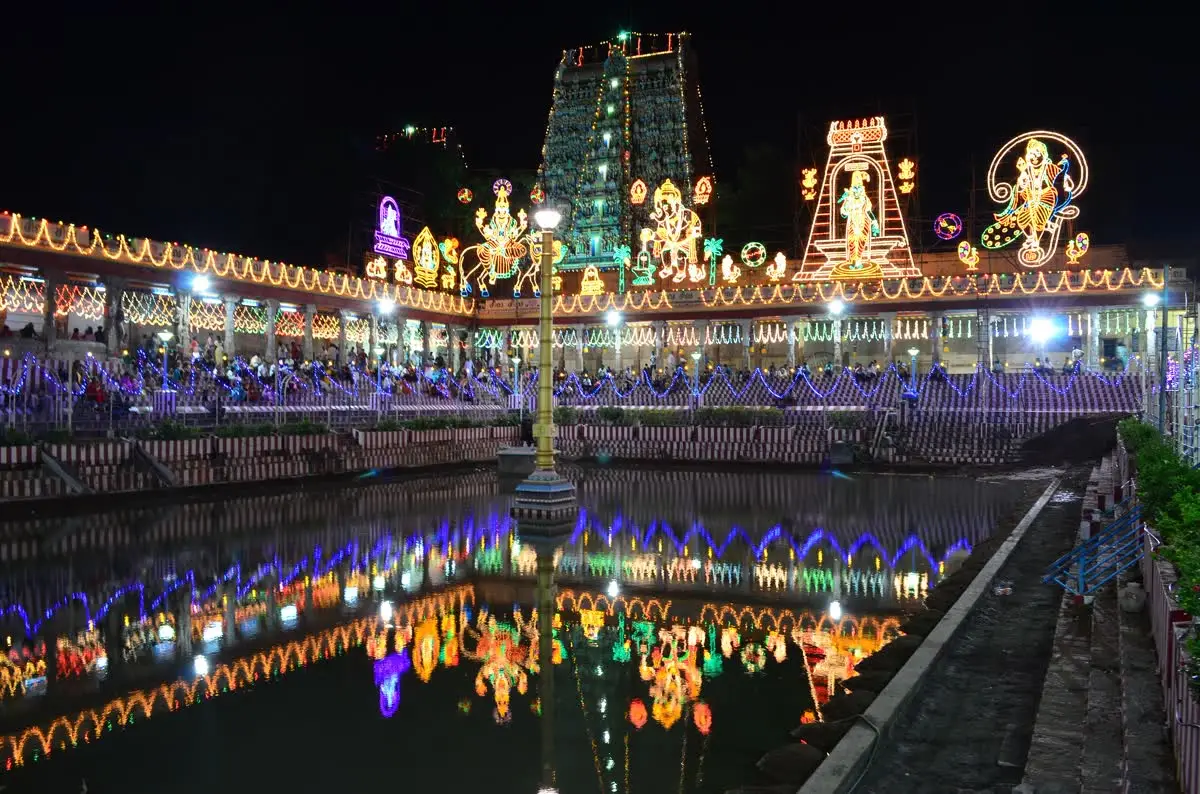
At the heart of the complex lies the Porthamarai Kulam, the "Golden Lotus Tank," a sacred pool roughly 50 metres by 37 metres with a gilded lotus emblem at its centre. Pilgrims descend its steps to bathe and offer prayers, and its still waters mirror the surrounding corridors and towers. Tradition holds it as a place where the worth of literary works was once tested, linking it to Madurai's ancient academy of Tamil poets.
The Sanctums of Meenakshi and Sundareswarar
Within the innermost enclosures stand the two principal shrines: the sanctum of Goddess Meenakshi, radiant in green, and that of Lord Sundareswarar. The goddess's shrine is the devotional focus of the temple, and each night a cherished ritual carries a symbolic image of Sundareswarar to Meenakshi's chamber so that the divine couple may rest together, to be parted again at dawn: a daily re-enactment of their eternal marriage.
Why Is the Temple Spiritually Significant?
For devotees, Meenakshi is the compassionate Divine Mother, protector and giver of grace. Worship at Madurai blends the tenderness of bhakti with the depth of the Shakta and Sri Vidya traditions, and pilgrims come seeking her blessing for marriage, family harmony, courage and spiritual awakening.
A Confluence of Shaivism, Shaktism and Vaishnavism
The temple is theologically remarkable for uniting several streams of Hinduism. As the abode of Sundareswarar it is a great Shaiva shrine; as the seat of the Divine Mother it is a foremost Shakta sanctuary; and through Vishnu's presence in the wedding legend it honours the Vaishnava tradition too. Few temples so completely embody the harmony of these paths. Readers who wish to explore the wider Shakta landscape can begin with our complete guide to the 51 Shakti Peethas.
Daily Rituals and Devotion
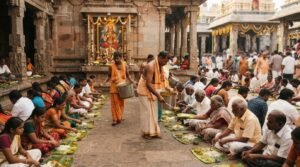
The temple's rhythm follows an ancient cycle of pujas from before dawn until late at night, culminating in the nightly palki (palanquin) ceremony that unites the divine couple. Devotees offer flowers, especially fragrant blossoms, along with lamps, cloth and heartfelt prayer. Above every offering, tradition holds, the goddess treasures sincere devotion.
Which Mantras Are Chanted for Meenakshi?
Devotees invoke the Divine Mother through simple, traditional salutations. The mantras below are among the most commonly recited names and salutations of the goddess. Seed-syllable and Sri Vidya mantras of Tripura Sundari are traditionally received from a qualified guru through initiation (diksha); the salutations here are widely used devotional forms. Where you seek deeper practice, approach an authentic teacher.
| Sanskrit | Hindi | Transliteration | Meaning |
|---|---|---|---|
| ओं मीनाक्ष्यै नमः | ओम् मीनाक्ष्यै नमः | Om Meenakshyai Namah | I bow to Goddess Meenakshi, the fish-eyed Divine Mother of Madurai. |
| ओं सुन्दरेश्वराय नमः | ओम् सुन्दरेश्वराय नमः | Om Sundareswaraya Namah | I bow to Sundareswarar, the beautiful lord Shiva, consort of Meenakshi. |
| ओं त्रिपुरसुन्दर्यै नमः | ओम् त्रिपुरसुन्दर्यै नमः | Om Tripurasundaryai Namah | I bow to Tripura Sundari, the supreme beautiful goddess with whom Meenakshi is identified. |
| ओं पार्वत्यै नमः | ओम् पार्वत्यै नमः | Om Parvatyai Namah | I bow to Parvati, the Divine Mother of whom Meenakshi is a cherished form. |
Note: traditions vary in the exact wording of the goddess's salutations across regions and lineages. Recite with a calm mind and devotion; consistency and sincerity matter more than quantity.
What Happens During the Chithirai Festival and Meenakshi Thirukalyanam?
The Chithirai Festival, held in the Tamil month of Chithirai (April-May), is Madurai's grandest celebration and among the largest temple festivals in India. Lasting around a fortnight, it re-enacts the coronation of Meenakshi as queen and her celestial wedding to Sundareswarar, the Meenakshi Thirukalyanam, before enormous crowds.
The Meenakshi Thirukalyanam
The heart of the festival is the celestial wedding, performed with immense splendour. The coronation of Meenakshi and her divine marriage are staged over successive days, and the streets fill with processions, music and joyous devotion. Temple authorities issue special arrangements and ticketed access for the wedding ceremony; devotees planning to attend should consult the temple's official channels for current dates and registration, as these change each year.
Alagar's Journey and the Union of Traditions
A distinctive feature of the Madurai Chithirai Festival is the journey of Lord Alagar (Kallazhagar), a form of Vishnu from the nearby Alagar Koyil, who sets out to attend his sister Meenakshi's wedding. In a famous episode, he arrives after the ceremony and crosses the Vaigai River in a spectacular procession that draws vast crowds. This blending of the Shaiva-Shakta wedding with the Vaishnava journey beautifully embodies the temple's ecumenical spirit.
How Do You Reach and Visit the Meenakshi Amman Temple?
The temple stands in the old heart of Madurai. Madurai Airport (IXM) lies roughly 12-14 km away, Madurai Junction railway station only about 2 km, and national highways link the city to all major southern hubs. The temple opens in two daily sessions, roughly 5:00 AM to 12:30 PM and 4:00 PM to 10:00 PM.
| Location | Old city centre of Madurai, Tamil Nadu, near the Vaigai River |
|---|---|
| Nearest airport | Madurai Airport (IXM), roughly 12-14 km, about 25-35 minutes by taxi |
| Nearest railway station | Madurai Junction, about 2 km from the temple, well connected to Chennai, Bengaluru and cities across India |
| By road | National highways to major southern cities; TNSTC and private buses via Mattuthavani and Periyar bus stands |
| Timings (indicative) | About 5:00 AM to 12:30 PM and 4:00 PM to 10:00 PM daily; extended during the Chithirai Festival; confirm before visiting |
| Entry | Darshan open to all; festival wedding ceremony access is ticketed through official temple channels |
Getting There
- By Air: Madurai Airport (IXM) is roughly 12-14 km from the temple; a taxi takes about 25-35 minutes. Pre-paid taxi counters operate in the arrivals hall, and app-based cabs and TNSTC buses are readily available.
- By Train: Madurai Junction is a major railhead well connected to Chennai, Bengaluru and cities across India, and lies only about 2 km from the temple, a short auto-rickshaw ride away.
- By Road: Madurai is linked by national highways to major southern cities. State (TNSTC) and private buses serve the Mattuthavani and Periyar bus stands, with local autos and taxis reaching the temple lanes.
What Are the Temple Timings?
The temple is generally open in two sessions each day, roughly from early morning (around 5:00 AM) to about 12:30 PM, and again from about 4:00 PM to 10:00 PM. The early morning hours are the calmest and best for an unhurried darshan. During the Chithirai Festival the temple keeps extended hours. Always verify current timings, as they may be revised.
What Is the Dress Code and Temple Etiquette?
- Dress modestly: men typically wear dhoti or trousers with a shirt; women wear sarees or salwar-kameez. Avoid shorts, sleeveless tops and revealing clothing.
- Footwear must be removed before entering; leave shoes at the designated stands outside.
- Photography is restricted inside the inner sanctums; follow posted rules and staff guidance.
- Maintain silence and decorum near the shrines, and follow the queue system during busy hours.
Tips for Pilgrims
- Arrive early, ideally at opening, to enjoy a quieter darshan and cooler weather.
- Carry minimal belongings; large bags and some electronics may not be permitted inside.
- Stay hydrated and wear light cotton clothing; Madurai can be very warm.
- Allow ample time to walk the corridors, see the Golden Lotus Tank and the Thousand Pillar Hall museum.
- For festival visits, plan accommodation and any ticketed access well in advance through official temple channels.
Conclusion: Under the Gaze of the Divine Mother
To stand within the Meenakshi Amman Temple is to feel the presence of a goddess who is at once queen, warrior, wife and mother, and above all, the tender Divine Mother whose fish-shaped eyes never close upon her children. In her home of soaring towers and golden waters, legend and stone, festival and prayer flow together into a single living devotion that has endured for many centuries.
Whether you come as a pilgrim seeking her grace or a traveller drawn by her city's beauty, may your visit to Madurai leave you, as it has left countless others, quietly transformed under the gaze of the Divine Mother.
Listen: Subscribe to Musinara Sounds for 432 Hz mantra chants
🕉️ Hear these sacred mantras come alive. Subscribe to Musinara Sounds on YouTube for 432 Hz Devi mantra chants, sung slowly enough to follow and repeat.
Plan Your Visit to Meenakshi Amman: Timings, Tickets and Travel
The details below were checked on 3 October 2026 against the HR&CE Tamil Nadu and the other sources listed under each table. Timings and fees change on festival days, eclipses and special occasions, so confirm with the temple before you travel.
Darshan and Aarti Timings
| Information | Details |
|---|---|
| Temple opens | 5:00 am to 12:30 pm and 4:00 pm to 10:00 pm; closed from 12:30 to 4:00 pm. Pooja timings can change during festivals. |
Source: HR&CE Tamil Nadu: Meenakshi Sundaraswarar Temple, Madurai (home page).
Tickets, Darshan Options and Sevas
| Option | Price | Notes |
|---|---|---|
| Special entry | Fee shown at the counter | Special-entry tickets are sold at the temple, and the fee is shown at the counter. General darshan is free. |
| Mobile phone deposit | Rs 5 per phone | In force since 1 September 2026. Phones are stored near the entrances against a receipt. |
General darshan is free. No darshan fee was charged from 17 to 20 September 2026, after the Kumbabishekam. Bookings are handled on maduraimeenakshi.hrce.tn.gov.in. The temple website has sections on temple facilities, annadhanam, bus routes and nearby places. Musinara is not connected with the temple and does not take bookings.
Sources: Holaciti: Meenakshi Temple Madurai: darshan timings, ticket prices, dress code, Afternoon News: Mobile phone ban comes into effect at 52 major temples from t..., Organiser: Madurai Meenakshi Amman Temple Kumbabhishekam, HR&CE Tamil Nadu: Meenakshi Sundaraswarar Temple, Madurai (home page).
Temple Rules and Dress Code
- Mobile phones are not allowed inside. The Tamil Nadu HR&CE Department has banned phones in 52 major temples from 1 September 2026, including Meenakshi Sundareswarar. Phones can be deposited near the entrances for Rs 5 per phone against a receipt (Afternoon News, 1 September 2026). The Madras High Court had earlier banned phones at this temple in February 2018, after the fire of 3 February 2018.
- Plastic is not allowed inside the temple (Madras High Court order, February 2018).
- Dress traditionally and modestly: dhoti or trousers with a shirt for men, saree, half-saree or churidar with dupatta for women. Avoid shorts and sleeveless clothes.
Sources: Dinamalar Temple: Maha Kumbabishekam 2026, Afternoon News: Mobile phone ban comes into effect at 52 major temples from t..., Scroll.in: Madras HC bans phones, use of plastics inside temple, Holaciti: Meenakshi Temple Madurai: darshan timings, ticket prices, dress code.
How to Reach Meenakshi Amman
Open Meenakshi Amman in Google Maps for live directions.
| Mode | Nearest point | Distance to the temple |
|---|---|---|
| Air | Madurai Airport | about 12 from the city centre |
| Rail | Madurai Junction | about 2 km |
Source: Yatra.com: Distance from Madurai to Chennai and other cities.
Approximate distances and journey times from the cities most pilgrims start from. Road times assume normal traffic; festival weekends take longer.
| From | By road | Road time | Train or flight |
|---|---|---|---|
| Chennai | about 450 to 460 km | ||
| Bengaluru | about 436 km | ||
| Coimbatore | about 229 km | ||
| Tiruchirappalli | about 126 to 136 km | ||
| Thiruvananthapuram | about 311 km |
Source: Yatra.com: Distance from Madurai to Chennai and other cities.
Bus routes to the temple and a list of nearby places are given on the temple website.
Prasadam, Annadanam and Where to Stay
The temple runs an annadhanam scheme. Details are on the temple website.
Source: HR&CE Tamil Nadu: Meenakshi Sundaraswarar Temple, Madurai (home page).
Frequently Asked Questions
Who is Meenakshi Amman?
Meenakshi is the presiding Divine Mother of Madurai, worshipped as a form of Parvati and identified with Tripura Sundari. Her name means "fish-eyed," and she is honoured as a warrior-queen and goddess whose consort is Sundareswarar (Shiva).
Why is Meenakshi called "fish-eyed"?
The name Meenakshi joins the Sanskrit mina (fish) and akshi (eye), describing eyes shaped like a fish. A fish is said never to close its eyes, symbolising the goddess's ever-watchful, protecting gaze over her devotees.
Who built the Meenakshi Amman Temple?
Though its origins are ancient, the temple was revived by the Vijayanagara Empire and rebuilt on a monumental scale by the Madurai Nayak dynasty in the 16th-17th centuries, especially under Tirumalai Nayak, who added the great gopurams and halls.
What is the legend of Meenakshi's three breasts?
Born from a sacred fire to the Pandya king Malayadhwaja with three breasts, she was prophesied to lose the third on meeting her destined husband. This happened when she encountered Shiva, confirming him as her consort.
What is the Meenakshi Thirukalyanam?
It is the celestial wedding of Meenakshi and Sundareswarar, re-enacted each year as the centrepiece of the Chithirai Festival in April-May, one of the largest temple celebrations in India.
What are the Meenakshi Amman Temple timings?
The temple is generally open from about 5:00 AM to 12:30 PM and again from about 4:00 PM to 10:00 PM daily, with extended hours during the Chithirai Festival. Confirm current timings before visiting.
How do I reach the Meenakshi Amman Temple?
Madurai Airport is about 12-14 km away, Madurai Junction railway station roughly 2 km, and the city is well connected by highways and buses. Autos and taxis reach the temple lanes easily.
What is the dress code at the Meenakshi temple?
Modest, traditional attire is expected: dhoti or trousers with a shirt for men, and sarees or salwar-kameez for women. Shorts and sleeveless clothing are discouraged, and footwear must be left outside.
Is the Meenakshi Temple a Shakti Peetha?
The temple is a foremost seat of Devi worship in South India and, in several traditions, links to the network of goddess shrines. Traditions vary on the precise listings, so devotees should treat such classifications with respect for regional differences.
What should I not miss inside the temple?
Be sure to see the towering gopurams, the Golden Lotus Tank (Porthamarai Kulam), the Thousand Pillar Hall with its musical pillars, and the sanctums of Meenakshi and Sundareswarar.
மதுரையில் நவராத்திரி மிகச் சிறப்பாக நடக்கும். வீட்டில் கொலு வைப்பது பற்றி - நவராத்திரி கொலு ௨௦௨௬.
Official and Reference Sources
- Meenakshi Amman Temple, official - Tamil Nadu Hindu Religious & Charitable Endowments Department
Planning a pilgrimage? All twenty Devi temple guides on this site are arranged by region, with practical circuits, in Devi Temples of India. For where each site sits in the disputed lists of 51, 52 and 108, see the Shakti Peeth list.