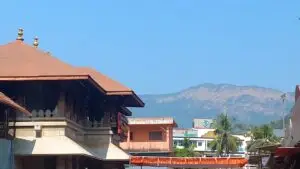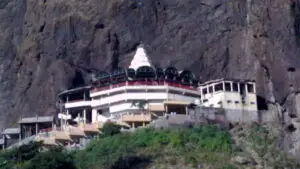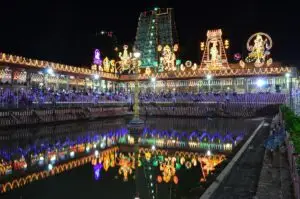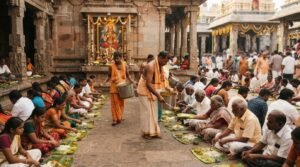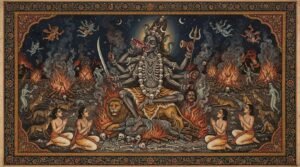
The Kamakhya Devi Temple in Guwahati, Assam, is widely regarded as the most powerful of all Shakti Peethas. It stands on Nilachal Hill, where the womb and yoni of Sati are said to have fallen, and the Goddess is worshipped here not as an idol but as a yoni-shaped rock kept moist by a natural spring.
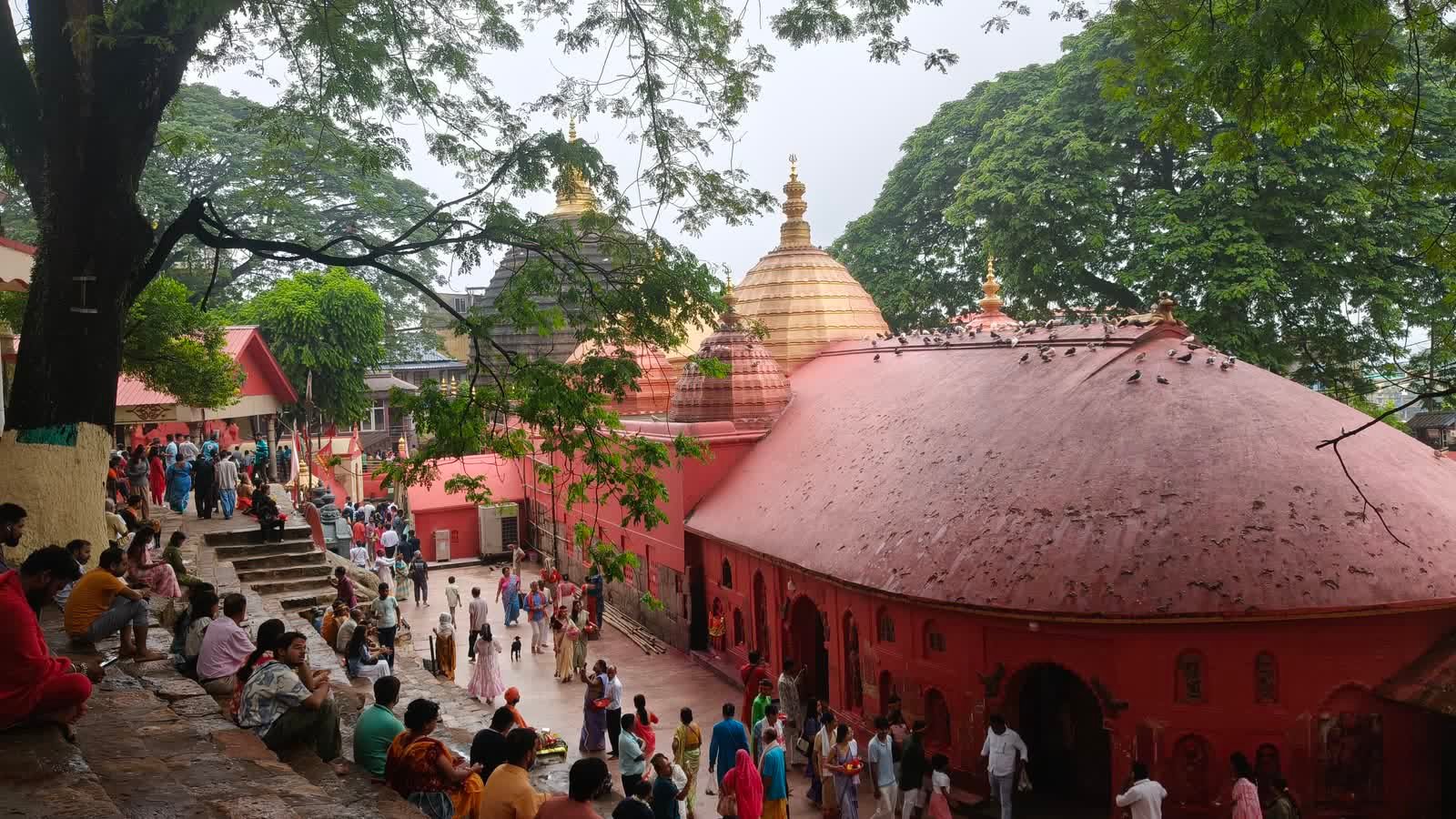
High on the forested crest of Nilachal Hill, overlooking the wide grey ribbon of the Brahmaputra, stands a temple unlike any other in the Hindu world. The sanctum of Kamakhya holds no statue, no golden face of the Mother. Deep inside a dim natural cave, devotees bow before a cleft of living rock shaped like a yoni, the womb and generative organ of the Goddess, kept perpetually wet by an underground spring.
To pilgrims, sadhus and Tantric practitioners, Kamakhya is the beating heart of Shakta worship in India. She is Kamakhya, “she whose essence is desire”, the fulfiller of every longing, the bride of Shiva and the giver of liberation. Each summer, during the Ambubachi Mela, the temple honours what almost no other shrine on earth celebrates openly: the annual menstruation of the Mother Goddess, a festival of fertility, regeneration and unashamed reverence for the feminine creative power.
This guide walks you through the legend of Sati’s yoni, the temple’s turbulent history and Koch dynasty rebuild, the mystery of the shrine with no idol, the Ambubachi Mela, the rare cluster of Dashamahavidya shrines on the hill, the Tantric significance rooted in the Kalika Purana and Yogini Tantra, the Kamakhya mantra, the benefits of worship, and a complete travel and darshan plan.
Key Takeaways
- Kamakhya Devi Temple on Nilachal Hill in Guwahati, Assam, is honoured as the Yoni Peetha, the most powerful of all Shakti Peethas, where the womb and yoni of Sati fell.
- The sanctum has no idol; the Goddess is worshipped as a yoni-shaped rock cleft kept perpetually moist by a natural underground spring.
- The Ambubachi Mela each June celebrates the annual menstruation of the Goddess, with the sanctum closed for three days and reopened on the fourth.
- Nilachal Hill is the only place in the world where temples to all ten Mahavidyas stand together in one complex.
- The temple was rebuilt in 1565 CE by the Koch kings Vishwa Singha and Nara Narayan, giving it its unique beehive-shaped Nilachal-style dome.
Who Is Kamakhya Devi?
Kamakhya Devi is the presiding Goddess of the Kamakhya Temple, one of the oldest and most venerated centres of Shakta and Tantric worship in the Indian subcontinent. Her name is most often read as “she who grants desires”, from kama, meaning desire, and she is identified with the supreme Adi Shakti, the primordial feminine energy behind all existence.
In the Shakta tradition she is closely linked with Kali, Tripura Sundari and the wider family of the ten Mahavidyas. What sets Kamakhya apart from the thousands of Devi shrines across India is the directness of her worship. There is no carved image, no painted face, no jewelled crown to focus the eye. The Goddess is present as the yoni-shaped rock fissure in the garbhagriha, worshipped as the very organ of creation.
For Tantric practitioners this is profoundly significant: Kamakhya is creation worshipped at its source, the union of Shiva and Shakti made tangible in stone and water. Because of this, Kamakhya has for centuries drawn an extraordinary range of seekers. Ordinary householders come praying for children, marriage or prosperity. Devotees come seeking the Mother’s protection. Ascetics, Aghoris and Tantriks regard Nilachal Hill as the most spiritually charged ground in the country.
Why Is Kamakhya Called the Most Powerful Shakti Peetha?
Kamakhya is called the most powerful Shakti Peetha because, according to the Kalika Purana, the womb and yoni of Sati fell on Nilachal Hill. Other Peethas mark a finger, a toe or an ornament; Kamakhya marks the very seat of creation and fertility, which is why it is honoured as the Yoni Peetha.
The story begins with Sati, the first consort of Shiva and a daughter of King Daksha Prajapati. When Daksha organised a grand yajna and deliberately did not invite Shiva, Sati attended uninvited and was publicly humiliated by her father’s insults against her husband. Unable to bear the dishonour shown to Shiva, Sati gave up her life, in many versions by casting herself into the sacrificial fire. You can read the full account in our guide to the story of Sati Devi and the Daksha Yagna.
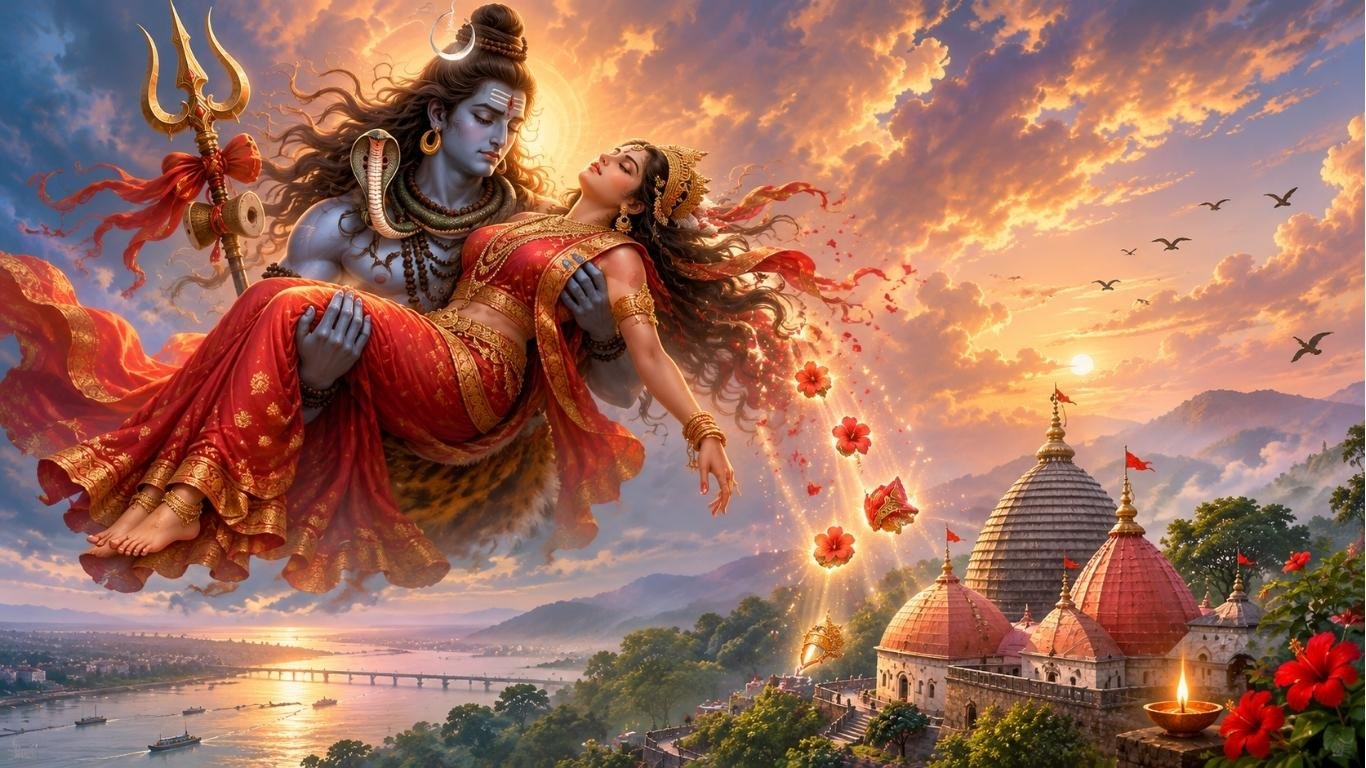
Maddened by grief, Shiva lifted Sati’s lifeless body and roamed the cosmos in a wild dance of sorrow, the Tandava, which threatened to unravel creation itself. To save the universe and release Shiva from his anguish, Vishnu followed and, with his Sudarshana Chakra, cut Sati’s body into pieces. Wherever a part of her body or an ornament fell to the earth, that spot became sanctified as a Shakti Peetha, a “seat of the Goddess”, charged forever with her presence. Tradition counts 51 such Shakti Peethas across the subcontinent.
According to the tradition preserved in the Kalika Purana and the Shakta texts of Assam, it was the womb and yoni, the generative organ of Sati, that fell upon Nilachal Hill. It is said that here the Goddess and Shiva quietly continue their union, and that the hill itself turns red during the monsoon as a sign of the Mother’s life-giving power.
Who Built the Kamakhya Temple and What Is Its Architecture?
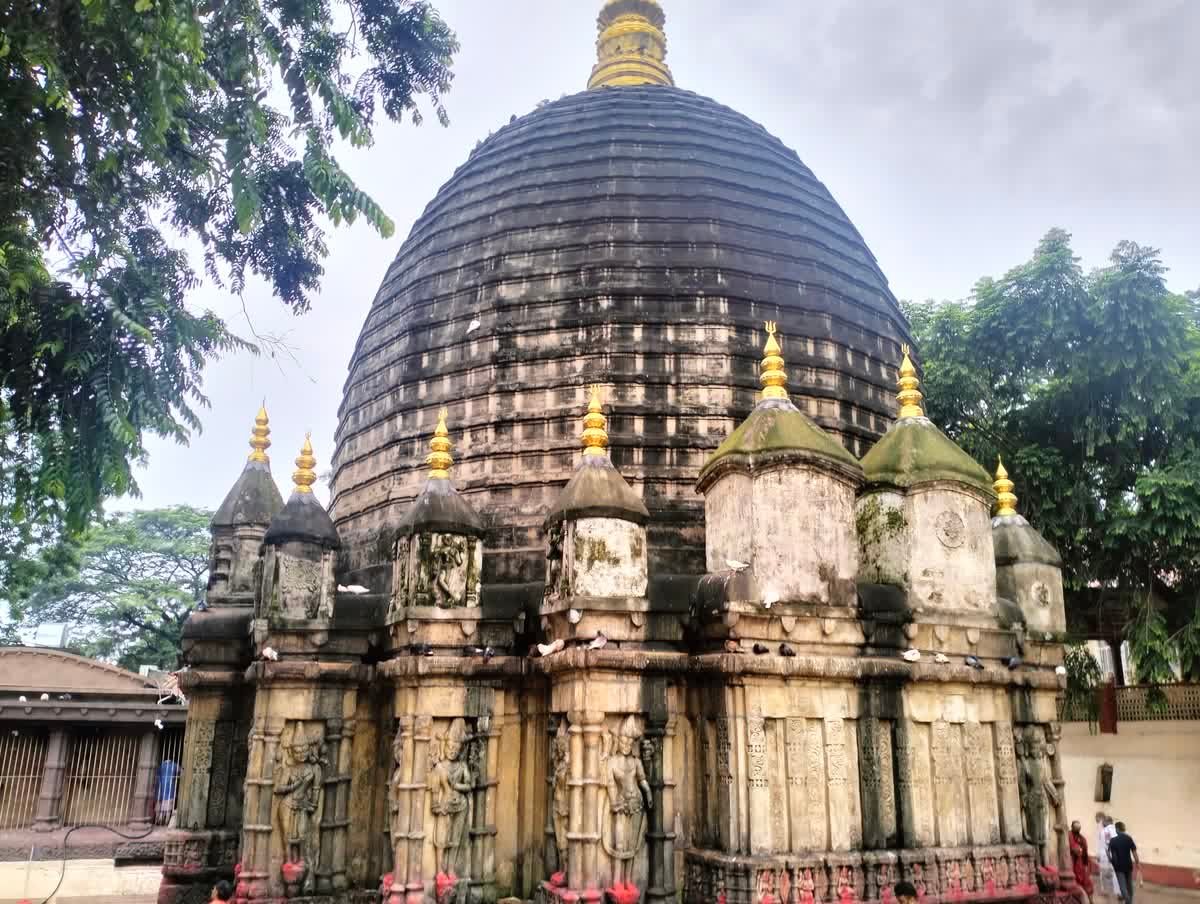
The present Kamakhya Temple was rebuilt in 1565 CE by the Koch dynasty, under King Vishwa Singha and decisively his son Nara Narayan with the general Chilarai, after the earlier structure was destroyed in the late medieval period. The rebuild created the temple’s famous beehive-shaped dome, known as the Nilachal style.
Worship at Nilachal Hill is ancient. The earliest detailed textual reference to Kamakhya appears in the Kalika Purana, generally dated to around the 10th century CE, which praises the Goddess as the young bride of Shiva, the yielder of all desires and the giver of salvation, and describes Nilachal as a great seat of esoteric Tantric ritual. The Yogini Tantra, a later Assamese Shakta work, further establishes the supremacy of Kamakhya and the worship of the Goddess in her yoni form. Inscriptions and tradition suggest the site was patronised by early Assamese dynasties of the old kingdom of Kamarupa.
The temple did not survive the centuries unscathed. Tradition associates the ruin of the original structure with the invasion led by Kalapahar, an officer in the service of the Bengal Sultanate, in the 16th century. For a time the great seat of the Mother lay in rubble, until the Koch kings raised it again on the old foundations.
Architecturally the temple is a fusion. It blends the older Nagara temple tradition with indigenous Assamese and later Ahom-period building styles, producing a silhouette found nowhere else in India. Instead of the tall, straight shikhara of classical North Indian temples, Kamakhya is crowned by a distinctive hemispherical, beehive-like dome set on a cruciform base, with multiple smaller spires and rows of carved panels on the walls. The temple has several chambers arranged along an east-west axis: the garbhagriha (sanctum), the calanta, the pancharatna and the natamandira, the hall for ritual song, dance and recitation. Each chamber draws the devotee further inward toward the hidden cave shrine.
What Is Inside the Kamakhya Temple Sanctum?
Inside the Kamakhya sanctum there is no idol at all. The devotee descends steep stone steps into a dark cave chamber where a natural rock cleft, shaped like a yoni and roughly ten inches deep, is kept perpetually filled with water from an underground spring. This living stone is worshipped as the Goddess herself.
The most extraordinary and intimate part of Kamakhya lies hidden from casual view. To reach the garbhagriha, the devotee descends a flight of narrow, steep, often slippery stone steps into a small chamber that sits below ground level inside the temple’s vimana. There is no lamp-lit idol waiting at the bottom, no golden face of the Goddess.
Instead, the worshipper finds a sheet of natural rock that slopes down from both sides and meets in a yoni-shaped cleft. The Mother here is utterly aniconic: she is present as the source of life itself, kept ever-flowing by the water of the perennial spring. Priests honour the sacred cleft with offerings of flowers, vermilion (sindoor), red cloth and worship throughout the day, while devotees descend in a continuous, hushed line to touch the holy water and receive her blessing.
The same striking arrangement, a yoni-shaped stone below ground level filled with spring water, is echoed in the sanctums of the other Mahavidya temples in the complex. Nilachal Hill is, in effect, a whole landscape devoted to the worship of the creative feminine in its most primal form.
What Is the Ambubachi Mela and When Is It Held?
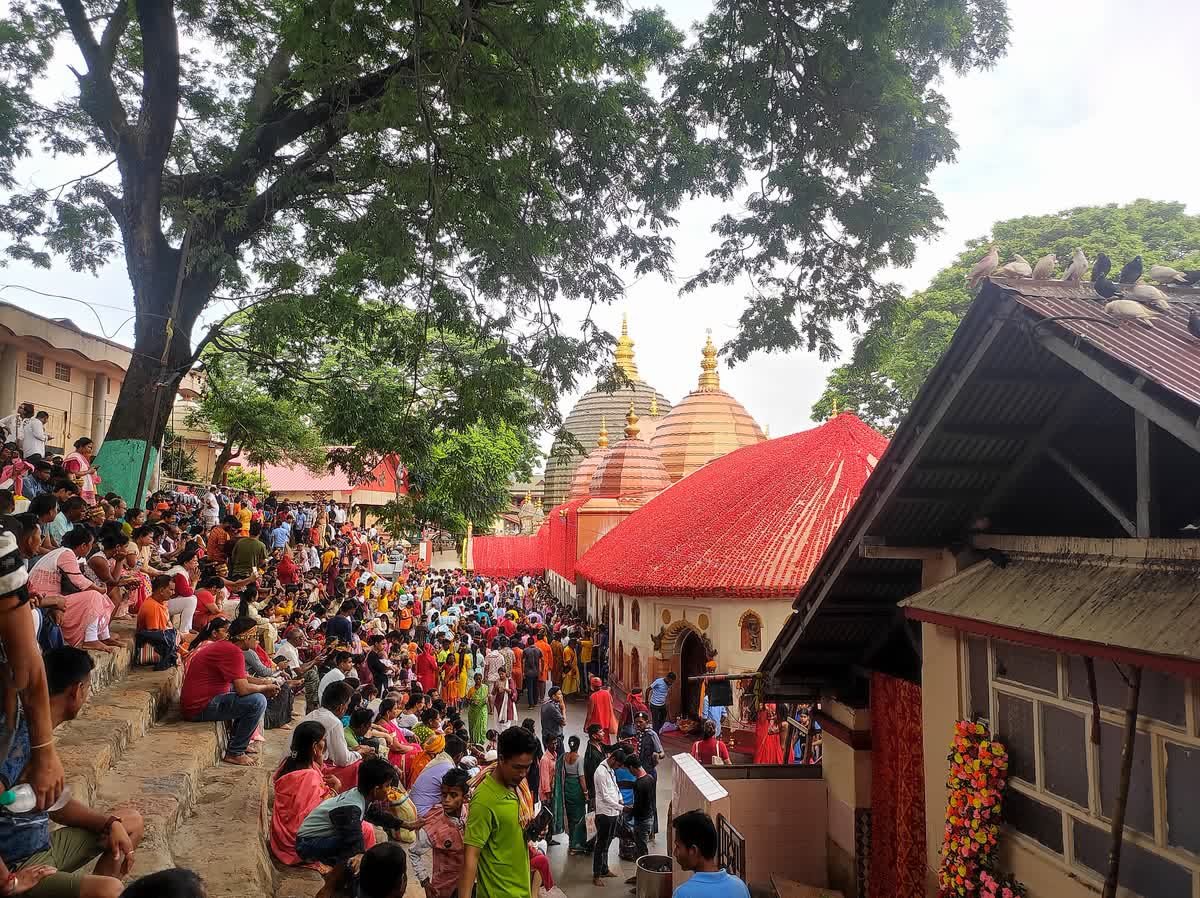
The Ambubachi Mela is the annual festival celebrating the menstruation of Goddess Kamakhya, held around mid-June. The sanctum doors close for three days while the Mother is believed to be in her menses, then reopen on the fourth day after ritual purification, drawing lakhs of pilgrims and Tantric practitioners to Nilachal Hill.
If one festival defines Kamakhya in the popular imagination, it is the Ambubachi Mela. It is one of the very few religious events anywhere in the world to publicly and joyfully venerate the female reproductive cycle as sacred rather than impure. During the closure, no worship, cooking of certain foods, farming or other auspicious activity is traditionally undertaken in the region. On the fourth day the sanctum is ritually purified and reopened for darshan, and the Goddess is celebrated as refreshed and renewed.
In 2026, for example, the festival is observed from around 22 June, with the sanctum closed for the three days of menses and reopening for devotees on 26 June. Exact dates each year follow the traditional Assamese calendar, so pilgrims should confirm locally before travelling.
Symbolically, the Ambubachi Mela is a celebration of fertility and the regenerative power of the earth itself. It coincides with the onset of the monsoon, when the soil grows moist and ready for sowing; Mother Earth, like the Goddess, is understood to be fertile and life-giving. In Tantric philosophy menstruation is not shameful but a profound emblem of creation, renewal and shakti.
The Mela is also one of the greatest gatherings of Tantric practitioners in India. Lakhs of pilgrims, along with sadhus, ascetics, Aghoris and Tantriks, many of whom spend the rest of the year in seclusion, converge on Nilachal Hill. After the reopening, devotees receive prasad in two famous forms: angodak, the holy spring water, and angabastra, small pieces of the red cloth said to have covered the Goddess during her menses, believed to be intensely auspicious.
How many pilgrims come for Ambubachi?
Assam’s Tourism Department counts visitors to the four-day fair each year. These are the figures given by Tourism Minister Ajanta Neog, as reported by ETV Bharat on 27 June 2026:
| Year | Devotees at Ambubachi Mela | Pilgrims from abroad | Change |
|---|---|---|---|
| 2024 | 7,46,066 | 20 | - |
| 2025 | 7,72,019 | 42 | +3.5% |
| 2026 | 7,96,777 | 75 | +3.2% |
Attendance has grown by roughly three percent a year, and the number of pilgrims travelling from abroad has nearly quadrupled in two years. The temple administration gives much larger numbers: its secretary, Jnan Nath Sarma, told India Today NE in 2024 that attendance reached up to 30 lakh, against about 22 lakh the year before. The two counts appear to measure different things, so we show both rather than pick one.
The Kamakhya corridor
The temple is being rebuilt around its crowds. The Maa Kamakhya Access Corridor, funded at about ₹498 crore under the Centre’s PM-DevINE scheme for the North East, had its foundation stone laid in February 2024. After the Gauhati High Court dismissed petitions against it in early 2026, construction resumed in June 2026 under Larsen & Toubro. The plan widens the open space around the shrine from roughly 3,000 to 100,000 square feet across three levels, sized for 8,000 to 10,000 visitors at peak events such as Ambubachi. (Source.)
Which Dashamahavidya Temples Stand on Nilachal Hill?
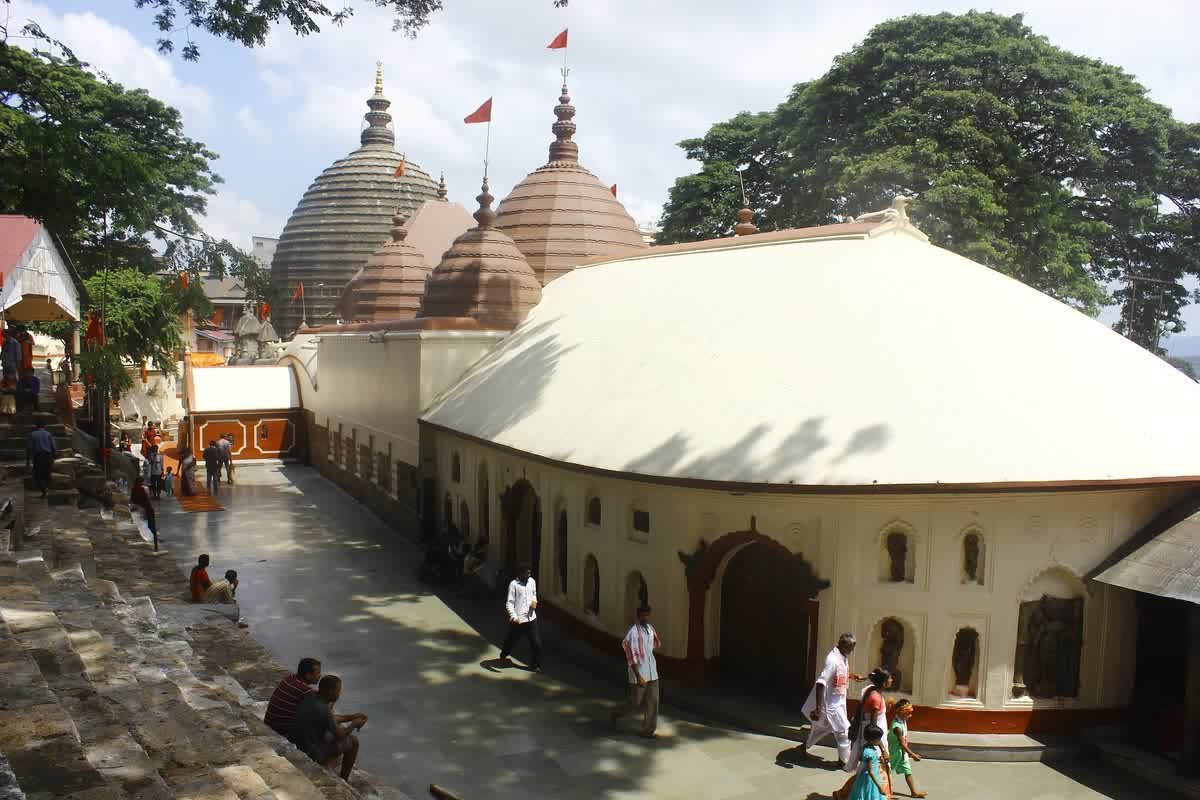
Nilachal Hill is the only site in the world where temples to all ten Mahavidyas, the great wisdom goddesses of the Tantric tradition, stand together. Tripura Sundari, Matangi and Kamala reside within the main Kamakhya temple, while Kali, Tara, Bhuvaneshwari, Bhairavi, Chhinnamasta, Dhumavati and Bagalamukhi have individual shrines across the hill.
Kamakhya is not a single shrine but a sacred landscape. A pilgrimage to Kamakhya is, in effect, a pilgrimage to the entire spectrum of the Divine Mother. If you are new to these goddesses, our guide to the origin story of the Das Mahavidyas explains how the ten arose.
Each Mahavidya represents a distinct facet of the supreme Goddess and confers her own type of blessing, wisdom or perfection. Kali is the conqueror of time and fear, Tara the compassionate guide across difficulty, Tripura Sundari the beauty and bliss of pure awareness, Bhuvaneshwari the ruler of the cosmos, Bhairavi the fierce ascetic fire, Chhinnamasta self-sacrifice and the awakened life-force, Dhumavati the wisdom of dissolution and the void, Bagalamukhi the power to still enemies and obstacles, Matangi the goddess of speech and the arts, and Kamala the bestower of prosperity.
- Within the main temple: Tripura Sundari, Matangi and Kamala.
- In individual shrines on the hill: Kali, Tara, Bhuvaneshwari, Bhairavi, Chhinnamasta, Dhumavati and Bagalamukhi.
To circumambulate the hill and visit each shrine is to honour the Mother in all her forms.
Why Is Kamakhya So Important in Tantra?
Kamakhya is central to Tantra because the Kalika Purana and Yogini Tantra establish Nilachal Hill as a supreme pitha for esoteric practice. In Tantric metaphysics the yoni shrine is the place where the union of Shiva (consciousness) and Shakti (creative power) is eternally present and accessible, the cosmic womb of all manifestation.
Over the centuries Kamakhya became one of the principal seats from which Shakta Tantra radiated across eastern India and the Himalayan world. Worshipping the Goddess here as the yoni is not a crude or literal act but a profound affirmation that creation, the body and desire are themselves doorways to the divine, rather than obstacles to be denied.
Because of this, Kamakhya has long been a centre for advanced sadhana, for the worship of the Mahavidyas and the Yoginis, and for rituals that take the energies of the body and the world as the very material of liberation. It is a place associated with both bhakti, the simple loving devotion of the ordinary pilgrim, and with the demanding inner disciplines of the serious Tantric practitioner. This dual character, accessible to all yet deep enough for the most advanced, is part of what gives Nilachal Hill its enduring power.
What Are the Benefits of Worshipping Kamakhya Devi?
Worship of Kamakhya Devi is traditionally sought for the fulfilment of desires, the blessing of children and family harmony, prosperity, protection from negativity, and, for serious sadhakas, the awakening of inner shakti. As the supreme Mother, she is also approached for courage, emotional healing and the grace that leads to liberation.
Devotees turn to Kamakhya for blessings that touch every level of life, from the most practical to the most transcendent. As the goddess of desire and fertility, she is especially invoked by those seeking children, a happy marriage or harmony in relationships, and by those praying for the removal of obstacles.
Traditionally attributed benefits of sincere worship and mantra practice at Kamakhya include:
- Fulfilment of heartfelt desires and the blessing of progeny and family harmony.
- Removal of obstacles, negativity and the influence of harmful forces.
- Material prosperity, abundance and success in endeavours, when sought with right intention.
- Protection of the devotee and the household under the Mother’s grace.
- Awakening of Kundalini and inner shakti for serious sadhakas.
- Courage, emotional healing and freedom from deep-seated fear.
- Spiritual growth and, ultimately, the grace that leads toward liberation (moksha).
As always in the Shakta path, the deepest offering is not gold or grain but sincere devotion, surrender of the ego and a heart open to the Mother. The outer ritual is a doorway; the inner transformation is the true gift of Kamakhya.
What Is the Kamakhya Mantra?
The principal Kamakhya mantra is “Om Hreem Kleem Kamakhyai Namah”, which honours the Goddess through the seed syllables Hreem (cosmic grace) and Kleem (creative desire). A popular beej mantra for the fulfilment of desires is “Kleem Kleem Kamakhya Kleem Kleem Namah”, chanted 108 times with devotion.
Chanting the name and seed sounds of Kamakhya Devi is one of the simplest and most powerful ways to connect with her, whether or not one is able to travel to Nilachal Hill.
| Field | Kamakhya Mool Mantra |
|---|---|
| Sanskrit | ॐ ह्रीं क्लीं कामाख्यै नमः |
| Hindi | ओम् ह्रीं क्लीं कामाख्या देवी को मेरा प्रणाम |
| Transliteration | Om Hreem Kleem Kamakhyai Namah |
| Meaning | Om. With the seed sounds Hreem (the Great Goddess, cosmic Maya and grace) and Kleem (the seed of desire, attraction and creative power), I bow to Kamakhya Devi, the Mother who is the source of all longing, fertility and liberation. |
A widely chanted Kamakhya beej (seed) mantra, especially favoured for the fulfilment of desires, encloses the Goddess’s name within the powerful syllable Kleem:
| Field | Kamakhya Beej Mantra |
|---|---|
| Sanskrit | क्लीं क्लीं कामाख्यै क्लीं क्लीं नमः |
| Hindi | क्लीं क्लीं कामाख्या क्लीं क्लीं नमः |
| Transliteration | Kleem Kleem Kamakhya Kleem Kleem Namah |
| Meaning | Enclosing the name of the Goddess within the powerful seed syllable Kleem, the devotee invokes Kamakhya as the embodiment of desire, attraction and the fulfilment of all wishes, and offers salutation. |
For practice, sit in a clean, quiet place, preferably during the early morning Brahma Muhurta or in the evening. Light a lamp and incense, hold a rudraksha or crystal mala, and chant the mantra with attention and devotion, ideally completing at least one full mala of 108 repetitions. Tuesdays, Fridays and the days of Navaratri are considered especially auspicious for Devi worship. Advanced or more elaborate Tantric mantras of Kamakhya are traditionally received directly from a qualified guru through formal initiation (diksha).
How Do You Reach Kamakhya Temple?
Open Kamakhya Temple in Google Maps for live directions from where you are.
Kamakhya Temple sits atop Nilachal Hill in western Guwahati, Assam, about 8 km from the city centre. Fly into Guwahati’s Lokpriya Gopinath Bordoloi International Airport (about 20 km away), or take a train to Kamakhya Railway Station or Guwahati Junction (7-8 km), then a taxi or auto up the motorable hill road.
| Detail | Information |
|---|---|
| Location | Nilachal Hill (Kamagiri), western Guwahati, Assam, about 8 km from the city centre |
| Nearest airport | Lokpriya Gopinath Bordoloi International Airport, Guwahati, about 20 km (45 minutes to 1 hour by taxi) |
| Nearest railway stations | Kamakhya Railway Station (about 7 km) and Guwahati Junction (about 7-8 km) |
| By road | Motorable road to the temple entrance; ASTC city buses, shared Sumos, autos and taxis from Guwahati city |
| Darshan timings | About 5:30 AM to 1:00 PM, then 2:30 PM to 5:30 PM (confirm locally on festival days) |
| Best time to arrive | 5:30 AM to 8:00 AM, ideally Tuesday, Wednesday or Thursday |
By Air
- Nearest airport: Lokpriya Gopinath Bordoloi International Airport (Guwahati), about 20 km from the temple.
- From the airport: pre-paid taxis, app cabs and shared cabs are readily available; the drive to Nilachal Hill takes roughly 45 minutes to 1 hour depending on traffic.
- Connectivity: direct flights link Guwahati with Delhi, Kolkata, Mumbai, Bengaluru and other major Indian cities.
By Train
- Nearest stations: Kamakhya Railway Station (about 7 km from the temple) and Guwahati Junction (about 7-8 km); both are major stops served by express and superfast trains from across India.
- From the station: auto-rickshaws, taxis and shared cabs run to the foot and top of Nilachal Hill; the ride takes about 15-20 minutes.
By Road
- Local route: a motorable road winds all the way up Nilachal Hill to the temple, so vehicles can reach close to the entrance.
- Buses and shared transport: ASTC city buses, shared Sumos, autos and taxis run regularly between Guwahati city (such as the Judges Field area) and the temple, especially on holidays and festival days.
- By bus from afar: Guwahati is connected by state and private buses to towns across Assam, the wider Northeast and neighbouring states.
Darshan Timings
- Opening: the temple is generally open for darshan from about 5:30 AM, with morning rituals (snana and worship of the Goddess) performed in the early hours.
- Afternoon break: the sanctum typically closes around 1:00 PM and reopens at about 2:30 PM.
- Evening: darshan continues in the afternoon session and the temple closes around 5:30 PM after the evening aarti. Timings can vary on festival days, so confirm locally.
Darshan Tips
- Arrive early, between 5:30 AM and 8:00 AM, ideally on a Tuesday, Wednesday or Thursday, for the shortest queues and the most serene atmosphere.
- Expect very long lines during the Ambubachi Mela (June) and on festival days; special darshan or VIP passes are often available for a fee and can save hours of waiting.
- Dress modestly and be prepared to remove footwear; the steps down into the cave sanctum are steep, narrow and can be wet and slippery.
- Photography is usually restricted inside the sanctum; respect all signs and the instructions of the priests.
- Carry offerings such as red flowers, sindoor and a red cloth or chunari if you wish; local stalls near the temple sell puja items and prasad.
- Animal sacrifice is part of certain traditional rituals here; visitors who prefer not to witness it should plan their timing accordingly.
Which Festivals Are Celebrated at Kamakhya?
Beyond the famous Ambubachi Mela in June, Kamakhya celebrates Durga Puja and Navaratri in autumn, Manasa Puja during the monsoon, the spring festival of Durga Deul (Pohan Biya), and Kali Puja on the new-moon night of Kartik. The hill remains a living centre of Shakta devotion all year round.
| Festival | When | What Happens |
|---|---|---|
| Ambubachi Mela | June | The greatest festival of Kamakhya, celebrating the Mother’s annual menses; the sanctum closes for three days and reopens amid huge gatherings of pilgrims and Tantriks. |
| Durga Puja / Navaratri | September-October (Sharad) | The autumn worship of the Goddess in her nine forms, celebrated with great fervour at one of India’s most important Devi seats. |
| Manasa Puja | August | Worship of the serpent goddess Manasa, observed at the temple during the monsoon season. |
| Durga Deul / Pohan Biya | Spring | A spring festival on Nilachal Hill, including the symbolic marriage of the Goddess, marking the seasonal cycle of the Devi. |
| Diwali and Kali Puja | October-November | The new-moon night of Kartik, sacred to Kali and the Mahavidyas, observed with lamps and special worship across the complex. |
Whatever the season, Kamakhya remains a living, breathing centre of devotion: the place where the Mother is worshipped not as an image of stone but as the very source of life.
Listen: Subscribe to Musinara Sounds for 432 Hz mantra chants
Plan Your Visit to Kamakhya: Timings, Tickets and Travel
The details below were checked on 3 October 2026 against the Maa Kamakhya Devalaya and the other sources listed under each table. Timings and fees change on festival days, eclipses and special occasions, so confirm with the temple before you travel.
Darshan and Aarti Timings
| Information | Details |
|---|---|
| Ritual bathing of the deity | 5:30 am (not open to the public) |
| Daily worship | 6:00 am (not open to the public) |
| Temple door opens to devotees | 8:00 am |
| Midday closure for bhog | 1:00 pm to 2:30 pm |
| Temple door closes for the night | 5:15 pm |
| Evening aarti | 7:30 pm on the temple schedule. The door is closed to devotees from 5:15 pm. |
| Ambubachi closure (2026) | Door closed to devotees from the night of 22 June to the morning of 26 June 2026. Special darshan was suspended on 26 and 27 June. |
| Festival days | Hours can change. Check the notices on maakamakhya.org before you travel. |
Sources: Maa Kamakhya Devalaya (official): Maa Kamakhya Devalaya home page (daily sche…, Maa Kamakhya Devalaya (official): Administration (notices incl. Ambubachi 202…, ETV Bharat: Devotees Throng Kamakhya Temple As Doors Reopen After Ambubachi.
Tickets, Darshan Options and Sevas
| Option | Price | Notes |
|---|---|---|
| Special darshan | Rs 501 per person | Booked online only since 15 June 2026. Counter booking has been discontinued. |
General queue darshan is free. A free general queue booking portal is listed on the temple website at mkdonlinegenq.in. Bookings are handled on mkdonline.co.in. Special darshan is booked at mkdonline.co.in. Defence personnel book separately at defence.mkdonline.in. The free general queue portal is mkdonlinegenq.in. The Devalaya does not authorise any other website or app to book pujas on its behalf. Its official websites are maakamakhya.org and maakamakhyadevalaya.org. Musinara is not connected with the temple and does not take bookings.
Sources: Maa Kamakhya Devalaya (official): Maa Kamakhya Devalaya home page (daily sche…, The Sentinel (Assam): Kamakhya Temple to Shift All Special Darshan Bookings O…, Maa Kamakhya Devalaya (official): Administration (notices incl. Ambubachi 202….
Temple Rules and Dress Code
- Leave footwear at the designated camps on the approach road. Footwear is not allowed from the main entrance onwards.
- The temple area is a tobacco-free zone, in force since 1 January 2016.
- Do not book pujas through third-party websites or apps. The Devalaya has not authorised them.
Sources: Maa Kamakhya Devalaya (official): Administration (notices incl. Ambubachi 202…, Maa Kamakhya Devalaya (official): Maa Kamakhya Devalaya home page (daily sche….
How to Reach Kamakhya
| Mode | Nearest point | Distance to the temple |
|---|---|---|
| Air | Lokpriya Gopinath Bordoloi International Airport, Guwahati | about 20 km |
| Rail | Kamakhya Junction is the nearest station. Guwahati station is the main hub. | |
| Bus | Guwahati bus terminals: Adabari, Paltan Bazar and ISBT Guwahati |
Sources: Maa Kamakhya Devalaya (official): How to Reach, kamakhya.org: How to Reach Kamakhya Temple.
Approximate distances and journey times from the cities most pilgrims start from. Road times assume normal traffic; festival weekends take longer.
| From | By road | Road time | Train or flight |
|---|---|---|---|
| Guwahati airport (LGBI) | about 20 km | ||
| Shillong | about 100 km | 1.5 to 3 hours, depending on traffic | |
| Kolkata | Howrah to Guwahati takes about 18 hours by train. The Garib Rath Express (12517, AC 3 Tier Economy only) leaves Kolkata on Thursdays at 9:45 pm and reaches Guwahati at 3:55 pm next day. Check IRCTC for the current schedule.; Flights connect Kolkata (CCU) and Guwahati (GAU). |
Sources: Maa Kamakhya Devalaya (official): How to Reach, kamakhya.org: How to Reach Kamakhya Temple, Cleartrip: Guwahati to Shillong route, Cleartrip: Kolkata to Guwahati route, Wikipedia: Kolkata-Guwahati Garib Rath Express.
Taxis and local buses run from the railway stations and the airport into the city. Construction of the access corridor is under way near the approach, so allow extra time.
When to Go and How Long to Allow
The two main festival periods are Ambubachi in June and Durga Puja in autumn. Crowds are much larger during Ambubachi.
Sources: Maa Kamakhya Devalaya (official): Festival, Maa Kamakhya Devalaya (official): Administration (notices incl. Ambubachi 202…, The Sentinel (Assam): Record 8 Lakh Devotees Attend Ambubachi Mahayog at Kama….
Prasadam, Annadanam and Where to Stay
For accommodation enquiries, contact the Doloi’s office: O/o The Doloi, Maa Kamakhya Devalaya, Guwahati 781010. Phone 0361-2734654 or 0361-2734655. Email info@maakamakhyadevalaya.org.
Source: Maa Kamakhya Devalaya (official): Contact.
Temples and Places Near Kamakhya
- Other Mahavidya shrines in the complex: Shrines of the other Mahavidyas stand within the Kamakhya temple complex on Nilachal Hill.
Source: Wikipedia: Kamakhya Temple.
Frequently Asked Questions
Why is Kamakhya called the most powerful Shakti Peetha?
Because, according to the Kalika Purana and the Shakta tradition, the womb and yoni, the generative organ of Sati, fell on Nilachal Hill. Where other Shakti Peethas mark a finger, toe or ornament, Kamakhya marks the very seat of creation and fertility, which is why it is honoured as the Yoni Peetha and regarded as supreme.
Is there an idol of Kamakhya Devi in the temple?
No. Uniquely, there is no statue or image. The Goddess is worshipped in the form of a natural yoni-shaped cleft of rock in the dark cave sanctum, kept perpetually moist by water from an underground spring. This living stone is venerated as the Goddess herself.
What is the Ambubachi Mela and when is it held?
The Ambubachi Mela is the annual festival celebrating the menstruation of Goddess Kamakhya, held around mid-June. The sanctum closes for three days while the Mother is believed to be in her menses, then reopens for darshan. In 2026 it is observed from around 22 June, with the temple reopening on 26 June; exact dates follow the Assamese calendar each year.
What is the Kamakhya mantra?
A principal devotional mantra is “Om Hreem Kleem Kamakhyai Namah”. A popular beej (seed) mantra for fulfilment of desires is “Kleem Kleem Kamakhya Kleem Kleem Namah”. These are chanted with a mala, ideally 108 times, with devotion.
What are the Kamakhya Temple darshan timings?
The temple is generally open from about 5:30 AM to 1:00 PM and again from about 2:30 PM to 5:30 PM daily, with morning and evening rituals. Timings can change on festival days, so it is best to confirm locally before visiting.
How do I reach Kamakhya Temple?
Fly to Lokpriya Gopinath Bordoloi International Airport, Guwahati (about 20 km), or take a train to Kamakhya Railway Station or Guwahati Junction (about 7-8 km). From there, taxis, autos, shared cabs and city buses run up the motorable road on Nilachal Hill to the temple.
What are the Dashamahavidya temples at Kamakhya?
The complex is the only place in the world with shrines to all ten Mahavidyas: Kali, Tara, Tripura Sundari, Bhuvaneshwari, Bhairavi, Chhinnamasta, Dhumavati, Bagalamukhi, Matangi and Kamala. Tripura Sundari, Matangi and Kamala reside in the main temple; the other seven have their own shrines on the hill.
Who rebuilt the Kamakhya Temple?
After the earlier structure was destroyed in the medieval period, the temple was rebuilt in 1565 CE by the Koch dynasty, King Vishwa Singha and especially his son Nara Narayan, with the general Chilarai, giving it its present beehive-domed Nilachal-style form.
What offerings and prasad are associated with Kamakhya?
Devotees offer red flowers, sindoor (vermilion) and red cloth. The most prized prasad, especially after Ambubachi, are angodak (the holy spring water) and angabastra, small pieces of the red cloth associated with the Goddess’s menses, considered intensely auspicious.
Can anyone visit Kamakhya, and what should I keep in mind?
Yes, the temple is open to all devotees. Dress modestly, be ready to remove footwear and descend steep, often wet steps into the cave sanctum, expect long queues on festival days (consider special darshan passes), and respect restrictions on photography inside the sanctum.
Planning a pilgrimage? All twenty Devi temple guides on this site are arranged by region, with practical circuits, in Devi Temples of India. For where each site sits in the disputed lists of 51, 52 and 108, see the Shakti Peeth list.